
Industrial Sensor & Machine Safety Catalogue
141 published series across 20 categories — compare sensing duties, published limits and the model-specific documentation needed before ordering.
Catalogue structure and source-consistency review: 2026-09-06. Exact model specifications require confirmation.
This is the complete DAIDISIKE product range — the engineering index to every industrial sensor and machine safety device we manufacture in our Foshan factory. The catalogue spans 20 categories: safety light curtains and press-brake guards with model-specific safety documentation, measuring light curtains, 2D LiDAR scanners, laser distance and displacement measurement, photoelectric, proximity, fiber-optic, slot and colour-mark sensing, guard interlocks and door locks, safety relays, mats and edges, and the relay and Modbus I/O modules that sit between a sensor and a controller.
It is published the way an engineer actually shortlists: every family carries its full model list and specification table, the limits that rule it out, and an explicit statement of whether it may protect a person. Prices follow a specification, not the other way round — send the application and the quote comes back as a part number with the documentation to defend it. OEM and ODM builds, custom lengths and private-label versions are quoted from the same catalogue data.
Start Here: The Eight Constraints That Eliminate a Sensor
Across the catalogue we have documented 716 specific cases where one of our own families is the wrong device. Grouped, they cover eight recurring constraints. Find yours, and the shortlist writes itself.
The environment eats the sensor
Check washdown, coolant mist, dust, outdoor light and temperature conditions. Housing, connectors, optics and installation can all affect suitability; an IP rating alone does not approve a cleaning process or every outdoor application.
94 documented cases in this catalogue
→ Photoelectric sensor housing and environment checks · Proximity sensor mounting and enclosure options
The distance is out of reach
The span is longer than the family can hold, or so short that the sensor sits inside its own blind zone. Published range figures assume a cooperative target; on dark or angled surfaces the usable distance is often well under the headline number.
74 documented cases in this catalogue
→ Laser distance sensors to 200 m · 2D LiDAR scanners, 5–100 m
A person could be hurt, and the device is not rated to prevent it
A sensor that detects a person is not automatically a safeguard. Define the safety function and required performance through the machine risk assessment, then verify the device, integration and validation documentation. IEC 61496 Type ratings concern electro-sensitive protective equipment, not every kind of interlock, mat or control component.
77 documented cases in this catalogue
→ Light-curtain configurations and safety evidence · Guard interlocks and door locking
The target does not behave
Transparent film, black matte rubber, polished steel, or changing target colour can alter detection. Check the sensing mode, target size, angle and returned signal. Through-beam avoids a reflective return path; background suppression and time-of-flight still need testing on the actual target and must not be treated as immune to reflectance effects.
51 documented cases in this catalogue
→ Through-beam and background-suppression modes · Fiber optic sensing for tiny or awkward targets
The resolution is not there
Asking a switch to measure, or asking a 40 mm beam pitch to find a 5 mm feature. Detection tells you something is present; measurement tells you how far, how thick or how tall. They are different device classes and swapping one for the other is a common and expensive mistake.
65 documented cases in this catalogue
→ Laser displacement sensors (micron class) · Measuring light curtains for profiling
The output does not match the controller
PNP where the input card wants NPN, a transistor output where a volt-free relay contact is required, or a switching output where the process needs an analogue or Modbus value. This is the cheapest mistake to avoid and the most annoying to discover on site.
75 documented cases in this catalogue
→ NPN vs PNP explained · Relay, timing and Modbus I/O modules
The line is faster than the sensor
Response time has to be shorter than the time the target spends in the beam. On high-speed feeding, sorting and stamping lines this eliminates whole families before any other parameter is considered — and on a safeguard, response time also feeds directly into the mounting distance.
31 documented cases in this catalogue
→ Slot sensors for fast small-part counting · Laser switches with sub-millisecond response
There is nowhere to put it
The detection point exists but the sensor body does not fit: a slot too narrow for a standard housing, a machine panel with no depth behind it, a thread size the bracket cannot take, or an emitter and receiver that cannot both be mounted. Form factor eliminates as many candidates as any electrical parameter, and it is usually discovered last.
18 documented cases in this catalogue
→ Fiber optic sensing for spaces no body fits · Miniature and ultra-thin photoelectric sensors
The Product Range — 20 Categories, 141 Series
Each card is one product family: what it does, where it earns its keep, and two ways in — the full category with every series and model, or the matching selection guide.
Safety Light Curtains
17 series
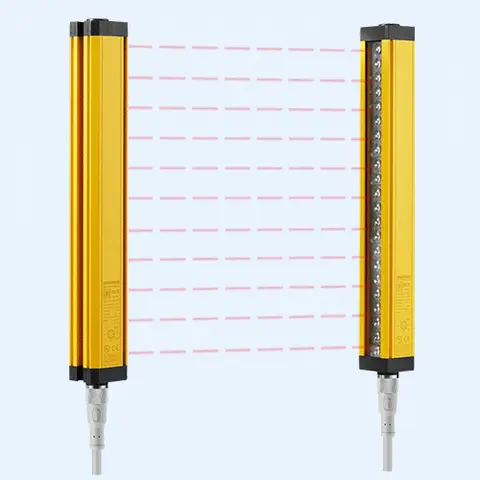
Type-4 architecture safety light curtains with finger, hand and body resolution options for presses, robot cells and automated machinery. Dual safety outputs connect directly to a safety relay, and protective heights span small feed openings to full access points. Factory direct, with the specification checked against your machine before dispatch.
Measuring Light Curtains
3 series
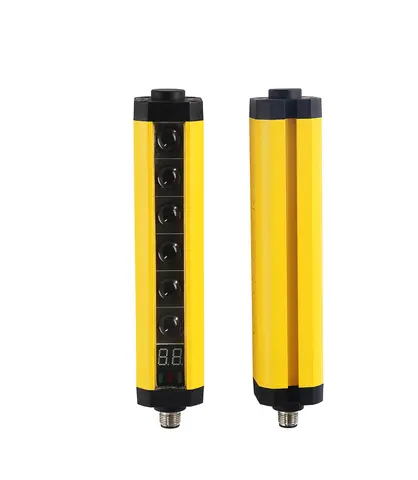
Measuring light curtains for dimensioning, object counting and vehicle separation, with analog, switching and RS485 output versions to match your controller. Choose beam pitch by the smallest object you must resolve and height by the field you must cover. These are detection devices, not safety-rated — every series page says so plainly.
All 3 series → · Safety versus measurement: check the required function
Press & Press Brake Protection
3 series
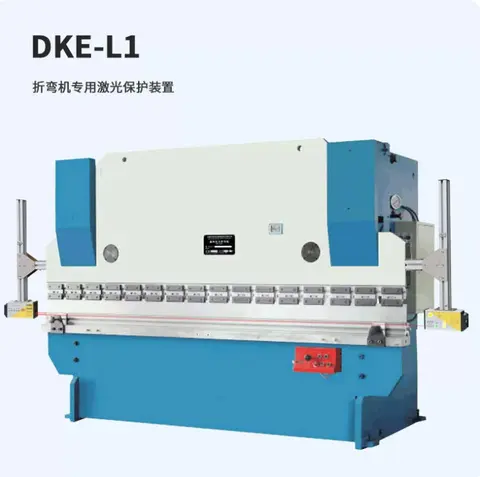
Photoelectric guards and laser protection systems purpose-built for power presses and press brakes, covering front-of-tool laser guarding where the operator holds the workpiece and multi-beam protection where they stand clear. Tell us the machine type and its measured stopping time and we will specify the right guard, not just a price.
LiDAR Scanners
10 series
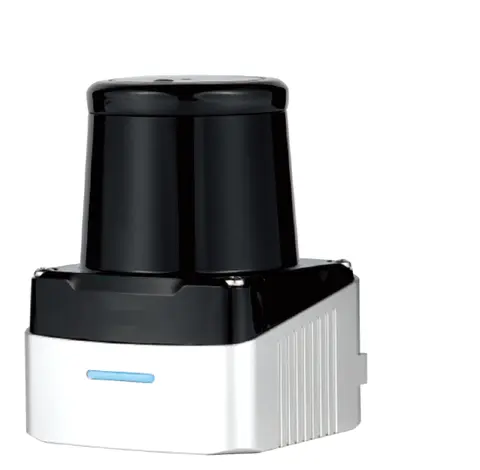
2D TOF LiDAR scanners covering 5–100 m for AGV obstacle avoidance, navigation, mapping and perimeter security. Field and range options let one platform serve intralogistics vehicles and fixed security installations alike. Each product page states whether the model is detection-only or rated for use in a safety function.
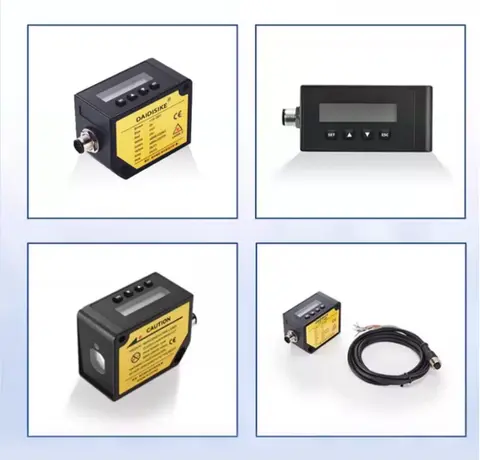
Laser Distance Sensors
3 series
Long-range laser distance sensors measuring up to 200 m, with analog, switching and RS485 Modbus outputs for direct PLC and SCADA integration. Suited to positioning, level and range measurement where the target cannot be touched. Select by range, target surface and the output your controller expects — we will confirm against all three.
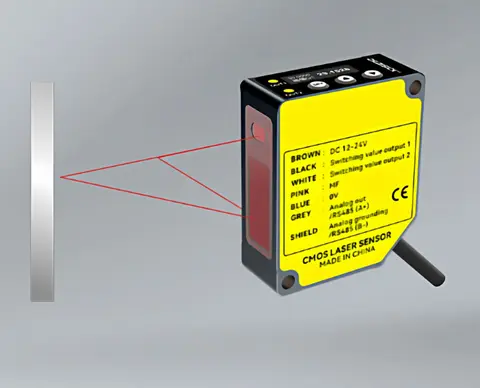
Laser Displacement Sensors
3 series
CMOS laser displacement sensors with micron-level repeatability for thickness, runout and position measurement. Non-contact operation suits moving, hot or delicate targets that a stylus would mark or wear. Send a sample of your actual part and we will verify the measurement before you commit to an order.
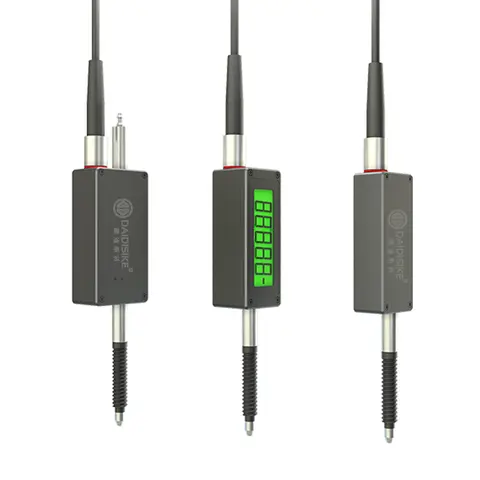
Contact Displacement Sensors
1 series
Grating-based contact displacement sensors with resolution options down to 0.2 µm for gauging, flatness and assembly verification. The grating measuring principle reads position directly along the stroke rather than inferring it. A practical, factory-direct alternative to imported gauge probes on inspection fixtures and production checkpoints.
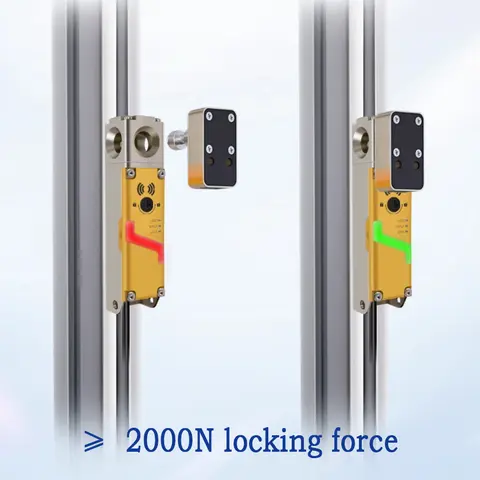
Safety Door Locks & Switches
9 series
Guard locking interlocks and safety door switches in RFID coded and magnetic coded versions for machine doors, gates and fencing. Guard locking versions hold the door shut until the hazard has actually stopped; coded versions resist defeat by simple substitute actuators. Matched safety relays are in this catalogue too.
All 9 series → · How to Choose a Safety Door Switch / Interlock
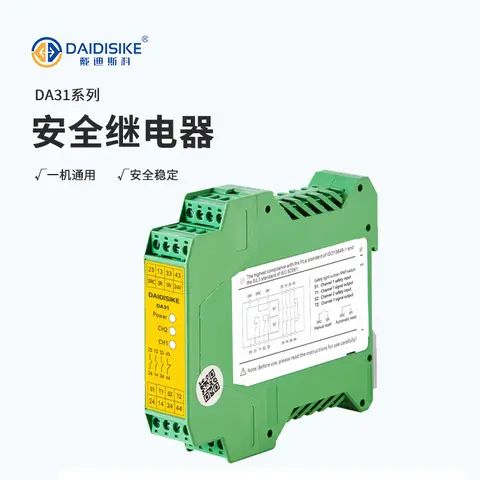
Safety Relays
2 series
Safety relay modules with forcibly guided contacts for e-stop, safety light curtain and door lock circuits. Forcibly guided contacts make a welded contact detectable — which is the whole point: the relay is the monitored link between the protective device and your contactors. Pair with our curtains and interlocks for a single-supplier safety chain.
All 2 series → · How to Choose a Safety Door Switch / Interlock
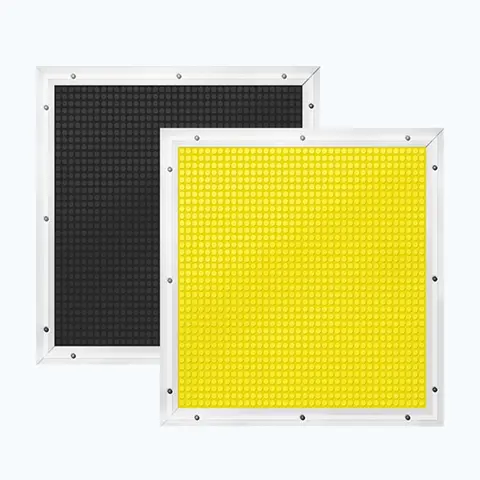
Safety Mats
1 series
Pressure-sensitive safety mats for presence detection across hazardous floor areas around presses, robots and automated cells. A mat covers the case optical guarding misses: the person already standing inside the danger zone at restart. Tell us the area to cover and the controller, and we will size the mat layout and monitoring.
Safety Edges
2 series
Pressure-sensitive safety edges for moving machinery, industrial doors and gates. The profile stops motion at the point of contact, protecting where crush and shear hazards travel with the machine — powered gates, moving tables, vehicle bumpers. Send the closing edge dimensions and we will recommend the profile and monitoring arrangement.
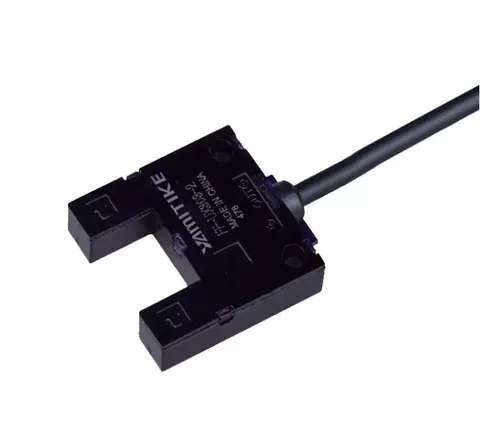
Slot Sensors
5 series
U-shaped slot sensors for edge, registration mark and small-part detection. The fixed fork geometry keeps emitter and receiver permanently aligned, so there is no beam alignment to drift on high-speed lines. Typical duties: label and gap detection, web edge sensing and component counting in feeders and packaging machines.
Hot Metal Detectors
1 series
Laser-based hot metal detectors for metallurgical lines, covering both hot and cold metal detection in rolling mills, continuous casting and bar lines. Built for the heat, scale and vibration that eliminate ordinary photoelectric sensors. Tell us the installation position and product temperature range and we will confirm the model.
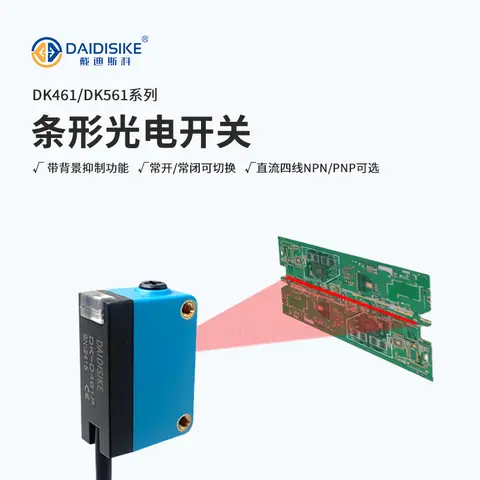
Photoelectric Sensors
16 series
Photoelectric sensors in diffuse, through-beam, retro-reflective and background-suppression versions — the four sensing modes that cover most object detection on conveyors, packaging lines and assembly machines. Select the mode first, then range and output type. Replacing an existing unit? Send the part number and target details for a checked cross-reference.
Laser Switch Sensors
7 series
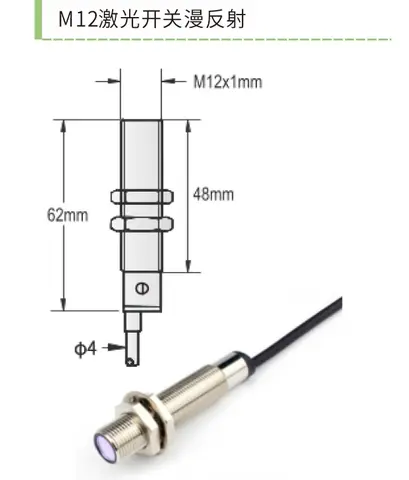
Miniature laser switch sensors in diffuse and through-beam versions, with housings from M3 and a visible red spot that makes aiming trivial. The tight beam resolves small targets at longer distances than a standard photoelectric sensor, and the housing fits where nothing else will — tooling, grippers, narrow feed channels.
Color & Color Mark Sensors
5 series
RGB color sensors and color mark sensors for packaging and printing: registration mark detection for cutting, sealing and form-fill lines, and color verification for cap and product sorting. Send a sample of your material and marks and we will verify reliable detection at line speed before you order.
Proximity Sensors
26 series
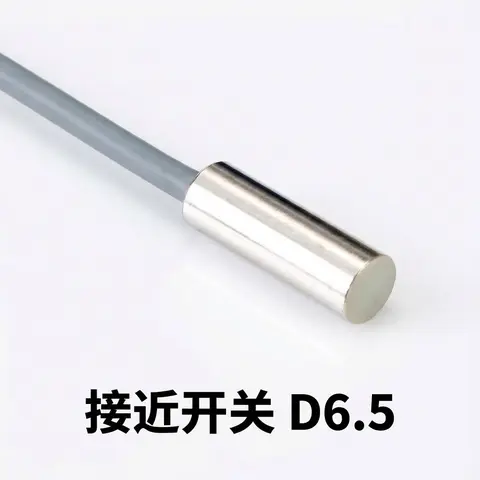
Inductive and capacitive proximity sensors from M3 to M30 housings, flush and non-flush mounting, connector or cable termination — the workhorse of position detection on machine tools, conveyors and fixtures. Specify housing size, mounting style and output polarity and the model code follows directly. NPN and PNP versions are both standard.
Fiber Optic Sensors
3 series
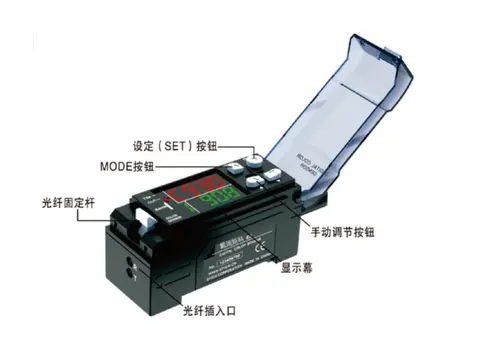
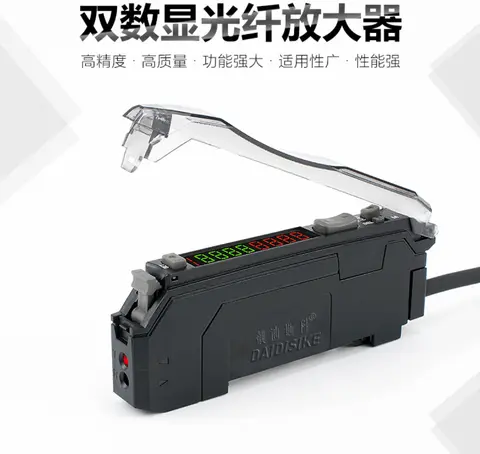
Fiber optic sensors — amplifiers, fiber heads and matrix fibers — for tight spaces and tiny targets no standard housing can reach. The passive head goes into the machine; the amplifier stays accessible for adjustment. The head range covers through-beam and diffuse sensing in confined tooling, feeders and electronics fixtures.
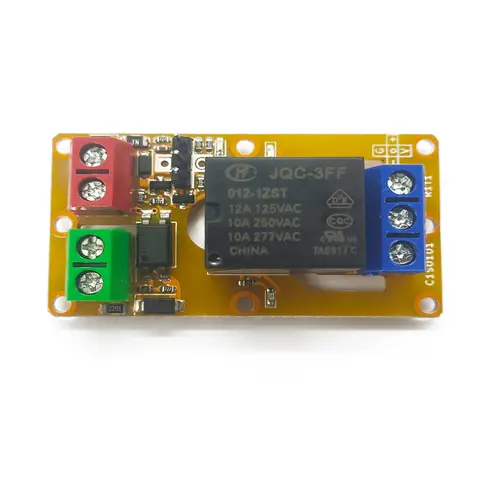
Relay & Timer Modules
23 series
Trigger-delay relays, MODBUS-485 I/O modules and signal isolation amplifiers — the interface layer between sensors and controllers. Add delay logic, isolate a noisy signal or bring distributed I/O onto an RS485 bus without expanding a PLC rack. They pair naturally with the sensor families across this catalogue.
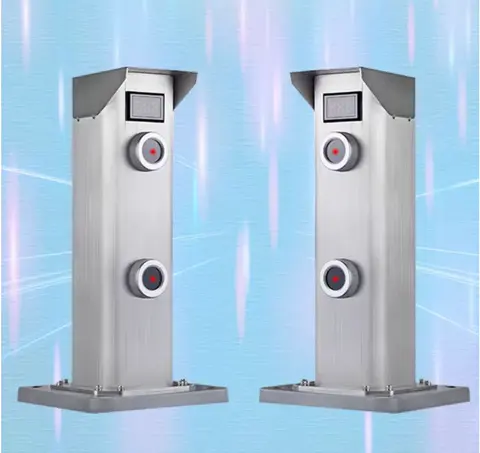
Outdoor Security Sensors
1 series
Outdoor laser beam detectors for perimeter security with ranges up to 500 m, built for fence lines, site boundaries and building approaches exposed to weather. Beam-interruption detection keeps the false alarm behaviour predictable in outdoor conditions. Tell us the perimeter length and layout and we will return a beam coverage plan.
Find Recorded Output & Data Interface Options
Counts include only series with a reviewed output or interface option still stated in that series’ specification table. This is a conservative index, not an exhaustive capability list. Options may belong to different variants; confirm the full ordering code, wiring and protocol. RS-485 is a data interface, not a switching output, and does not by itself confirm Modbus support.
| Output / interface | Series with a recorded option | Where to start |
|---|---|---|
| NPN (sinking) | 88 series | Proximity · Photoelectric · NPN vs PNP explained |
| PNP (sourcing) | 82 series | Proximity · Laser switch · NPN vs PNP explained |
| Relay contact | 25 series | Relay & timer modules · Safety relays |
| RS-485 data interface (protocol varies) | 22 series | Modbus I/O · Measuring curtains · Laser distance |
| Analog (4–20 mA / voltage) | 7 series | Measuring curtains · Laser displacement |
Browse by Application
Nine duties we equip every week, each with the category combination that actually gets specified together.
Punch Press & Stamping
Point-of-operation guarding for mechanical and hydraulic presses, from the curtain to the relay that monitors it.
Safety Light Curtains · Press & Press Brake Protection · Safety Relays
Packaging Line
Registration marks, label gaps and presence checks at production line speed.
Color & Color Mark Sensors · Slot Sensors · Photoelectric Sensors · Fiber Optic Sensors
AGV & Intralogistics
Obstacle avoidance ahead of the vehicle, contact protection at its edges, precision at the dock.
Robot Cell
Access guarding at every route into the cell: openings, doors and the floor inside.
Safety Light Curtains · Safety Door Locks & Switches · Safety Mats · Safety Relays
Conveyor Detection
Presence, counting and position along the line, whatever the target material.
Photoelectric Sensors · Proximity Sensors · Laser Switch Sensors · Measuring Light Curtains
Toll & Parking
Vehicle separation, profiling and positioning at barriers and lanes.
Measuring Light Curtains · Laser Distance Sensors · LiDAR Scanners
Outdoor Perimeter
Long-range intrusion detection on fence lines and open boundaries, in real weather.
Machine Tool
Position feedback on fixtures, guarded access doors and in-process gauging.
Proximity Sensors · Safety Door Locks & Switches · Laser Displacement Sensors
Electronics Assembly
Tiny targets in tight fixtures, verified to micron-level repeatability where it matters.
Fiber Optic Sensors · Slot Sensors · Laser Switch Sensors · Laser Displacement Sensors
Every Series We Make — All 141, by Category
The complete catalogue as a text index. Every entry links to its full specification table, model list, application notes and published limits.
Safety Light Curtains
DCE Automation Safety Light Curtain · DD / DDOF Single-Sided Area Light Curtain · DQA Long-distance Safety Light Curtain · DQB Ultra-thin (Side-emitting) Safety Light Curtain · DQBT Ultra-thin Optical-sync Safety Light Curtain · DQC General Safety Light Curtain · DQE Safety Light Curtain · DQO Zero Blind-zone Safety Light Curtain · DQR / DQRF Waterproof Safety Light Curtain · DQSA Area Protection Light Curtain · DQT Long-distance Safety Light Curtain (Large Beam Count) · DQT4 Type-4 Safety Light Curtain · DQZ Ultra-thin (Front-emitting) Safety Light Curtain · Explosion-proof Safety Light Curtain (Custom / FB Series) · JER Economical Safety Light Curtain (Optical Synchronization) · MK Mini Economical Safety Light Curtain · MQ Essence Edition Safety Light Curtain
Measuring Light Curtains
DQL Measuring Light Curtain (Analog/RS485) · DQLV Vehicle Separation Light Curtain · DQM Measuring Light Curtain (Switching Output)
Press & Press Brake Protection
DKE-L3 Press Brake Laser Protection · DQS Press Photoelectric Safety Guard · DQV Double-sided Photoelectric Safety Protection Device
LiDAR Scanners
DLD-100D Single-Line TOF Scanning LiDAR · DLD-50D 2D TOF LiDAR for Navigation & Mapping (50 m) · DLD-50G 2D Single-line LiDAR (Diffuse-remission Measuring Type) · DLD05A3 2D TOF Obstacle-avoidance LiDAR (5 m) · DLD20A5-5N / DLD20A5-5P 2D TOF Obstacle-avoidance LiDAR (20 m) · DLD30T-5N Single-line TOF Measuring 2D LiDAR (30 m) · DLD50T8N / DLD50T8P — 50 m Measuring LiDAR with Discrete I/O + Ethernet · DLDS2030A-5S Laser Scanning Radar · SDLD-05A TOF Laser Radar (Obstacle-Avoidance Type) · ST27 Series Safety Laser Scanner (Type 3 ESPE, 3 m / 5 m Protective · 20 m Warning · 60 m Measuring)
Laser Distance Sensors
DDA-Y & DDB-Y Industrial Laser Distance Sensor (Phase-Shift) · DDK-F Long-range Laser Distance Sensor · DSK-CG Long-range Laser Distance Sensor
Laser Displacement Sensors
DDK-G Laser Displacement Sensor 30-250 mm · DK-G Series Laser Displacement Sensor · LK-F Series CMOS Laser Displacement Sensor
Safety Door Locks & Switches
DX-C1 Magnetic Coded Safety Switch · DX-D2 & DX-D3 Safety Door Switch · DX-D6 Guard Locking Safety-Door Switch · DX-K Series Safety Door Lock Operation Keys · DX-R1 Non-contact Safety Switch (RFID Coded) · DX-W2 Safety Door Lock (Solenoid Guard Locking Interlock Switch) · DX-W3 Safety Door Lock · DX-W5 Safety Door Lock (Guard Locking Interlock Switch) · DXL Safety Door Bolt (DXL-A / DXL-B)
Slot Sensors
DD-303N / DD-403N Wide-slot Photoelectric Sensor · DD-670 Series Slot Photoelectric Sensor (Pin/Plug-in Connector Type) · DD-L25/45 Series Micro-slot (Micro U-shaped) Photoelectric Sensor · EE-SX67 Series Slot-type Photoelectric Sensor (Photomicrosensor) · FS-KNS Slot Photoelectric Sensor (Plug-in Type)
Photoelectric Sensors
BGS-CX441 / BGS-CX442 Background Suppression Photoelectric Sensor · BGS-CX61 Focused-Beam Background Suppression Photoelectric Sensor · BX Series Long-range Background Suppression (BGS) Photoelectric Sensor · DD-301/401/302/402 Series Reflective Photoelectric Sensor (Wire-lead Type) · DD-T21 / DD-T31 / DD-D21 Compact Self-Contained Photoelectric Sensor · DK-D461 / DK-D561 Strip-beam (Line-beam) Photoelectric Sensor · DX-15/30/50/100 Series Ultra-thin Through-beam Photoelectric Sensor · E3JK Square Photoelectric Sensor (Relay & Transistor Output) · E3Z Compact Photoelectric Sensor · H-M Series M12/M18 Through-beam Photoelectric Sensor · H-series Micro Diffuse Photoelectric Sensor (M3-M6) · H08 / R12 Series Micro Diffuse-Reflective Photoelectric Sensor (M8/M12) · JNS18 & JNK18 Series M18 Diffuse Photoelectric Sensor · PZ-CM10 Vision-based One-touch Teach Photoelectric Sensor · PZ-MK10 One-Touch Teach Laser Sensor · QF-35 M8 Diffuse-Reflective Photoelectric Sensor
Laser Switch Sensors
DDSK Laser Diffuse Reflective Sensor M12 / DK Laser Diffuse Reflective Sensor M18 · DDSK Ultra-Miniature Laser Diffuse Reflective Sensor (M3/M4/M5/M6/M8) · DS Laser Through-Beam Sensor M12/M18 (50m) · DS Miniature Laser Through-Beam Sensor (M3/M4/M5/M6/M8) · DS Right-Angle (90°) Laser Through-Beam Switch M4 / M6 · F31 Square Laser Photoelectric Switch (Diffuse-Reflective & Through-Beam) · JNS Right-Angle (90°) Laser Diffuse Reflective Sensor — M4 / M6
Color & Color Mark Sensors
CZ-V1 High-Precision Color Sensor · CZ-V21 RGB Digital Color Sensor (Amplifier-Separate Type) · FS-S72 Color Mark Sensor (FS-S72 NPN / FS-S72P PNP) · JNS-W70 / JNS-W500 Long-Range Color Mark Sensor · PZ-LX101 Color Mark Sensor
Proximity Sensors
D6.5 Series Inductive Proximity Sensors (Ultra-Short 18mm / Y-Type / 35mm / 45mm) · Economy Inductive Proximity Sensors M8/M12/M18/M30 (JNX/JNS Series) · Economy M4/M5/M6 Inductive Proximity Switches (Export-Grade) · High-Quality Threaded M4/M5/M6 Inductive Proximity Sensors · JD Series 3-Wire Connector-Type Inductive Proximity Sensors D6.5-M8 / D6.5-M12 · JM Series M18/M30 Connector-Type Inductive Proximity Sensors (M12 Quick-Disconnect) · JM12 Series M12 Inductive Proximity Sensor with M12 Aviation (Quick-Disconnect) Connector · JM8 Series Quick-Disconnect (Connector-Type) Inductive Proximity Sensors · M12 Inductive Proximity Sensors (22mm/35mm/45mm Short-Body) · M12/M18/M30 2-Wire AC Inductive Proximity Sensors · M12/M18/M30 Metal-Housing Capacitive Proximity Sensors (Cable Type) · M18 / M30 Inductive Proximity Sensors (35mm & 55mm Body Length) · M18/M30 Capacitive Proximity Sensors with M12 Connector (Plug-in Type) · M3 / M4 Non-Threaded (Thread-less) Inductive Proximity Switches · M3/M4/M5 Short-Body Separate-Amplifier Inductive Proximity Switches (15mm) · M8 Capacitive Proximity Switch (Metal Housing, Cable Type) · M8 Inductive Proximity Sensors (Short/Flush, Y-Type, 35mm, 45mm) · M8/M12 Capacitive Proximity Switch with Connector (Plug-in, Aviation Connector) · M8/M12/M18/M30 DC 2-Wire Inductive Proximity Sensors · Q08 Series Square Inductive Proximity Sensor (Q082.5T / Q082.5F) · Q10 Series Square Inductive Proximity Switch (Q102.5 / Q104) · Q17 / Q18C Square Inductive Proximity Sensor · Q20 Square Capacitive Proximity Switch · Q25 / Q30 / Q40 Square Inductive Proximity Sensors · RS Series M12/M18/M30 Capacitive Proximity Sensor (ABS Plastic Housing) · SN04 / TL-W5E1 Series Square Inductive Proximity Switch
Fiber Optic Sensors
Fiber Amplifier (Digital Fiber Optic Sensor Amplifier) · Fiber Optic Sensor Heads (Fiber Units) · Matrix (Array) Fiber Optic Heads
Relay & Timer Modules
A1J0101 Economical Input Amplifier Module · B2J0101 Economical Power-up Delay Module · B2J0201 Economical Trigger Delay Module · B2J0302 Enhanced Single MODBUS-485 I/O Module · B2J0401 MODBUS Analog/Digital I/O Module · B2J0601 Economical Intelligent Trigger Delay Module · B2J0701 Ethernet to RS-485 MODBUS-TCP Gateway Module · D3J0104 Modbus · D3J0108 Modbus · D3J0116 Modbus · D3J0128 Modbus · D3J0202 Modbus · D3J0204 Modbus · D3J0208 Modbus · D3J0214 Modbus · D3J0302 Modbus · D3J0304 Modbus · D3J0308 Modbus · D3J0312 Modbus · D4G0206 Relay Module · E4J0101 Easy Multifunctional Trigger Delay Module · E4J0102 Easy Multifunctional Clock-Trigger Delay Module · E4J0103 Easy Multifunctional Dual-Channel Trigger Delay Module
The Whole Catalogue in One Table
What each category detects, a practical limitation, and its number of published series. Sorted by series count; ranges and calculated model-table entries are not counted as orderable variants.
| Category | What it detects | The limit that most often rules it out | Series |
|---|---|---|---|
| Proximity Sensors | Metal (inductive) or most materials incl. liquids (capacitive) | Sensing distance is derated for non-ferrous metals; capacitive types drift with humidity and build-up. | 26 |
| Relay & Timer Modules | Nothing — these switch, delay and carry signals | Contact rating and duty cycle, not detection, are the limiting factors. | 23 |
| Safety Light Curtains | A person or body part entering an opening | Needs a clear, aligned optical path; cannot contain ejected parts or splashing coolant. | 17 |
| Photoelectric Sensors | Presence, edge and position of most opaque objects | Diffuse modes depend on target colour and gloss; transparent targets need a dedicated mode. | 16 |
| LiDAR Scanners | Distance and angle across a 2D plane, up to 100 m | Range figures fall sharply on dark, matte targets; fog, dust and rain scatter the beam. | 10 |
| Safety Door Locks & Switches | Whether a guard door is closed, and holds it shut | Coding level decides defeat resistance; a plain magnetic switch is easy to bypass. | 9 |
| Laser Switch Sensors | Very small targets with a collimated visible spot | Tight beam is unforgiving of vibration and misalignment. | 7 |
| Slot Sensors | Small parts, marks and edges passing through a fixed slot | Target must physically fit through the slot; no standoff flexibility. | 5 |
| Color & Color Mark Sensors | Registration marks and colour differences | Needs adequate contrast; metallic and glossy substrates cause false triggers. | 5 |
| Measuring Light Curtains | Object height, width, profile and count in flight | Optical pitch, minimum detectable object, measurement error and update time are separate requirements; not a personnel safeguard. | 3 |
| Press & Press Brake Protection | Hands approaching a press or press-brake tool line | Mounting distance is governed by the machine’s measured stopping time, not by the device alone. | 3 |
| Laser Distance Sensors | Absolute distance to a surface, up to 200 m | Needs a cooperative target or a reflector at long range; accuracy degrades on angled surfaces. | 3 |
| Laser Displacement Sensors | Micron-level change in position, thickness or runout | Short standoff; surface finish and colour shift the reading unless calibrated. | 3 |
| Fiber Optic Sensors | Tiny targets in spaces no sensor body will fit | Fibre bend radius and amplifier gain set the practical limit. | 3 |
| Safety Relays | The selected dual-channel safety input state | The complete safety function still depends on the field device, wiring architecture, output elements and validation. | 2 |
| Safety Edges | Contact force on a moving edge | Reacts on contact, so the machine must be able to stop within the edge’s compression travel. | 2 |
| Contact Displacement Sensors | Physical displacement through a spring-loaded probe | Contact wear and probe force limit speed and suit static or slow measurement. | 1 |
| Safety Mats | A person standing in a floor area | Needs mechanical protection from trucks and pallets; edge trims must be sealed. | 1 |
| Hot Metal Detectors | Presence of hot or cold metal on a rolling line | Tuned to a specific temperature band and geometry. | 1 |
| Outdoor Security Sensors | Perimeter intrusion across long outdoor spans | Weather and wildlife drive false alarms; alignment over distance is critical. | 1 |
Which Devices May Protect a Person — and Which May Not
This is the division that matters most and gets confused most often. A device may only be part of a safety function if it was designed, built and rated for it — a Type rating under IEC 61496 for electro-sensitive equipment, a Performance Level under ISO 13849-1 for the whole function. A detection sensor that happens to see a person does not qualify, however reliable it is in production use.
Safety-related ranges — verify the exact model
- Safety Light CurtainsMixed — see noteSafety-related families and detection-only products share this catalogue group. The DD diffuse area grid is detection-only. Check the exact model documentation and application requirements; a category name is not a certification.
- Press & Press Brake ProtectionSafety-related — verify modelPress and press-brake protection configurations; verify the exact optical principle, model, controller and applicable safety documentation. Do not infer a standards classification from the category.
- LiDAR ScannersMixed — see noteST27 is presented as the safety-scanner option; verify its exact configuration and safety documentation for the application. Other listed LiDAR series are for measurement or obstacle detection, not personnel safeguarding.
- Safety Door Locks & SwitchesMixed — see noteGuard interlocks, locking devices and mechanical accessories share this group. A door bolt or actuator alone is not an electrical safety device; verify the complete switch/actuator/controller combination.
- Safety RelaysSafety-related — verify modelForcibly guided contact modules for evaluating safety inputs.
- Safety MatsSafety-related — verify modelPressure-sensitive presence-sensing device.
- Safety EdgesSafety-related — verify modelPressure-sensitive protective device for moving edges.
Detection and measurement only — never a safeguard
- Measuring Light CurtainsDimensioning and counting devices. Despite sitting under a "light curtain" heading in some catalogues, no Type rating or ISO 13849 Category is published for these series.
- Laser Distance Sensors
- Laser Displacement Sensors
- Contact Displacement Sensors
- Slot Sensors
- Hot Metal Detectors
- Photoelectric Sensors
- Laser Switch Sensors
- Color & Color Mark Sensors
- Proximity Sensors
- Fiber Optic Sensors
- Relay & Timer ModulesTiming, I/O and interface modules. These switch loads and carry signals; they are not evaluated as safety relays.
- Outdoor Security SensorsPerimeter intrusion detection for security, not machine guarding.
Working out which one your application needs is a risk-assessment question before it is a purchasing question. Our field guide to press and press-brake guarding works through the calculation with real numbers, and the safety light curtain selection guide covers resolution, protective height and mounting distance in order.
How We Publish Specifications — Including What We Do Not Know
Specification tables in this catalogue are transcribed from the manufacturer manuals and catalogue pages we hold, not reconstructed from marketing copy. Where the source document does not state a value, we do not supply one. Instead the product page lists it as a data gap — there are 1,001 such declarations across 141 series, covering things like unstated IP ratings, missing temperature ranges, absent MTBF figures and unconfirmed output logic.
Two things follow from that. First, an empty field on one of our pages is a genuine gap in our source documentation rather than an oversight, and asking us will usually get it measured or confirmed. Second, where a catalogue elsewhere shows a figure we do not, treat the difference as a question worth asking rather than evidence that one of us is better specified. We would rather lose a comparison than publish a number we cannot stand behind.
The same principle governs safety claims. Several series in this catalogue sit under headings that suggest a safety function but carry no published Type rating or ISO 13849 Category — the DD diffuse area grid and the DQL, DQM and DQLV measuring curtains among them. Their pages say so plainly instead of leaving the heading to imply otherwise.
Selection Guides & Reference
Choosing a safety light curtain
Resolution, protective height, range, mounting distance, outputs and IP rating — in the order the decisions are actually made.
Read the guide →NPN vs PNP outputs
Why the wrong polarity will not read on your input card, and how to confirm which one your controller expects before ordering.
Read the explainer →Choosing a 2D LiDAR scanner
Protective range versus measuring range, remission, and why an obstacle-detection LiDAR is not a safety scanner.
Read the guide →Choosing a proximity sensor
Flush versus non-flush, correction factors for non-ferrous metals, housing size and connector choice.
Read the guide →Choosing a safety door interlock
Coding level and defeat resistance, guard locking versus simple interlocking, and what the risk assessment decides.
Read the guide →Application videos
Light curtain installation and alignment on a running press, guarding demonstrations and module setup walkthroughs.
Watch the cases →Catalogue FAQ
How do I narrow the sensor series down to a shortlist?
How do I check whether a listed product can be part of a personnel-safety function?
Why do you publish the limitations of your own products?
What is the difference between a measuring light curtain and a safety light curtain?
Do you publish parameters you have not verified?
What information should an OEM include in a sensor integration enquiry?
How are your model codes structured?
What information do you need to quote accurately?
What types of safety light curtain are there?
What is the difference between a Type 2 and a Type 4 safety light curtain?
What types of photoelectric sensor should I choose between?
NPN or PNP — which sensor output do I need?
What safety device does a press brake need?
What sensor should an AGV use for obstacle detection?
What sensors work for outdoor perimeter security?
Send Us the Application, Not Just the Part Number
Tell us the target, the distance, the environment and the controller input — and for a safeguard, the machine and its measured stopping time — and you will get a specification back with the reasoning shown, including the families we ruled out and why. Send an enquiry, or go straight to the safety light curtain range, photoelectric sensors or proximity sensors if you already know the family you need.