
Type 2 vs Type 4 Safety Light Curtains
Two light curtains can share a housing, pitch, height and range while differing in safety-related fault behaviour. IEC 61496 Type and the exact model documentation help distinguish those claims; the product photograph cannot.
Type 2 and Type 4 address different safety-related requirements. Type 2 relies on periodic testing; Type 4 has more demanding fault-response requirements. Output count alone does not prove the Type, and a component classification does not establish the achieved performance of the complete machine safety function.
This page focuses on the buyer's evidence check: which model and output version is quoted, what the actual certificate or test document covers, and what remains for the integrator to validate. It is not a substitute for the applicable standards or the machine risk assessment.
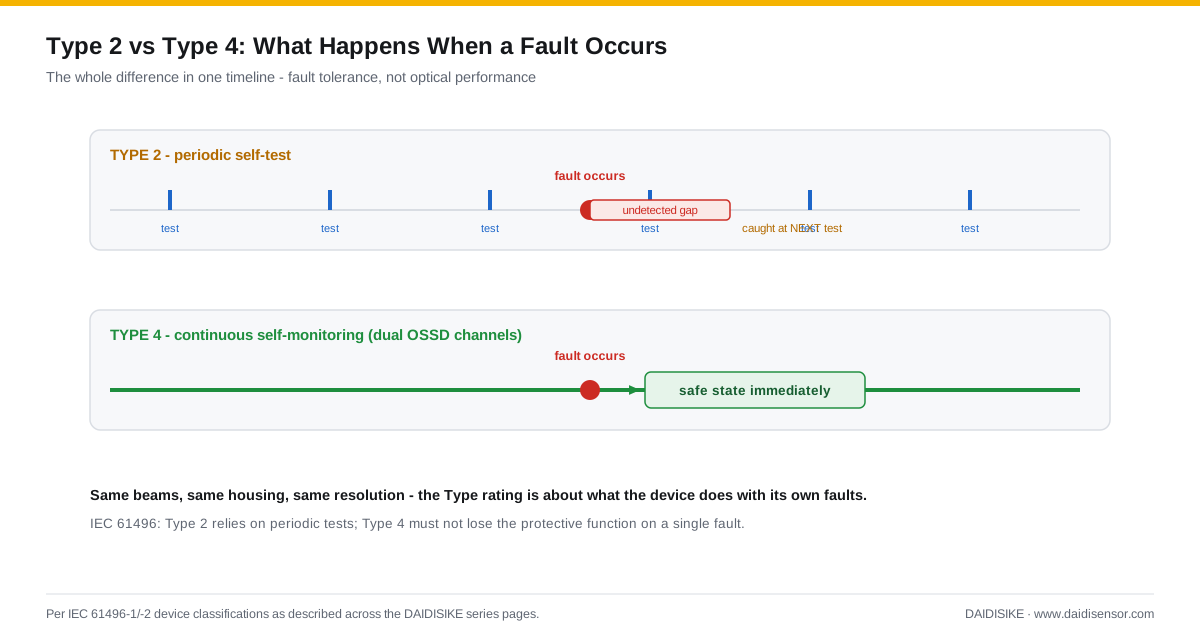
Where "Type" Comes From: IEC 61496 in Plain Terms
IEC 61496-1 provides general design and test requirements for electro-sensitive protective equipment; IEC 61496-2 adds requirements for active opto-electronic protective devices such as light curtains. Type is not a measurement-resolution or housing-quality grade.
Record the precise standard edition, device Type, configuration and test or certificate scope. A claim about a design basis, an EMC report and an ESPE type-examination document answer different questions and must not be presented as interchangeable.
The published scopes of IEC 61496-1:2020 and IEC 61496-2:2020 identify the general and optical-device requirements respectively.
The Real Difference: What Happens When a Fault Occurs
For a Type 4 claim, request the documented fault behaviour and safety-output arrangement, including how the receiving safety logic evaluates the outputs. Dual monitored OSSD channels are a common implementation, but a drawing showing two wires or a marketing phrase does not establish conformity.
For a Type 2 claim, request the required test method, timing, test input and response to a failed test. The integrator must assess those conditions against the safety function. Do not convert a conceptual timeline into a universal test interval or an immediate-response guarantee.
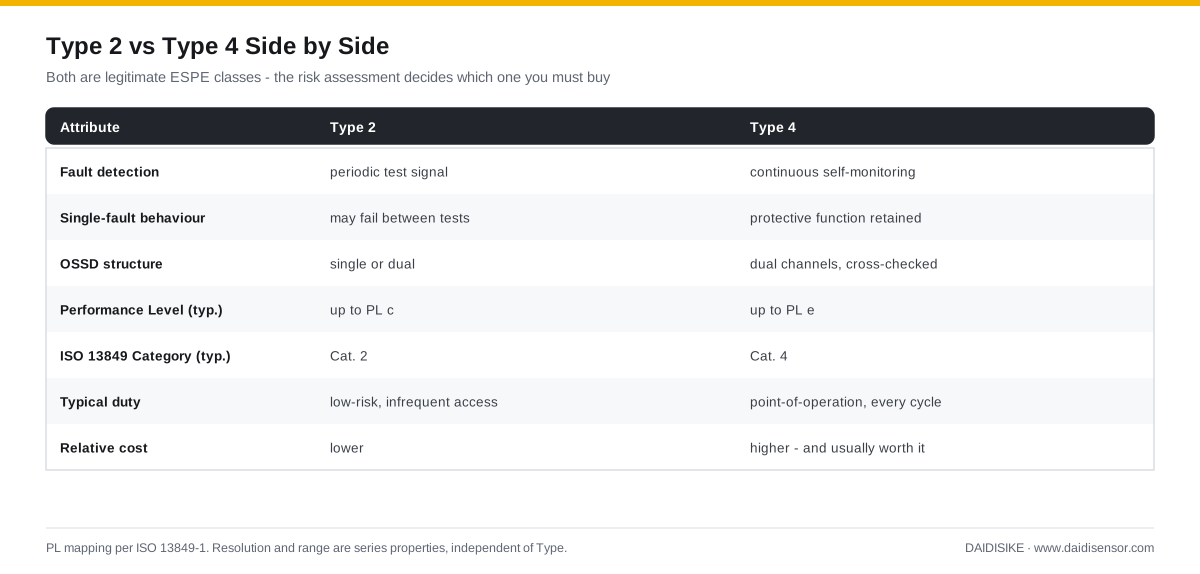
Type and Performance Level: Check Both, Not One Instead of the Other
Type 2 devices are commonly specified for applications up to PL c and Type 4 devices up to PL e, where the exact device documentation supports those claims. The machine's required Performance Level, PLr, is determined by the risk assessment and applicable machine requirements.
The achieved PL of the complete safety function also depends on the input, logic, final elements, diagnostics, reliability data and validation. Do not equate Type 4 with an automatically achieved Category 4/PL e installation, or accept a Type 2 product for a PL d/e requirement merely because its range or price is attractive.
Resolution Has Nothing to Do With Type
Detection capability and Type answer different questions. Detection capability is the rated test-object size under specified conditions; Type concerns safety-related device requirements. Neither can be inferred from the other.
Beam pitch is separate again: current DQT4 data gives 14/21/36 mm detection capability for 7.5/15/30 mm pitch, while current DQC data gives 18/22 mm objects for 10/14 mm pitch. These figures illustrate a terminology distinction, not approval of an output version or machine application.
Use the light-curtain selection guide for opening, span and detection decisions, then return to the exact evidence checklist here before releasing a purchase order.
When a Type 2 Light Curtain Is Enough
A Type 2 device can be considered only when the required safety performance, applicable machine standard and documented test arrangements permit it. An occasional-access opening or a slow machine does not by itself establish that result.
Keep the risk assessment, safety-requirements specification and exact device evidence in the machine file. If the required performance or test strategy remains unresolved, the purchase specification remains unresolved too; budget is not a substitute.
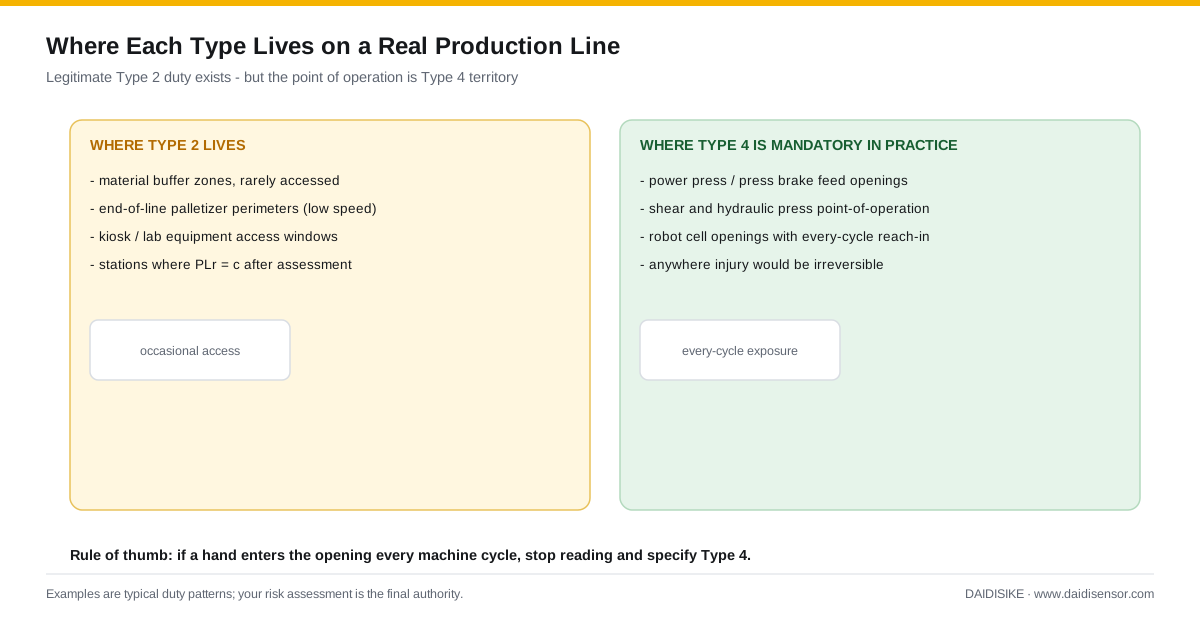
When the Requirement Excludes a Type 2 Device
If the safety function requires PL d or PL e, a Type 2/PL c device cannot satisfy that input-device requirement. A higher-capability device and appropriate complete architecture must be selected and validated; the machine-specific rules may add further requirements.
Presses, press brakes and shears require particular care with stopping performance, operating modes, tooling and access geometry. A fixed light curtain, ram-associated laser guard or other measure may be appropriate only within the applicable application and machine requirements.
The press and press-brake protection comparison separates available product arrangements. The press purchasing and verification article identifies the machine information needed before a system can be specified.
Why the Exact Output Version Matters More Than a Family Label
Do not assign one blanket Type 4/dual-OSSD statement to DCE, DQA, DQC, DQE, DQO, DQR, DQZ and DQSA. A family can have different electrical versions, and the current DQC material includes a single-output drawing. An NPN/PNP option is not evidence that a device supplies two safety OSSD channels.
Before ordering, obtain a row for the exact model: output count and function, Type/design basis, actual certificate scope, detection capability, maximum response time, controller input requirements and missing evidence. DQC's available EMC material must not be represented as an ESPE certificate. Economy or unpublished variants require the same evidence discipline.
Start from the current safety light curtain series list and compare only configurations supported by their own documents. Where a requirement cannot be evidenced, request clarification rather than filling the gap with another series' rating.
How to Verify a Claimed Type Rating
A product listing is the beginning of verification, not its conclusion. Ask for a quotation and evidence pack that can be reconciled line by line with the order code.
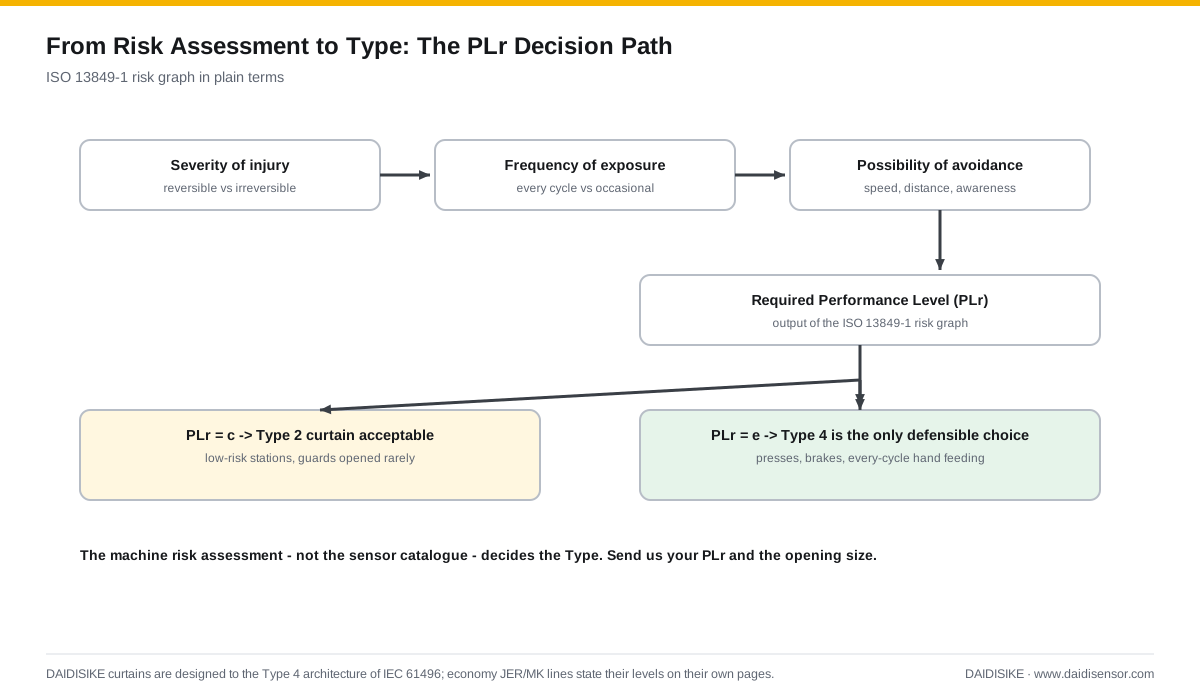
- Exact sensor, transmitter/receiver and controller identifiers, hardware/output version and document revision.
- Applicable IEC 61496 part and edition; distinguish design-basis wording from a model-specific certificate or test scope.
- Rated detection capability separately from beam pitch, and the maximum response time for the selected configuration.
- Safety data needed by the integrator, such as PFHd and mission time where applicable; mark unavailable items explicitly.
- Compatible safety-input arrangement, required reset/restart and final-element monitoring functions, and who implements each function.
- Accessories, cable/connector assignment and delivery documents matched to the same configuration; price alone is not proof for or against a rating.
DA31 and DQSRN must be assessed by their exact controller documentation. DQSRN supports manual and automatic reset per its selected-model instructions; EDM capability remains unconfirmed. Validate all required functions in the complete architecture. The safety-relay comparison is a starting point, not automatic compatibility approval.
For deeper electrical interpretation, the DAIDISIKE engineering reference on fsddsk.com covers OSSD terminology and integration. Qualified personnel must still follow the exact product and machine instructions.
Send your required performance, access layout, detection requirement, selected controller and destination market through the inquiry form. Request a configuration-specific document list before treating any model as approved.