
Photoelectric Sensors
Diffuse, through-beam, retro-reflective and background-suppression photoelectric sensors.
Choose a Photoelectric Sensor by Sensing Mode
A photoelectric sensor should first be selected by the optical path: through-beam, retro-reflective, diffuse-reflective, or background suppression. That choice decides whether the target must break a beam, return light to a receiver, or be separated from a background by distance. Housing, range and NPN/PNP output come after the sensing mode.
The sixteen series below range from M3–M18 threaded barrels and ultra-thin bodies to square relay-output sensors, strip-beam detectors and focused background-suppression models. The map identifies the correct family before you compare part numbers. If the sensing mode and series are already known, go to the sixteen product-series cards.
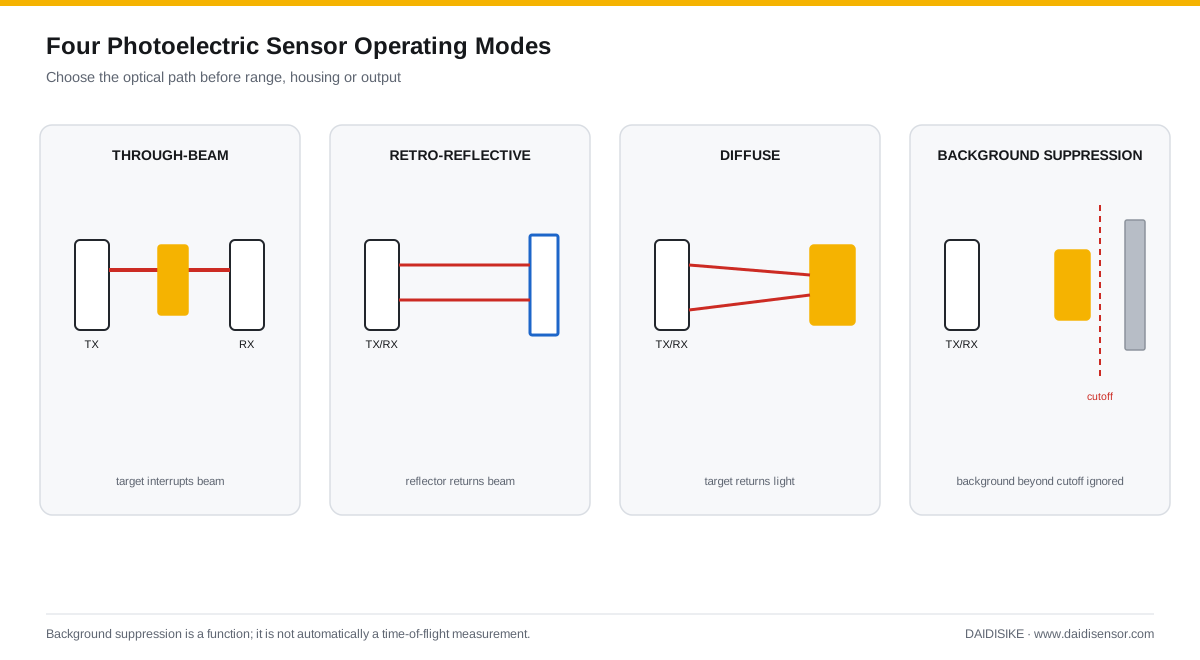
Round or Rectangular Photoelectric Sensor? Compare the Mode First
A round threaded barrel and a rectangular housing describe mounting, not the sensing principle. H-M is a round M12/M18 through-beam pair, while the E3JK square-body family has three different optical modes. First decide whether both sides can be mounted, whether a reflector is possible, and whether the background must be rejected; then compare the physical footprint and electrical version.
| Sensing need | Published family and housing | Output choices | Next configuration check |
|---|---|---|---|
| Through-beam, with access to both sides | H-M M12/M18 round barrels | N1/P1: NPN/PNP N.O.; N2/P2: complementary N.O.+N.C. | Emitter and receiver pair, 2/5/15 m range class, mounting holes and actual alignment |
| Diffuse, retro-reflective or through-beam in a square body | E3JK square photoelectric sensor | Relay or NPN/PNP transistor, selected by full code; through-beam transistor versions are N.O. only | Chosen optical mode, supply version, load/input rating, and reflector or emitter/receiver items |
| One-sided sensing with a nearby background | BGS-CX61 focused-beam BGS | NPN or PNP open collector; Light-ON/Dark-ON selection | Confirmed setting range, actual target/background sample and mounting drawing; BGS does not itself mean ToF |
| Through-beam in a narrow mounting space | DX-15/30/50/100 ultra-thin family | Choose only the output variant listed for the selected model | Real body and connector clearance, span and minimum target from that model's specification |
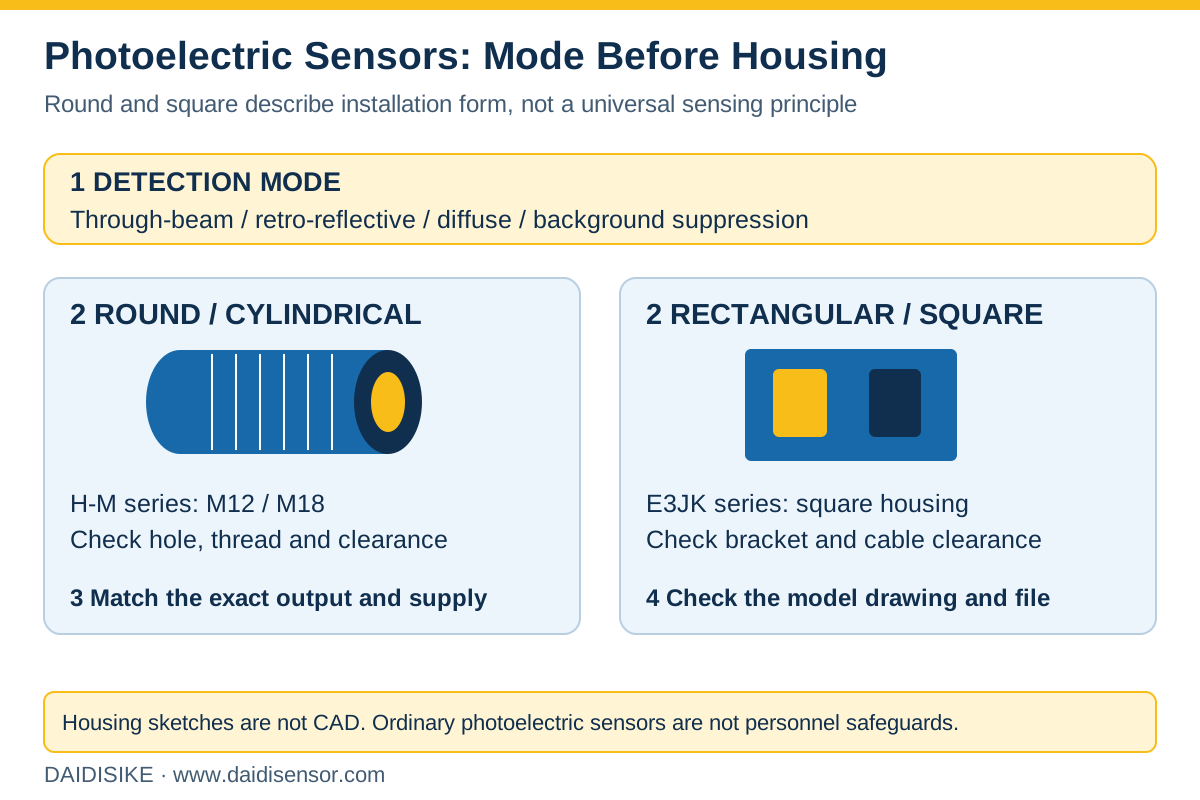
Use the linked model pages for the published specifications and model codes. If an exact drawing or PDF is not available there, request the document for your selected model before mechanical design or replacement; do not substitute a similar-looking housing. For PLC matching, check the NPN/PNP current-path guide against the input-module drawing.
Compare 16 Photoelectric Sensors Series
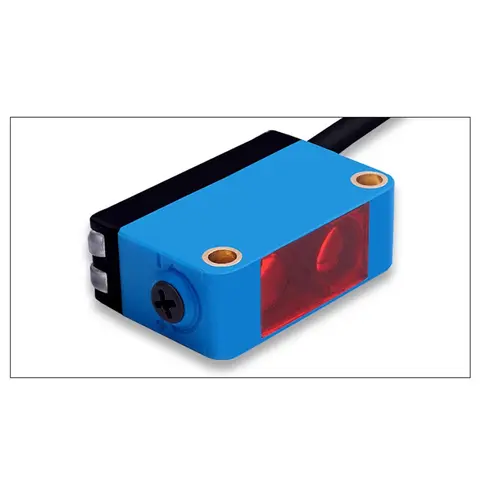
BGS-CX441 / BGS-CX442 Background Suppression Photoelectric Sensor
Wire-adjustable BGS sensor with 2 mm or 15 mm spot, 10-300 mm range, published black/white differential distance.
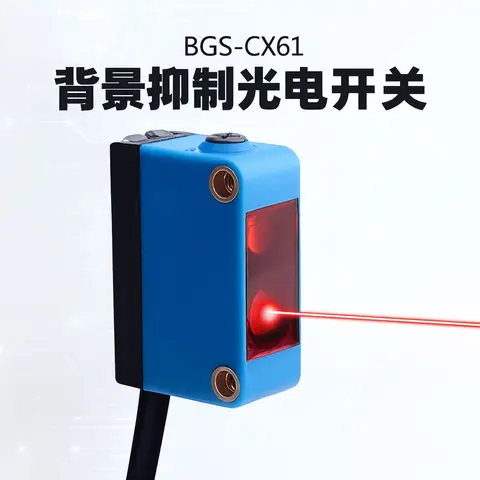
BGS-CX61 Focused-Beam Background Suppression Photoelectric Sensor
2 mm focused-spot BGS sensor that switches strictly by distance, ignoring shiny or close backgrounds.
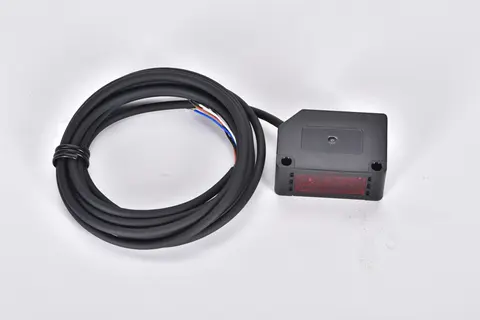
BX Series Long-range Background Suppression (BGS) Photoelectric Sensor
Background suppression photoelectric sensor detecting up to 4 m from one side, no reflector needed.
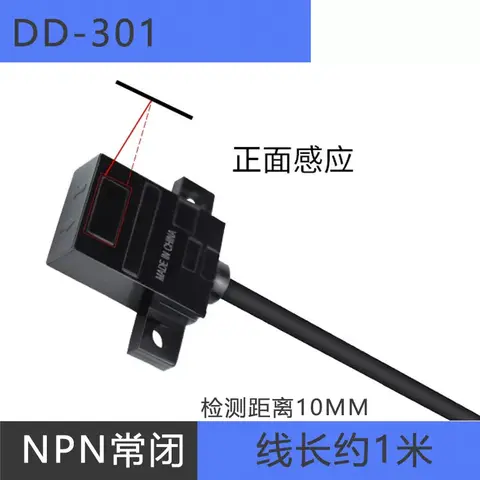
DD-301/401/302/402 Series Reflective Photoelectric Sensor (Wire-lead Type)
Wire-lead NPN reflective sensor, 5mm range, horizontal/vertical mount, Light-ON/Dark-ON logic options.
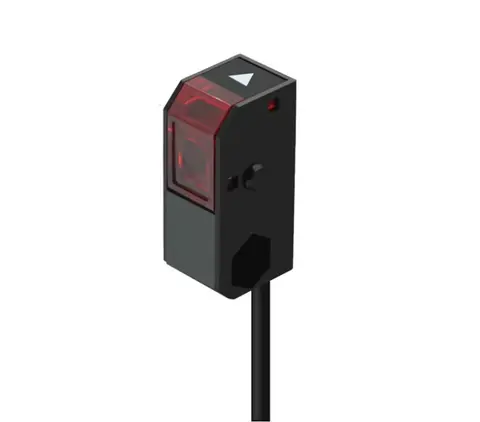
DD-T21 / DD-T31 / DD-D21 Compact Self-Contained Photoelectric Sensor
Compact self-contained NPN photoelectric sensor with built-in amplifier: wire to 12-24 VDC, get a 1 ms response.
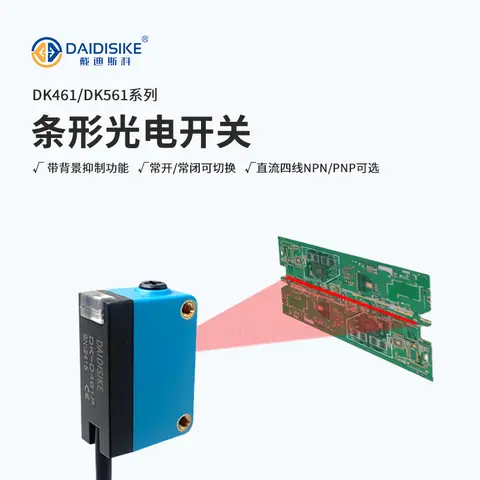
DK-D461 / DK-D561 Strip-beam (Line-beam) Photoelectric Sensor
A 4 mm x 100 mm strip beam catches small, swinging, or position-varying targets that point-spot sensors miss.
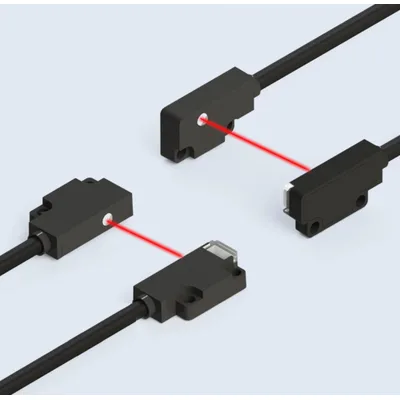
DX-15/30/50/100 Series Ultra-thin Through-beam Photoelectric Sensor
Ultra-thin through-beam pairs from 150mm to 1000mm: front or side sensing, 1mm object detection, NPN/PNP, IP67.
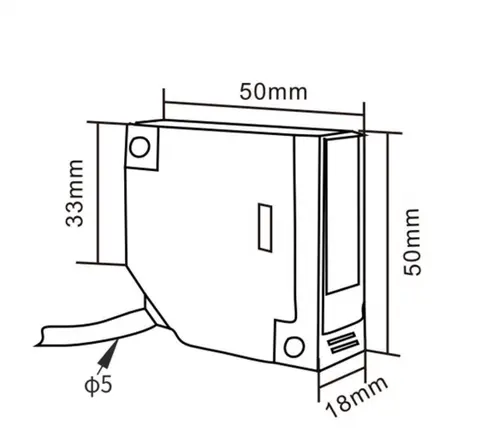
E3JK Square Photoelectric Sensor (Relay & Transistor Output)
Square photoelectric sensor with relay (3 A) or NPN/PNP transistor output — relay versions drive a load with no PLC or amplifier; transistor versions feed a PLC input directly.
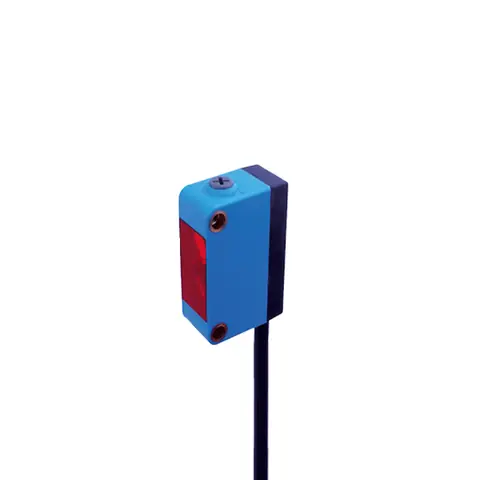
E3Z Compact Photoelectric Sensor
Compact 31×11×22mm DC photoelectric sensor with diffuse (30-300mm) or through-beam (5m) detection and NPN/PNP output.
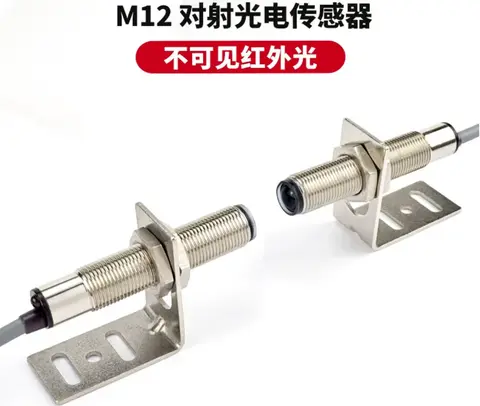
H-M Series M12/M18 Through-beam Photoelectric Sensor
M12/M18 through-beam sensor pairs for color-independent presence detection when the target sufficiently interrupts the beam, with 2 m to 15 m range options.
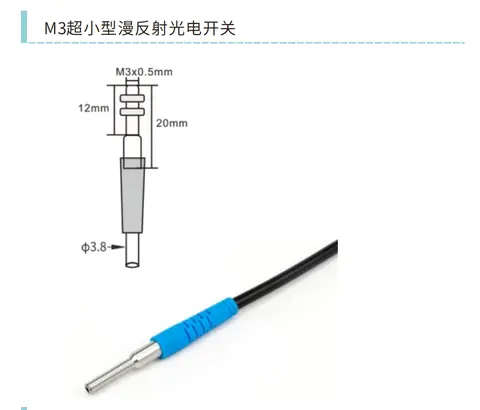
H-series Micro Diffuse Photoelectric Sensor (M3-M6)
Photoelectric-range detection (5-200mm) in an M3-M6 threaded barrel the size of a proximity switch.
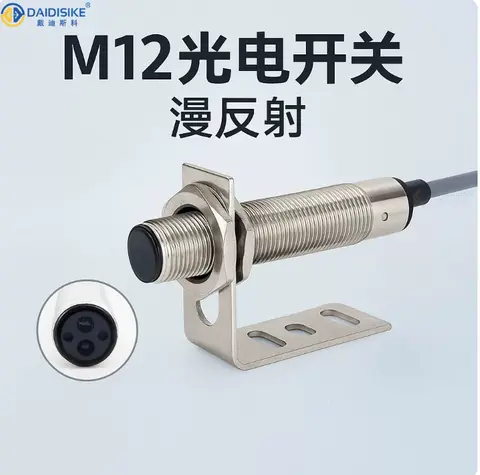
H08 / R12 Series Micro Diffuse-Reflective Photoelectric Sensor (M8/M12)
Standard M8/M12 threaded photoelectric sensors that drop into inductive-switch mounts, sensing up to 300 mm.
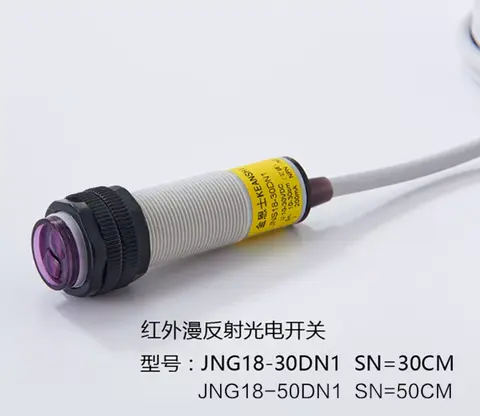
JNS18 & JNK18 Series M18 Diffuse Photoelectric Sensor
M18 diffuse photoelectric sensors from 100 mm to 3 m, one-sided mounting, no reflector needed.
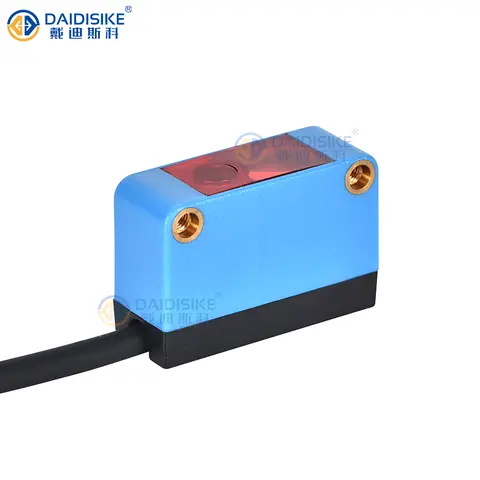
PZ-CM10 Vision-based One-touch Teach Photoelectric Sensor
Vision-based target recognition behind one SET button and a standard 3-wire discrete output.
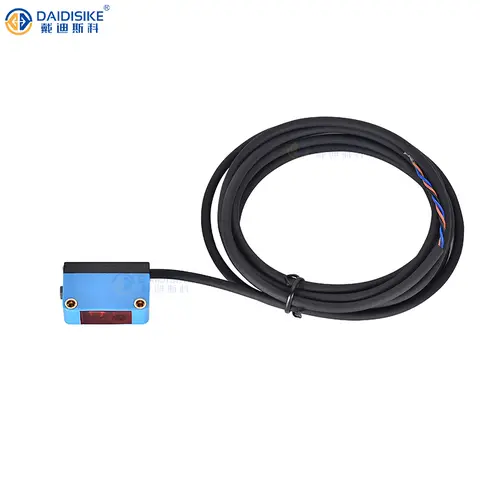
PZ-MK10 One-Touch Teach Laser Sensor
One-touch teach laser sensor with setting distances for light, dark, or no-background conditions.
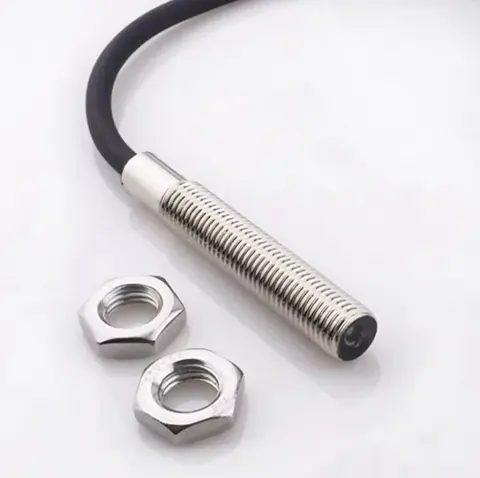
QF-35 M8 Diffuse-Reflective Photoelectric Sensor
M8 stainless-steel diffuse photoelectric sensor with a fixed 35 mm range, IP66 protection, and 3 ms response.
Through-Beam, Retro-Reflective, Diffuse or Background Suppression
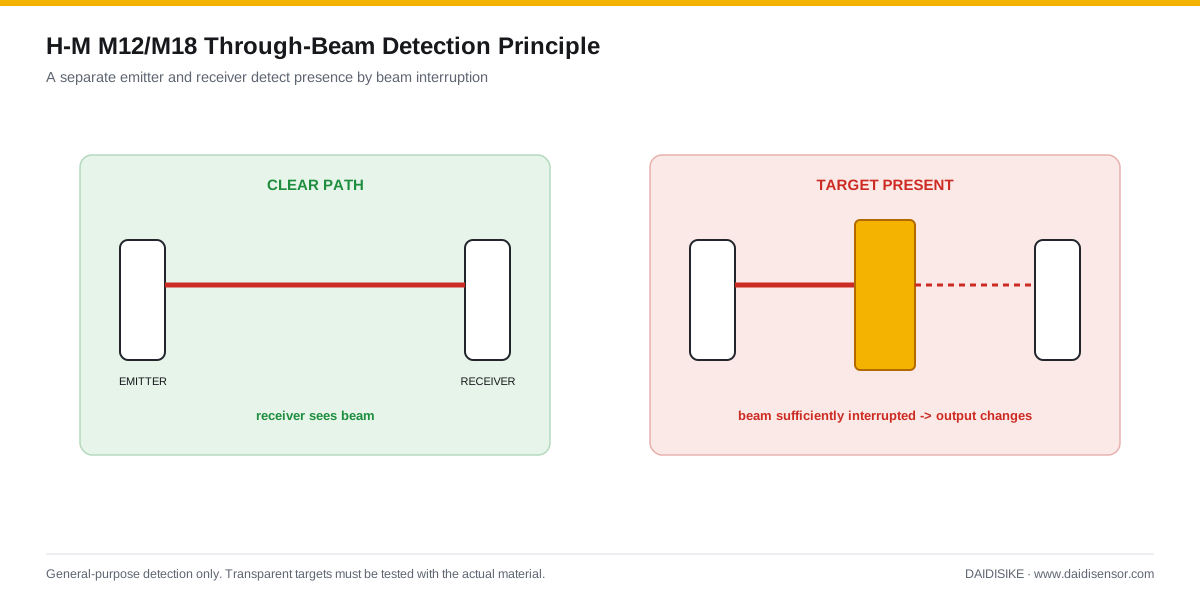
Through-beam uses a separate emitter and receiver. It is the strongest starting point for mixed target colours and long spans because detection occurs when the target interrupts the beam. Retro-reflective places the emitter and receiver on one side and a reflector on the other. Diffuse-reflective works from one side with no reflector, using light returned by the target. Background suppression also works from one side but is designed to separate the target from objects beyond a set distance.
Background suppression is a distance-selective optical method; it is not automatically time-of-flight. The BGS-CX and BX pages use only their published BGS descriptions and do not claim ToF.
| Mode | Hardware layout | Best starting point | Watch for |
|---|---|---|---|
| Through-beam | emitter and receiver opposite | long span and mixed surfaces | two-sided mounting and alignment |
| Retro-reflective | sensor one side, reflector opposite | one powered side with a clear reflector location | reflective targets may need application testing |
| Diffuse-reflective | single sensor, target returns light | simple one-sided presence detection | colour and surface can change usable range |
| Background suppression | single sensor, distance-selective optics | target in front of a nearby background | setting range and black/white differential |
M12 and M18 Through-Beam Photoelectric Sensors
The H-M through-beam family is the main M12/M18 opposed-mode range in this catalogue: M12 pairs at 2 m or 5 m, and M18 pairs at 5 m or 15 m, each offered in NPN or PNP and N.O. or complementary N.O.+N.C. output variants. It is the first series to compare for conveyor cross-belt detection, chute monitoring or a wide portal where target colour should not decide the result.
For an ultra-thin housing and shorter span, compare the DX-15/30/50/100 series. For a square housing with internal relay or transistor choices, compare E3JK.
Diffuse-Reflective and Background-Suppression Selection
Use compact diffuse models when one-sided mounting and straightforward presence detection matter: the H-series M3–M6, H08/R12 M8–M12, JNS18/JNK18 M18 and QF-35 M8 cover different footprints and ranges.
Use BGS where a nearby machine wall or conveyor structure must be ignored. Compare the BGS-CX61 focused-beam option, BGS-CX441/CX442 adjustable families and BX long-range BGS family using their own setting ranges and target conditions. BGS does not by itself establish a ToF measurement principle.
Photoelectric Sensor Output and Housing Checklist
After the optical mode is fixed, match NPN or PNP to the PLC input and choose N.O., N.C. or complementary logic by the control sequence. Use the NPN vs PNP guide for the current path. Then check the real installation limits: supply voltage, response time, IP rating, minimum target, available mounting faces and cable replacement method.
These are general-purpose detection sensors. They are not personnel-protection devices. For machine access safety, use the safety light curtain range or safety door switches selected from the machine risk assessment.
Send the target material, target size, sensing gap, background distance and PLC input type via the inquiry form for a mode-first recommendation.
Prepare a Target-and-Background Sample Check
For a comparable photoelectric-sensor quote, provide a photo or sample of the darkest, glossiest or partially transparent target, the smallest feature, working distance and background position. Ask for the proposed model and test conditions to be recorded together; a catalogue range measured on one reference target does not prove performance on every surface.
| Purchase question | Where to compare |
|---|---|
| Can both sides be mounted and cabled? | H-M emitter/receiver pairs |
| Must the sensor ignore a nearby background? | BGS-CX61 configuration |
| Does the panel accept the selected switching output? | NPN/PNP current-path guide |
Frequently Asked Questions
Which photoelectric sensor is best for dark or shiny objects?
A through-beam pair is the strongest starting point because the target is detected by interrupting the beam rather than by returning a certain amount of reflected light. Application testing is still required for partially transparent targets.
What is a through-beam photoelectric sensor?
It is an opposed emitter and receiver pair. The receiver output changes when an object blocks the optical path between the two housings.
What is the difference between diffuse reflective and background suppression?
Both work from one side. A standard diffuse sensor switches from target-reflected light; a BGS sensor is designed to distinguish a target from a background beyond a set distance.
Are background-suppression photoelectric sensors the same as ToF sensors?
No. Background suppression describes the application result, not one universal ranging technology. A product should only be called time-of-flight when its first-party specification explicitly states that principle.
Which H-M model gives a 15 m through-beam range?
The M18 H1815M range class is published at 15 m ±10%. Choose its NPN/PNP and output-logic suffix from the product model table.
Can a general photoelectric sensor replace a safety light curtain?
No. The products on this category page are for automation detection, not safety-rated personnel protection.
Selection Help & Related
📘 Not sure which series? NPN vs PNP Sensor Outputs Explained