
PZ-CM10 Vision-based One-touch Teach Photoelectric Sensor
Vision-based target recognition behind one SET button and a standard 3-wire discrete output.
 🔍 Click to enlarge · 1/14
Technical Specifications
| Output type | 3-wire (brown +, blue -, black signal output); NPN or PNP selectable to order |
|---|---|
| Detection method | Vision-based, AI self-learning + SET-button one-touch teach |
| Response time | ≤0.5 ms |
| Operating voltage | DC12-24V ±10% |
| Protection rating | IP65 / IP66 |
Overview
PZ-CM10 is a vision-based photoelectric sensor: internally it senses and evaluates the target using imaging and self-learning technology, but externally it behaves exactly like a conventional 3-wire photoelectric switch, wired brown (+), blue (-), black (signal output), with NPN or PNP output available to order. Setup is a single SET-button teach: point the sensor at the target and press once. It is built for engineers and integrators who need to reliably detect targets that trip up ordinary diffuse or background-suppression photoelectric sensors, without building, programming, or maintaining a full machine-vision system.
The sensor performs its target judgment via imaging and self-learning internally, yet the user interface is a single SET button and the output is a standard discrete signal, so commissioning needs no software, no programming, and no vision engineer. Rated response time is 0.5 ms or less, keeping pace with standard high-speed photoelectric switches, and the sensor runs on a DC12-24V ±10% supply with an IP65/IP66 ingress protection rating for general industrial environments with dust and splash exposure.
Features & Benefits
Vision-grade discrimination, photoelectric-switch simplicity
The sensor performs its target judgment via imaging and self-learning internally, yet the user interface is a single SET button and the output is a standard discrete signal - no software, no programming, no vision engineer required to commission it.
One-touch teach for fast changeover
A single press of the SET button while aiming at the target completes setup, letting production lines re-teach the sensor in seconds when the product or pattern changes.
Response time ≤0.5 ms
Vision-based judgment does not come at the cost of speed; the rated response time keeps pace with standard high-speed photoelectric switches.
Standard 3-wire hookup, NPN or PNP to order
Brown/blue/black wiring matches conventional photoelectric switches, so the PZ-CM10 wires in as a drop-in upgrade with no rewiring changes on the panel side.
Ingress protection for general industrial environments
Rated IP65/IP66, suitable for standard factory-floor conditions with dust and splash exposure.
DC12-24V ±10% power input
Compatible with common industrial 12-24 V DC supply rails without a dedicated power adapter.
Applications
Models & Ordering Information
PZ-CM10 series
How to Select
- Specify NPN or PNP output at the time of order to match your PLC input card - a sinking (Sink) PLC input typically pairs with NPN, a sourcing (Source) input typically pairs with PNP; confirm against your PLC's input specification.
- Wiring is standard 3-wire (brown +, blue -, black signal output), matching common 3-wire photoelectric switch electrical interfaces, suitable for direct replacement at existing points using the same wiring convention.
- Choose PZ-CM10 when the target has complex color, pattern, or reflectivity characteristics that a conventional diffuse or background-suppression sensor tends to misread; if the target can be distinguished reliably by distance alone, a standard background-suppression sensor may be evaluated as a lower-cost option.
- Confirm on-site supply is within DC12-24V ±10%; the sensor does not require a dedicated power adapter.
- IP65/IP66 protection suits general industrial environments with dust or splash exposure; for more demanding protection needs such as continuous immersion or strong corrosion, confirm with the factory whether a suitable variant is available.
- Detection-range figures are not yet published pending factory confirmation; do not use detection distance as a selection criterion until confirmed - contact us for the latest confirmed figure for your application.
📘 Need the full method? NPN vs PNP Sensor Outputs Explained
When NOT to specify the PZ-CM10 — and what to use instead
Line design requires a published, guaranteed detection-distance figure up front
Why not: The selection guide states that detection-range figures on file are not yet confirmed by the factory and should not be used as a selection criterion until verified.
Use instead: a diffuse or background-suppression model with a published, confirmed sensing distance, such as the M18 diffuse series
The target can already be distinguished reliably by distance or background alone, without complex color/pattern variation
Why not: The FAQ notes that if a target can be discriminated by distance alone, a standard background-suppression sensor may be a lower-cost option than vision-based judgment.
Use instead: a standard background-suppression diffuse sensor
Personnel guarding or a safety interlock
Why not: Nothing in the specification qualifies this sensor as a safety component.
Use instead: a safety-rated light curtain or safety interlock
Specifications we do not publish yet
We only publish a figure once we are confident it is true. The items below are still being validated through further testing and real-world customer feedback, so for now we would rather leave them open than guess. If one of them matters to your design, ask us for the latest validated status.
- Detection/sensing distance figures are on file but not yet confirmed by the factory
- Minimum detectable object size
- Housing material
- Hysteresis
- Operating and storage temperature range
- MTBF or expected service life
- Cable/connector type
- Certification documentation beyond 'available on request'
Frequently Asked Questions
What does "vision-based" mean for a photoelectric switch like the PZ-CM10?
Do I need special software or a PC to set up the PZ-CM10?
What output options are available?
What is the rated response time?
What ingress protection rating does the PZ-CM10 carry?
What is the supply voltage range?
Can the PZ-CM10 replace an existing conventional 3-wire photoelectric switch?
What is the difference between PZ-CM10 and PZ-MK10?
Is the detection range published?
Can I get certification documents for the PZ-CM10?
Related Categories and Example Products
Explore other functions that may be needed in a machine or line. The products below are category examples, not pre-validated electrical or safety combinations. Confirm each interface and application separately: Proximity Sensors · Laser Switch Sensors · Relay & Timer Modules
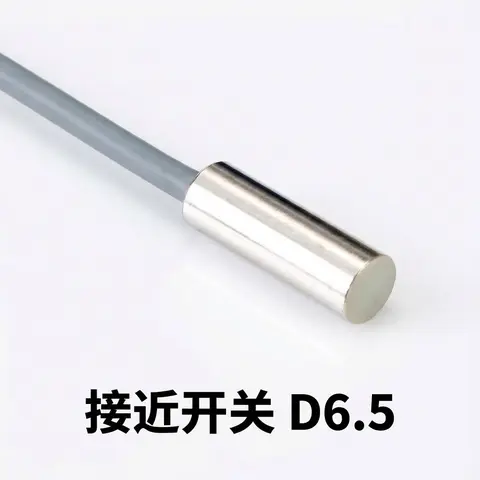
D6.5 Series Inductive Proximity Sensors (Ultra-Short 18mm / Y-Type / 35mm / 45mm)
6.5mm-diameter inductive proximity sensors for tight-clearance mounting where M8 sensors won't fit.
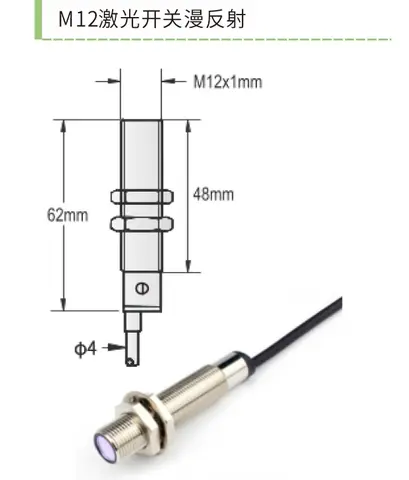
DDSK Laser Diffuse Reflective Sensor M12 / DK Laser Diffuse Reflective Sensor M18
M12/M18 threaded laser diffuse reflective sensor with a visible 650nm red laser for fast alignment.
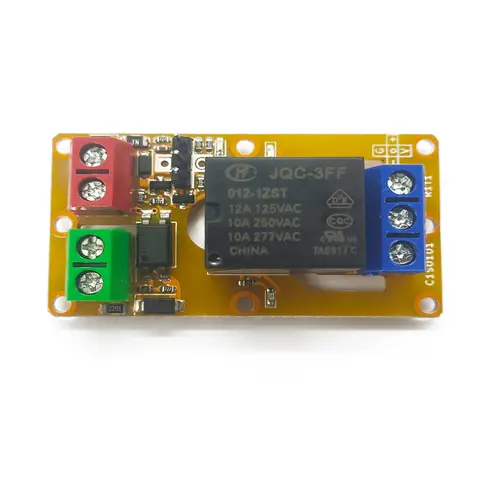
A1J0101 Economical Input Amplifier Module
Optocoupler-isolated input amplifier that turns a low-voltage signal into a 250V AC / 10A relay output.
Related Products in Photoelectric Sensors
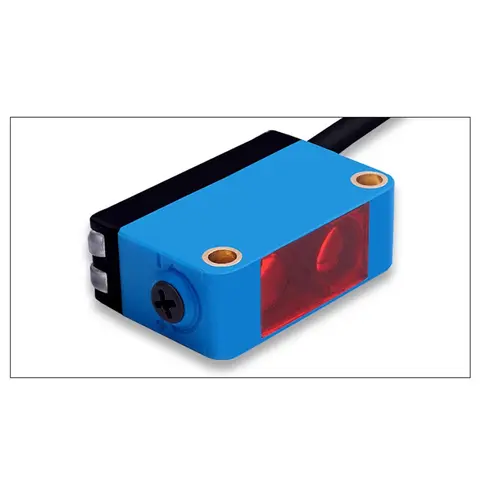
BGS-CX441 / BGS-CX442 Background Suppression Photoelectric Sensor
Wire-adjustable BGS sensor with 2 mm or 15 mm spot, 10-300 mm range, published black/white differential distance.
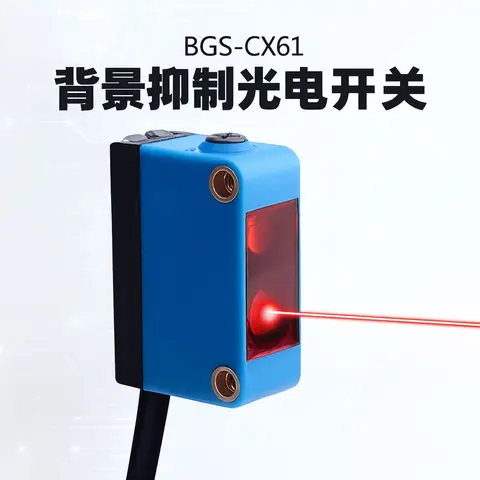
BGS-CX61 Focused-Beam Background Suppression Photoelectric Sensor
2 mm focused-spot BGS sensor that switches strictly by distance, ignoring shiny or close backgrounds.
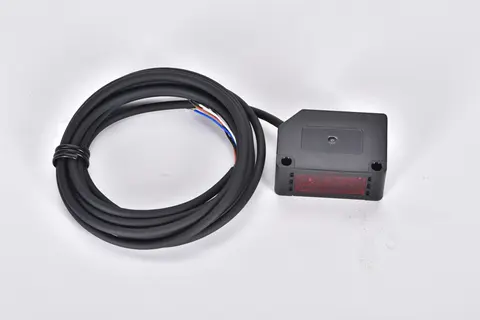
BX Series Long-range Background Suppression (BGS) Photoelectric Sensor
Background suppression photoelectric sensor detecting up to 4 m from one side, no reflector needed.
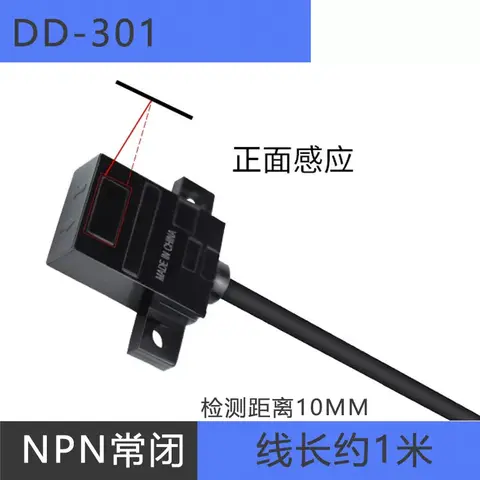
DD-301/401/302/402 Series Reflective Photoelectric Sensor (Wire-lead Type)
Wire-lead NPN reflective sensor, 5mm range, horizontal/vertical mount, Light-ON/Dark-ON logic options.