
BGS-CX61 Focused-Beam Background Suppression Photoelectric Sensor
2 mm focused-spot BGS sensor that switches strictly by distance, ignoring shiny or close backgrounds.
 🔍 Click to enlarge · 1/19
Technical Specifications
| Detection method | Diffuse-reflective, background suppression (BGS) |
|---|---|
| Output type | BGS-CX61N: NPN open-collector; BGS-CX61P: PNP open-collector |
| Logic selection | White wire unconnected = Light-ON; white wire connected to blue wire = Dark-ON |
| Spot size | 2 mm |
| Supply voltage | DC 12-24V ±10% |
| Current consumption | Under 30 mA |
| Response time | Under 0.5 ms |
| Load voltage | DC 26.4V max |
| Load current | 100 mA max |
| Leakage current | 10 μA max |
| Protection rating | IP67 (IEC 60529) |
| Operating temperature | -25°C to +55°C |
| Storage temperature | -40°C to +70°C (non-condensing) |
| Operating humidity | 35-85%RH |
| Storage humidity | 35-95%RH |
| Housing material | PBT (polybutylene terephthalate); resin lens/display cover |
| Sensitivity adjustment | Potentiometer, up to 5 full turns |
| Cable | 4-wire lead-out, 2 m length |
Overview
BGS-CX61 is a diffuse-reflective, background-suppression (BGS) photoelectric sensor available in NPN (BGS-CX61N) or PNP (BGS-CX61P) open-collector output. It is built for machine builders and line integrators who need a small-footprint sensor that detects a target at a set distance while disregarding whatever sits behind it — conveyor rollers, machine frames, reflective panels, or a mix of dark and light parts on the same line.
Detection is cut off strictly by distance rather than by reflected light intensity alone, so once the sensing distance is set, bright conveyor surfaces, metal frames, or rollers positioned beyond that range are ignored by design. The projected spot is only 2 mm, response time is under 0.5 ms, and the sealed housing is rated IP67 (IEC 60529), suiting small-part detection on fast-moving or washdown-exposed production lines.
Features & Benefits
True Background Suppression (BGS)
A standard diffuse sensor can be tricked into false triggering by a shiny or light-colored background. BGS-CX61 defines the detection zone by distance, so anything beyond the set range — bright conveyor surfaces, metal frames, rollers — is ignored by design.
Consistent Switching Distance on Dark and Light Targets
The sensor's switching distance stays consistent regardless of target color, so a line handling both black and white (or dark and light) products does not need re-teaching or sensitivity re-adjustment when the product color changes.
Focused 2 mm Spot for Small or Tightly Spaced Targets
The projected spot is only 2 mm, which lets the sensor pinpoint small parts, narrow gaps, or closely spaced positions without the beam spilling onto adjacent objects.
Sub-Millisecond Response for Fast-Moving Lines
Response time is under 0.5 ms, suitable for high-speed part counting, sorting, or presence checks on fast conveyors.
IP67-Rated Sealed Housing
The housing meets IP67 (IEC 60529) protection, tolerating dust and temporary immersion, which suits food, beverage, or oily/wet industrial environments.
Wire-Selectable Light-ON / Dark-ON Logic
A white control wire selects the output logic on site: leave it unconnected for Light-ON, or connect it to the blue wire for Dark-ON, without needing a different part number.
PBT Housing with On-Site Sensitivity Adjustment
The housing is molded from PBT (polybutylene terephthalate) with a resin lens/display cover, and sensitivity is fine-tuned with a built-in potentiometer (up to 5 full turns) for on-site setup.
Applications
Models & Ordering Information
Output Type Variants
How to Select
- Choose BGS-CX61N for NPN open-collector output to match a PLC/controller NPN input.
- Choose BGS-CX61P for PNP open-collector output to match a PNP input.
- Both models share the same load ratings: load voltage DC 26.4V max, load current 100 mA max, leakage current 10 μA max.
- Logic mode is field-selectable without changing part numbers: leave the white wire unconnected for Light-ON, or connect it to the blue wire for Dark-ON.
- For wet, dusty, or oily environments, the IP67 housing rating applies; operating temperature is -25°C to +55°C and storage temperature is -40°C to +70°C (non-condensing).
- The sensor is a 4-wire lead-out type with a 2 m cable; sensitivity can be fine-tuned on site with the built-in potentiometer (up to 5 full turns).
- Confirm the applicable sensing-distance range directly with us before finalizing a quotation, as this figure varies by installation and must be verified for your specific setup.
📘 Need the full method? NPN vs PNP Sensor Outputs Explained
When NOT to specify the BGS-CX61 — and what to use instead
Finalizing a quotation or system design that requires a confirmed sensing-distance figure
Why not: The applicable sensing-distance range for BGS-CX61 is explicitly not published in current data and must be confirmed directly with us before finalizing.
Use instead: the BGS-CX441/CX442 or BX series, which both publish explicit adjustable sensing-distance figures
Detection distance needs to reach into the meter range rather than a close focused spot
Why not: BGS-CX61 is built around a focused 2 mm spot for small/tight-target detection at close range, not multi-meter reach.
Use instead: the BX-H4000 long-range background-suppression sensor (adjustable 50-4000 mm, single-sided, no reflector)
The load must be switched directly (contactor, solenoid valve, alarm lamp) without a PLC or controller in between
Why not: BGS-CX61 is open-collector NPN/PNP output only - it has no built-in relay contact.
Use instead: the E3JK square photoelectric sensor's relay-output versions (3 A rated)
Ambient temperature will exceed +55 degC or drop below -25 degC in operation
Why not: Published operating temperature range is -25 degC to +55 degC.
Use instead: confirm an alternative rated for the actual ambient range before specifying
Specifications we do not publish yet
We only publish a figure once we are confident it is true. The items below are still being validated through further testing and real-world customer feedback, so for now we would rather leave them open than guess. If one of them matters to your design, ask us for the latest validated status.
- Sensing-distance range — still being validated; ask us for the confirmed figure
- Minimum detectable object size
- Hysteresis
- MTBF
- Light source type/wavelength (visible or infrared, nm)
- Cable connector type (flying leads vs. connector)
- Certification status (documents said to be available on request but not specified)
Frequently Asked Questions
What does "background suppression" (BGS) mean on the BGS-CX61?
What is the spot size of the BGS-CX61?
What output types are available?
Can I switch between Light-ON and Dark-ON without buying a different sensor?
What is the response time?
What is the protection rating, and is it suitable for washdown or wet environments?
What is the operating voltage and current consumption?
What is the sensor housing made of?
How is sensitivity adjusted on site?
Can you provide certification documents for the BGS-CX61?
Related Categories and Example Products
Explore other functions that may be needed in a machine or line. The products below are category examples, not pre-validated electrical or safety combinations. Confirm each interface and application separately: Proximity Sensors · Laser Switch Sensors · Relay & Timer Modules
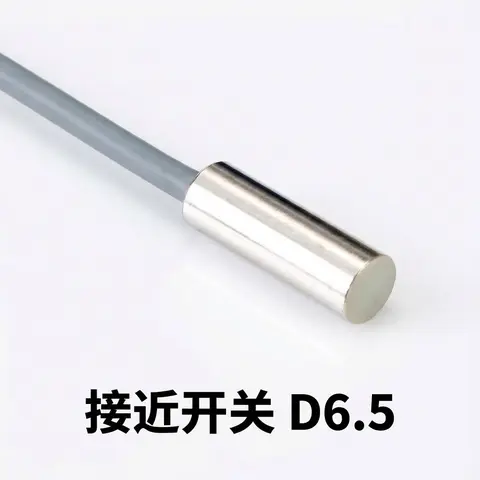
D6.5 Series Inductive Proximity Sensors (Ultra-Short 18mm / Y-Type / 35mm / 45mm)
6.5mm-diameter inductive proximity sensors for tight-clearance mounting where M8 sensors won't fit.
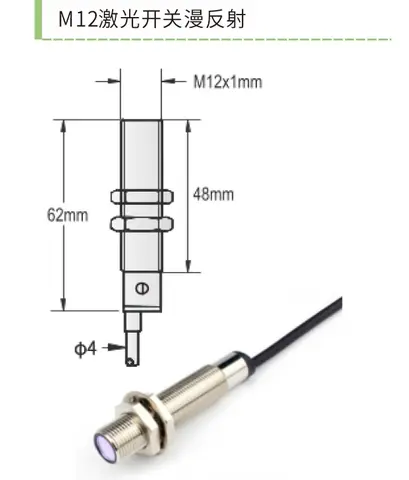
DDSK Laser Diffuse Reflective Sensor M12 / DK Laser Diffuse Reflective Sensor M18
M12/M18 threaded laser diffuse reflective sensor with a visible 650nm red laser for fast alignment.
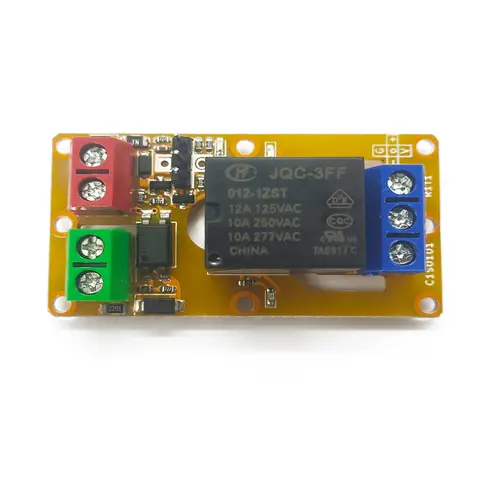
A1J0101 Economical Input Amplifier Module
Optocoupler-isolated input amplifier that turns a low-voltage signal into a 250V AC / 10A relay output.
Related Products in Photoelectric Sensors
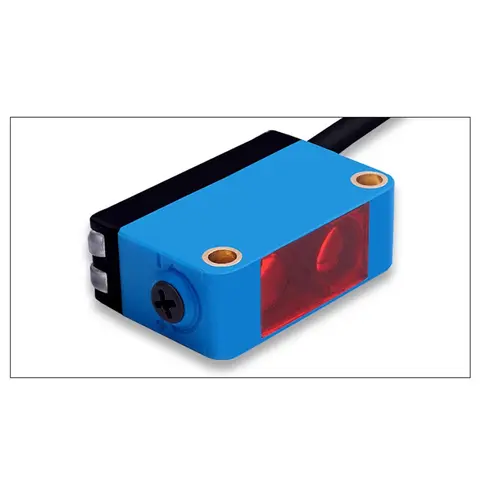
BGS-CX441 / BGS-CX442 Background Suppression Photoelectric Sensor
Wire-adjustable BGS sensor with 2 mm or 15 mm spot, 10-300 mm range, published black/white differential distance.
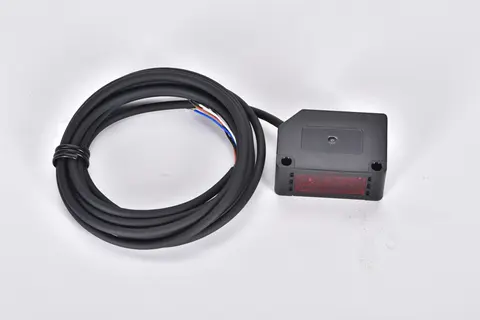
BX Series Long-range Background Suppression (BGS) Photoelectric Sensor
Background suppression photoelectric sensor detecting up to 4 m from one side, no reflector needed.
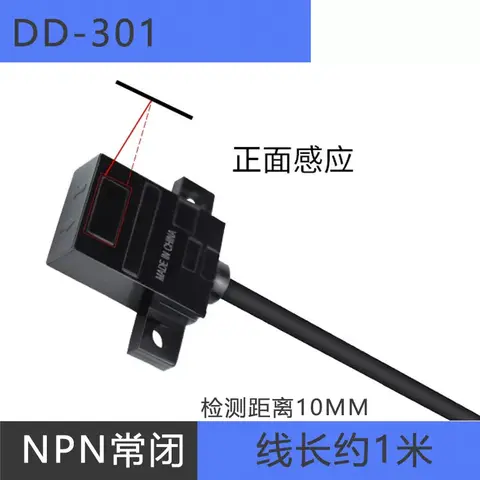
DD-301/401/302/402 Series Reflective Photoelectric Sensor (Wire-lead Type)
Wire-lead NPN reflective sensor, 5mm range, horizontal/vertical mount, Light-ON/Dark-ON logic options.
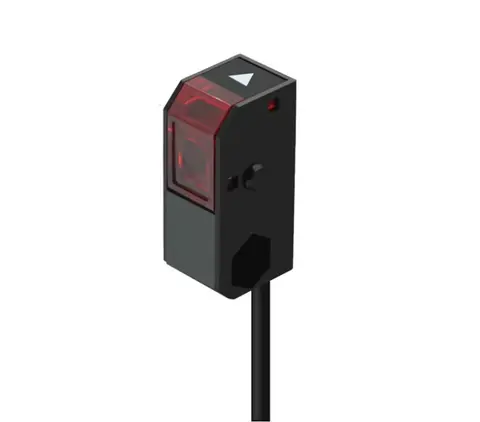
DD-T21 / DD-T31 / DD-D21 Compact Self-Contained Photoelectric Sensor
Compact self-contained NPN photoelectric sensor with built-in amplifier: wire to 12-24 VDC, get a 1 ms response.