
Measuring Light Curtains
Analog / RS485 / switching measuring light curtains for dimensioning, counting and vehicle separation.
Compare 3 Measuring Light Curtains Series
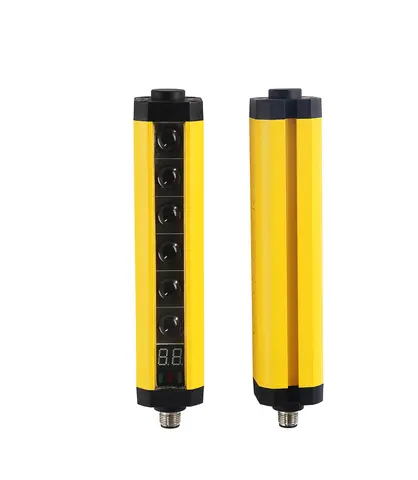
DQL Measuring Light Curtain (Analog/RS485)
Measuring light curtain with dual analog (voltage / 4-20mA current) and RS-485/RS-232 Modbus RTU serial output, 1.25-80mm beam spacing.
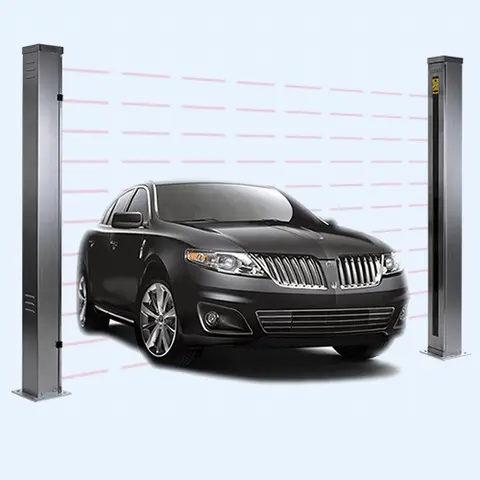
DQLV Vehicle Separation Light Curtain
Vehicle-separation through-beam curtain that deliberately ignores anything under 150 mm -- birds, insects, glare -- while resolving to 1 mm, with a controller-free NPN/PNP/relay/RS-485 output built for toll, parking and gate lanes.
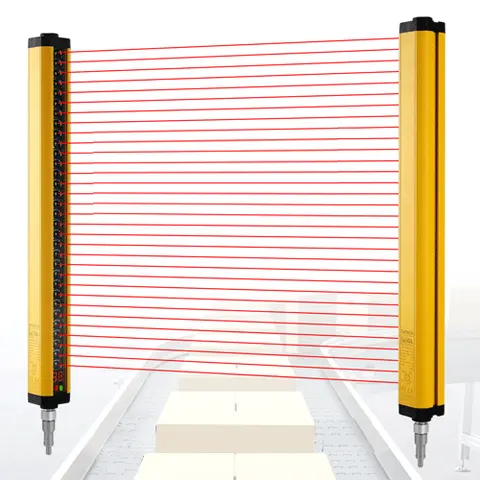
DQM Measuring Light Curtain (Switching Output)
Object detection and counting light curtain: NPN or PNP switching output, 0.5 ms response time, no RS485 or RS232 interface.
Measuring, Not Guarding — What These Light Curtains Are For
A measuring light curtain looks exactly like its safety cousin — two aluminium profiles, a fence of infrared beams between them — but it answers a completely different question. A safety curtain asks *"is something in the opening?"* and stops a machine. A measuring curtain asks *"how tall, how wide, where, and how many?"* and reports the answer to your PLC as data. The DQL, DQM and DQLV series on this page carry no IEC 61496 Type rating and no ISO 13849 category, deliberately: they are measurement and detection instruments, and we say so plainly rather than dressing them in safety language.
That makes this the right page if you searched for a non safety light curtain, a light grid sensor, or an infrared curtain for dimensioning, profiling, counting, hole detection or vehicle separation. If your application must protect people — stopping a press when a hand enters — leave this page now and specify from the safety light curtain category instead; no measuring product belongs in a personnel-protection circuit.
DQL vs DQM vs DQLV: Choose by Output, Not by Looks
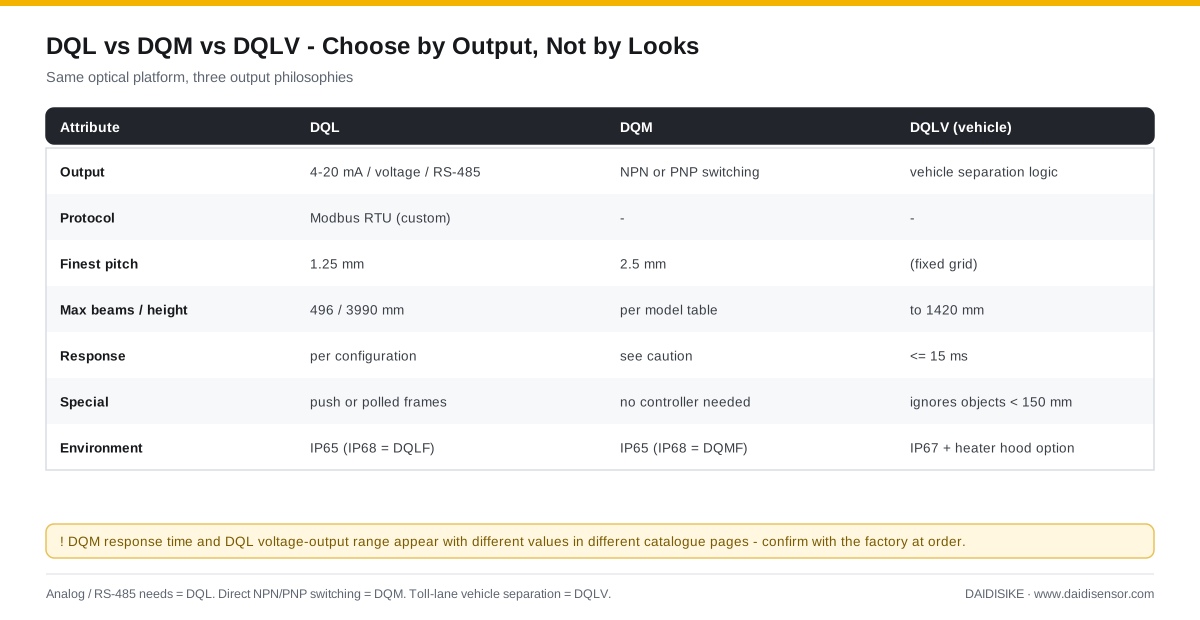
Choose the measurement or detection result and controller interface before the housing. DQL provides analog or serial-data configurations; DQM provides NPN or PNP switching outputs for detection and counting, with a confirmed 0.5 ms response and no RS485 or RS232. DQLV is the vehicle-separation family. These are not interchangeable safety devices.
| Attribute | DQL | DQM | DQLV (vehicle) |
|---|---|---|---|
| Output | 4–20 mA current, voltage output, or RS-485/232 | NPN or PNP switching, direct | vehicle-separation logic outputs |
| Protocol | Modbus RTU (customised frames) | — | — |
| Finest beam pitch | 1.25 mm | 2.5 mm | Verify optical pitch and reported measurement specification separately |
| Max beams / height | 496 beams / 3990 mm | per model table | up to 1420 mm |
| Response | per configuration | 0.5 ms (confirmed for all DQM specifications) | ≤ 15 ms |
| Special ability | push frames every 100 ms or polled multi-drop | no controller needed at all | Vehicle-separation logic; validate actual vehicles and lane conditions |
| Environment | IP65 (IP68 as DQLF) | IP65 (IP68 as DQMF) | IP67 + optional heater hood |
Tell us what you are measuring — object size, line speed, and what your PLC accepts (4–20 mA, RS-485 or a dry contact) — via the inquiry form, and the reply is a full model code like DQL08/10-70.
Select Beam Pitch, Field Height and Measurement Requirements
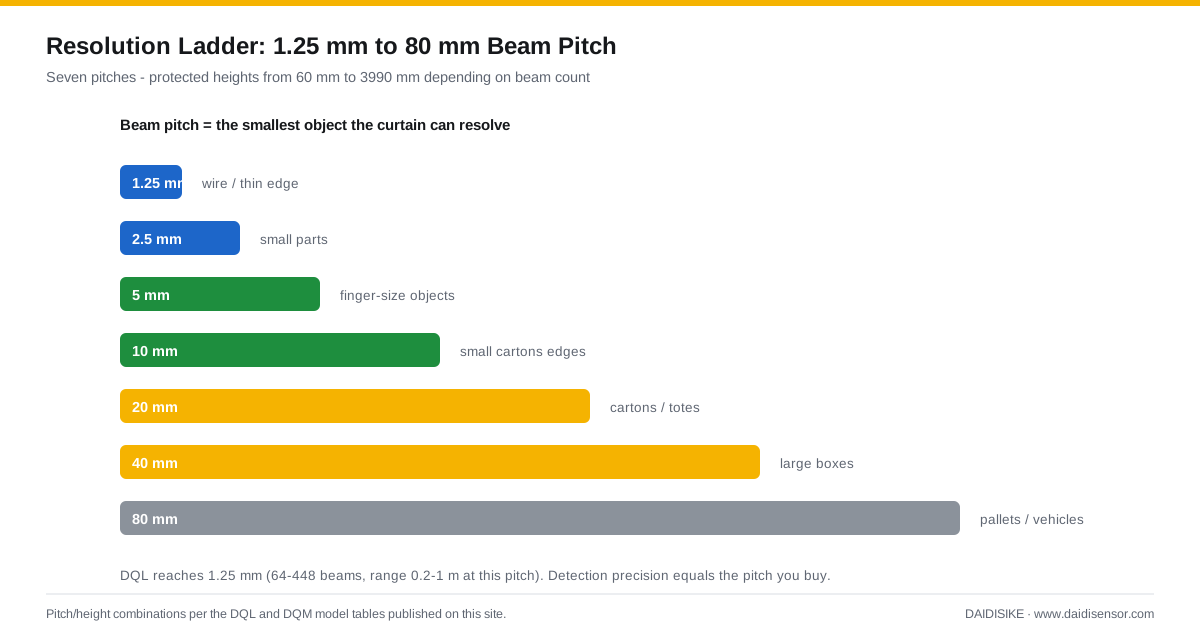
Beam pitch determines optical sampling positions; it is not automatically the smallest detectable object, measurement accuracy or repeatability. Target shape, optical beam size, scanning logic and installation affect the result. DQL lists pitch options down to 1.25 mm and DQM down to 2.5 mm; use the model-specific range and test the real target rather than treating either number as a universal detection guarantee.
Order from the published beam-count and height table, then ask for a sample test at the intended speed, target orientation and working span. For dimensioning, define the required measurement error and update time separately. For counting, define the minimum target and gap so that a switching result is not mistaken for a full profile measurement.
Analog 4–20 mA and Modbus RTU Integration
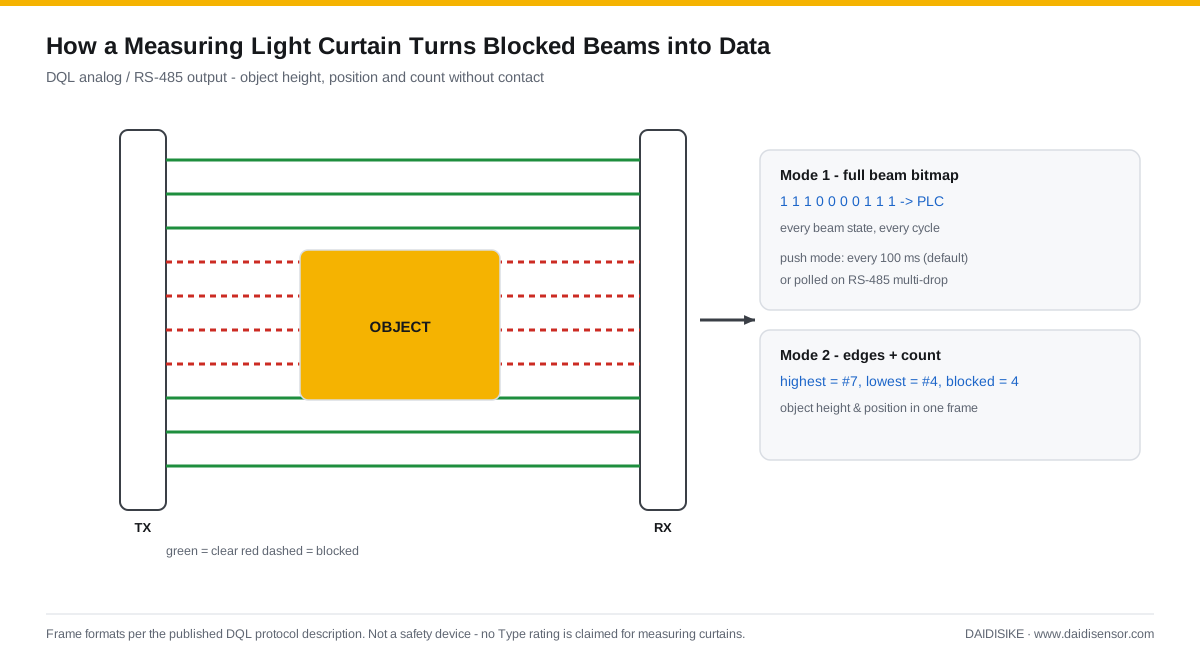
On the serial side, the DQL speaks Modbus RTU with two frame styles. Mode 1 transmits the complete beam bitmap — every beam's clear/blocked state, every cycle — which is the format for profiling and hole-detection work where the *shape* matters. Mode 2 compresses each scan to three numbers: highest blocked beam, lowest blocked beam, and total blocked count — one compact frame that yields object height, vertical position and a presence count, which covers most dimensioning and sorting jobs at a fraction of the bus load.
Delivery is either active push (the curtain transmits on its own clock, 100 ms by default) or passive polling, which lets several curtains share one RS-485 trunk and answer by address. Baud rates run 4800 to 38400. On the analogue side, 4–20 mA current output is the standard configuration; for voltage output the catalogue currently prints more than one range on different pages (1–10 V, 0–10 V and 1–5 V appear), so treat the voltage option as configure-at-order and have the factory confirm the range in writing — we would rather flag our own catalogue's inconsistency than let it surprise you at commissioning.
The relay and I/O module catalogue provides additional automation options, but a shared RS485 interface does not prove direct compatibility. Confirm the master/host and slave roles, addressing, register or custom-frame format, polling method and electrical interface. Two slave devices cannot be assumed to exchange data without a suitable host.
Bus wiring, termination and sensor-output reference material beyond this page lives in the DAIDISIKE engineering library on fsddsk.com — this page stays at the integration level.
Vehicle Separation: Validate the Target and Lane Configuration
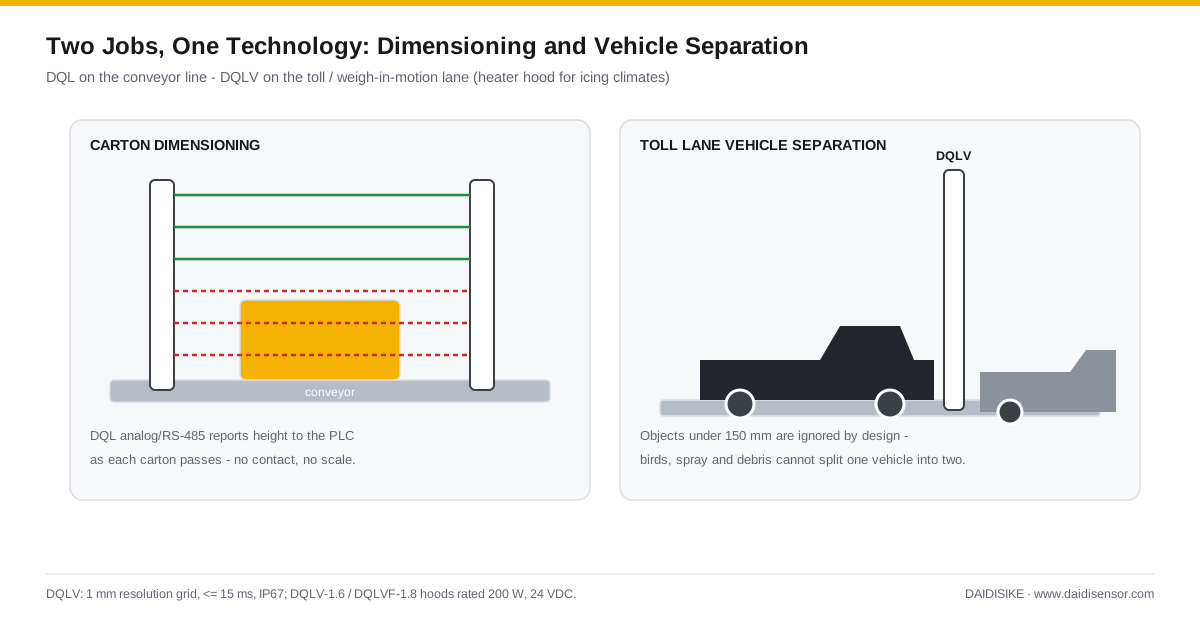
DQLV targets vehicle separation rather than fine-object measurement. Its published data describes a 150 mm minimum-object condition and a separate resolution figure; those are different specifications. Validate the complete vehicle sequence, lane geometry, mounting and environmental conditions instead of assuming birds, spray or trailer gaps can never affect a transaction.
The series page lists housing, operating-temperature and optional hood configurations. Quote the lane width, environmental exposure, power budget and required output with the DQLV model data. Optional heating does not by itself guarantee operation in every icing condition.
When a Measuring Curtain Is the Wrong Device
If the installation protects people, do not use DQL, DQM or DQLV as the personnel-protection device: evaluate the safety light-curtain configurations and their exact documentation instead. If fine displacement rather than beam interruption is required, compare laser displacement sensors against the target and accuracy requirement. For washdown, specify water pressure, chemicals and temperature; an IP label alone does not establish suitability for the cleaning process.
Frequently Asked Questions
Is a measuring light curtain a safety device?
No. The DQL, DQM and DQLV publish no IEC 61496 Type rating and no ISO 13849 category, and must never be the device that stops a machine to protect a person. For personnel protection, specify from the safety light curtain category — same optical idea, completely different engineering duty.
What is the difference between DQL and DQM?
DQL offers analog and serial-data configurations for measurement. DQM supplies NPN or PNP switching outputs for detection and counting, has a confirmed 0.5 ms response and does not provide RS485/RS232. Compare the actual model table, span and required result rather than treating the difference as a connector choice.
What data can I read over RS-485?
Two frame formats: the full beam-state bitmap (Mode 1), or highest blocked beam + lowest blocked beam + blocked count (Mode 2). Frames arrive by active push — every 100 ms by default — or by passive polling, which allows several curtains on one bus, addressed individually. Baud 4800–38400.
What is the finest resolution available?
DQL lists beam-pitch options down to 1.25 mm and DQM down to 2.5 mm. These are optical spacing figures, not universal measurement-accuracy or minimum-object guarantees. Confirm span, model code and performance on the intended target.
Can the DQLV replace a buried loop for vehicle detection?
DQLV is a vehicle-separation option that does not require a buried loop, but suitability depends on lane layout, vehicles, required output and environmental testing. Do not assume its small-object filtering or optional hood prevents every false transaction.
Measuring Light Curtains in Action — 1 Demonstration Videos
Wiring, setup and live operation filmed on the actual modules. Each clip links back to the series it demonstrates, so you can go straight from footage to specification.
Measuring Light Curtain for Dimension Detection & Piece Counting on a Line
A measuring light curtain reading object length, width and height while counting pieces in flight. This is the non-safety sibling of a protective curtain — used for dimensioning, sorting and volume scanning, not for personnel protection.
Related: DQL measuring light curtain
Selection Help & Related
📘 Not sure which series? Safety versus measurement: check the required function
Get a Quote
Ask about Measuring Light Curtains — we reply within 24 hours.
💬 WhatsApp: +86 152 1890 9599