
H-M Series M12/M18 Through-beam Photoelectric Sensor
M12/M18 through-beam sensor pairs for color-independent presence detection when the target sufficiently interrupts the beam, with 2 m to 15 m range options.
 🔍 Click to enlarge · 1/10
Technical Specifications
| Models | H122M, H125M, H1805M, H1815M, each in N1/P1/N2/P2 output variants (16 models total) |
|---|---|
| Output type | N1 = NPN N.O.; P1 = PNP N.O.; N2 = NPN N.O.+N.C.; P2 = PNP N.O.+N.C. |
| Sensing mode | Through-beam (opposed mode) |
| Sensing range | H122M: 2 m +/-10%; H125M: 5 m +/-10%; H1805M: 5 m +/-10%; H1815M: 15 m +/-10% |
| Thread / barrel size | M12x63 / M18x73 |
| Housing material | Nickel-plated brass |
| Supply voltage | 10-30VDC |
Overview
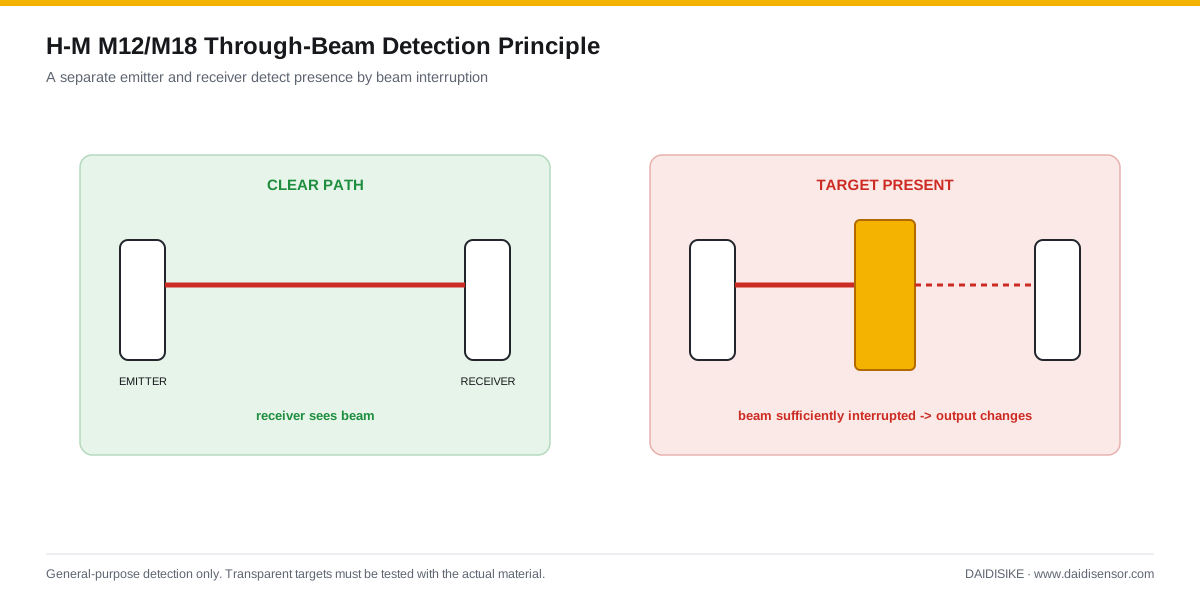
This is a through-beam (opposed-mode) photoelectric sensor set: a separate emitter and receiver are installed facing each other, and the receiver switches its output when the light beam between them is interrupted by an object. Because detection depends on beam interruption -- not on the target's reflectivity -- it suits engineers and machine builders who need dependable presence/absence detection on conveyors, chutes, gates, or passageways, especially where target color or surface (dark rubber, glossy metal, opaque film, or another target that sufficiently attenuates the beam) would confuse a diffuse or retroreflective sensor.
The H-M series covers four sensing-range classes across two barrel sizes: H122M (M12, 2 m +/-10%), H125M (M12, 5 m +/-10%), H1805M (M18, 5 m +/-10%), and H1815M (M18, 15 m +/-10%). Each range class is offered in NPN or PNP output, with either a single normally-open (N.O.) signal or complementary normally-open plus normally-closed (N.O.+N.C.) signals, for 16 models in total, all running on a 10-30 VDC supply.
How the H-M Through-Beam Sensor Pair Works
The emitter sends a continuous optical beam across the detection zone to the receiver. With the path clear, the receiver sees the emitter; when a target blocks the path, the receiver changes its output state. That opposed layout is why the H-M through-beam photoelectric sensor is much less dependent on the target's colour or gloss than a sensor that must read reflected light.
The trade-off is mechanical: both sides need mounting and power/cabling, and the two M12 or M18 barrels must share the same optical axis. Choose the range class from the real installed span, then allow alignment margin rather than specifying exactly at the published maximum.
H122M, H125M, H1805M or H1815M?
| Range class | Barrel | Published sensing range | Start here when |
|---|---|---|---|
| H122M | M12 × 63 mm | 2 m ±10% | the span is short and the mounting hole is M12 |
| H125M | M12 × 63 mm | 5 m ±10% | a compact M12 pair must cover a wider conveyor |
| H1805M | M18 × 73 mm | 5 m ±10% | the installation uses an M18 barrel |
| H1815M | M18 × 73 mm | 15 m ±10% | a gate, portal or long conveyor needs the longest H-M class |
After the range/body choice, select N1 or P1 for a single normally-open output, or N2/P2 for complementary normally-open plus normally-closed outputs. For other sensing principles and housings, return to the photoelectric sensor range.
Features & Benefits
Detection independent of target color, gloss or surface finish
Because the receiver registers whether the beam is sufficiently interrupted, dark or reflective targets do not depend on returning a particular amount of light. Transparent film and glass still require testing because they may not attenuate the beam enough to switch reliably.
Up to 15 m sensing range from a compact M18 barrel pair
The H1815M variants reach 15 m +/-10%, letting one emitter/receiver pair span an entire gate, portal, or wide conveyor without intermediate supports.
Four sensing-range classes across two barrel sizes (M12/M18)
H122M (M12, 2 m +/-10%), H125M (M12, 5 m +/-10%), H1805M (M18, 5 m +/-10%), H1815M (M18, 15 m +/-10%) let you match sensor size and range to the installation without over- or under-specifying.
Complementary N.O. + N.C. outputs on N2/P2 versions
A single receiver can output both a normally-open and a normally-closed signal simultaneously, supporting positive-logic control and negative-logic alarm/interlock from one sensor.
NPN and PNP output selectable per model
N1/N2 give NPN (sinking) output, P1/P2 give PNP (sourcing) output, matching either sinking- or sourcing-input PLC/controller architectures without extra interface hardware.
Rugged nickel-plated brass barrel in standard M12/M18 threads
The metal housing (M12x63 mm / M18x73 mm) resists mechanical knocks and mounts with standard threaded nuts, compatible with common proximity/photoelectric sensor bracket systems, and holds beam alignment once locked in place.
10-30 VDC wide supply range
Runs directly off common 24 VDC industrial control power without a separate regulated supply, and tolerates typical supply fluctuation across the 10-30 VDC window.
Applications
Models & Ordering Information
H122M -- M12 through-beam, 2 m +/-10%
H125M -- M12 through-beam, 5 m +/-10%
H1805M -- M18 through-beam, 5 m +/-10%
H1815M -- M18 through-beam, 15 m +/-10%
How to Select
- Need <=2 m sensing range with a compact footprint: choose H122M (M12, 2 m +/-10%).
- Need <=5 m range on an M12 mounting hole: choose H125M (M12, 5 m +/-10%).
- Need <=5 m range but prefer the larger M18 barrel: choose H1805M (M18, 5 m +/-10%).
- Need up to 15 m span, such as a gate or wide conveyor: choose H1815M (M18, 15 m +/-10%).
- Match the barrel size to your existing mounting holes: M12x63 for H122M/H125M, M18x73 for H1805M/H1815M.
- Match the output type to your controller's input architecture: NPN (sinking) input uses N1 or N2; PNP (sourcing) input uses P1 or P2.
- Choose N1 or P1 for a single normally-open output; choose N2 or P2 when you need simultaneous normally-open and normally-closed outputs for combined control and alarm/interlock circuits.
- All models share a common 10-30VDC supply, compatible with standard 24VDC industrial control power.
📘 Need the full method? NPN vs PNP Sensor Outputs Explained
When NOT to specify the H-M — and what to use instead
The target is a clear film, glass sheet, or other largely transparent material that only partially attenuates the beam
Why not: Through-beam detection in this series works purely by beam interruption; a target that doesn't sufficiently block the beam will not reliably switch the receiver's output.
Use instead: a diffuse-reflective or background-suppression sensor tuned to the target's edge or surface, rather than beam interruption
Only one side of the detection point can be wired and mounted
Why not: Through-beam (opposed mode) requires a separate emitter and receiver mounted facing each other along the same optical axis; there is no single-housing option in this series.
Use instead: a diffuse-reflective sensor that detects from one side only
Personnel guarding, machine-access safety interlock, or any life-safety function
Why not: The FAQs state explicitly that this is a general-purpose sensor, not designed, tested, or certified as a safety component.
Use instead: a safety-rated light curtain or safety interlock
Extremely space-constrained mounting where even an M12x63mm barrel and matching receiver won't fit
Why not: The smallest barrel in this series is M12x63mm (H122M/H125M); no sub-M12 through-beam option is offered here.
Use instead: a micro diffuse-reflective sensor in a smaller M3-M6 or M8/M12 threaded barrel
The application needs to discriminate the target's color, pattern, or surface feature rather than just presence/absence
Why not: Through-beam output only reflects whether the beam is broken, with no feature-recognition capability.
Use instead: a vision-based one-touch-teach sensor
Specifications we do not publish yet
We only publish a figure once we are confident it is true. The items below are still being validated through further testing and real-world customer feedback, so for now we would rather leave them open than guess. If one of them matters to your design, ask us for the latest validated status.
- Ingress protection (IP) rating is not listed in the current specification table
- Response time (operate/reset)
- Light source type/wavelength
- Minimum detectable object size / beam spot diameter
- Hysteresis
- Operating and storage temperature range
- MTBF or expected service life
- Cable/connector type
Frequently Asked Questions
What is the difference between a through-beam (opposed-mode) photoelectric sensor and a diffuse-mode sensor?
What sensing ranges are available in the H-M series?
What is the difference between the N1, P1, N2 and P2 suffixes?
Can this sensor detect dark, black, or transparent-edge objects?
What is the physical size and thread of the M12 and M18 versions?
What material is the sensor housing made of?
What supply voltage does this sensor require?
Is this sensor a safety device, such as a safety light curtain or safety interlock?
Do I need to align the emitter and receiver precisely?
Can the same receiver give me both a run signal and an alarm signal?
Are through-beam and thru-beam photoelectric sensors the same?
Related Categories and Example Products
Explore other functions that may be needed in a machine or line. The products below are category examples, not pre-validated electrical or safety combinations. Confirm each interface and application separately: Proximity Sensors · Laser Switch Sensors · Relay & Timer Modules
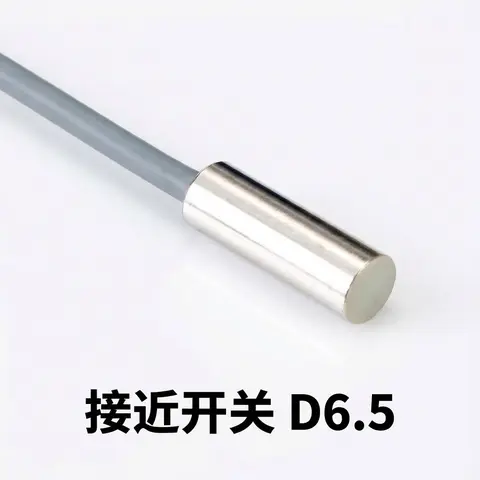
D6.5 Series Inductive Proximity Sensors (Ultra-Short 18mm / Y-Type / 35mm / 45mm)
6.5mm-diameter inductive proximity sensors for tight-clearance mounting where M8 sensors won't fit.
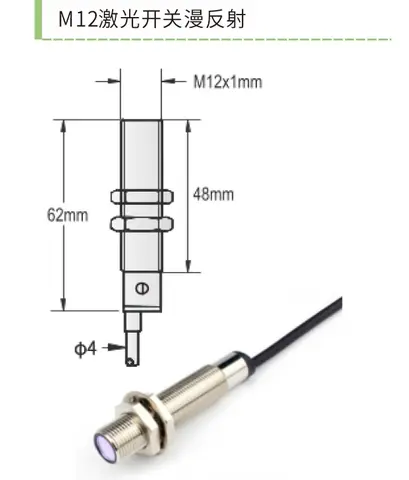
DDSK Laser Diffuse Reflective Sensor M12 / DK Laser Diffuse Reflective Sensor M18
M12/M18 threaded laser diffuse reflective sensor with a visible 650nm red laser for fast alignment.
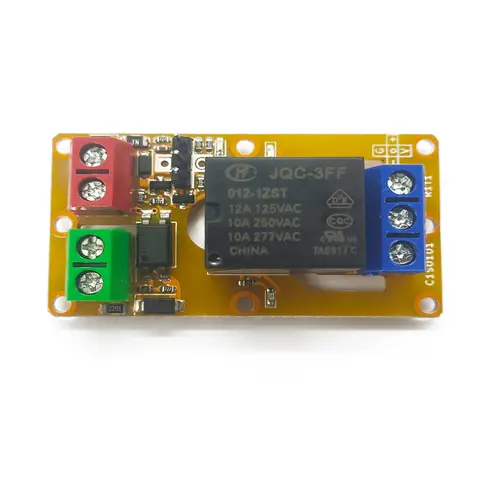
A1J0101 Economical Input Amplifier Module
Optocoupler-isolated input amplifier that turns a low-voltage signal into a 250V AC / 10A relay output.
Related Products in Photoelectric Sensors
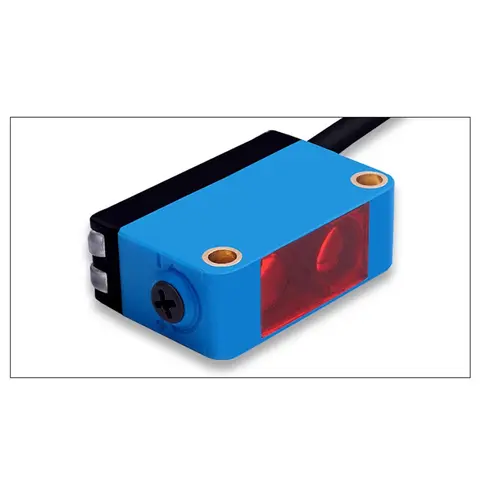
BGS-CX441 / BGS-CX442 Background Suppression Photoelectric Sensor
Wire-adjustable BGS sensor with 2 mm or 15 mm spot, 10-300 mm range, published black/white differential distance.
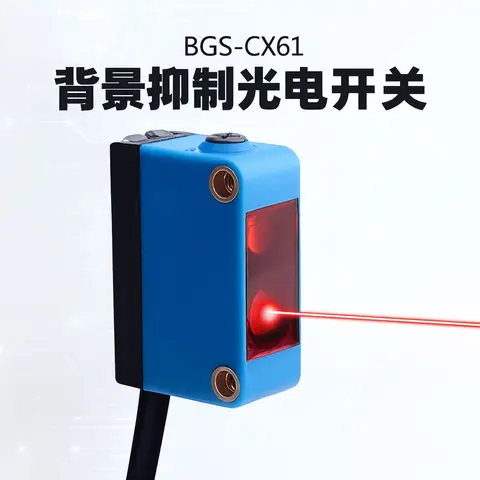
BGS-CX61 Focused-Beam Background Suppression Photoelectric Sensor
2 mm focused-spot BGS sensor that switches strictly by distance, ignoring shiny or close backgrounds.
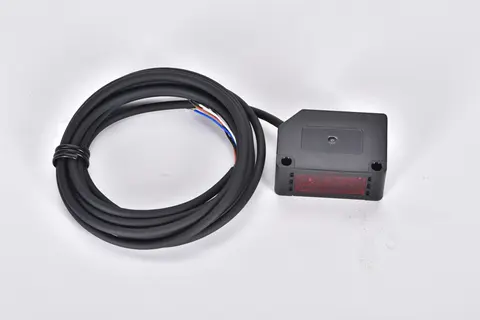
BX Series Long-range Background Suppression (BGS) Photoelectric Sensor
Background suppression photoelectric sensor detecting up to 4 m from one side, no reflector needed.
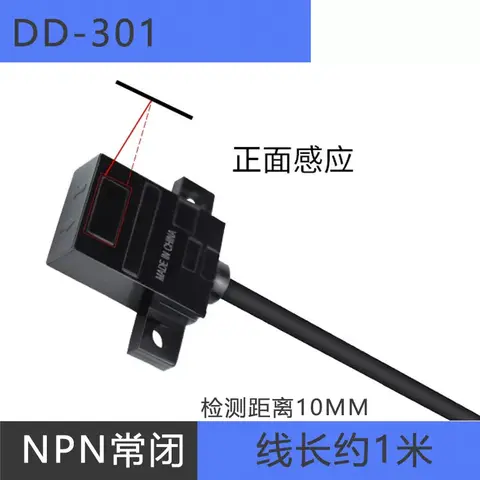
DD-301/401/302/402 Series Reflective Photoelectric Sensor (Wire-lead Type)
Wire-lead NPN reflective sensor, 5mm range, horizontal/vertical mount, Light-ON/Dark-ON logic options.