
DX-15/30/50/100 Series Ultra-thin Through-beam Photoelectric Sensor
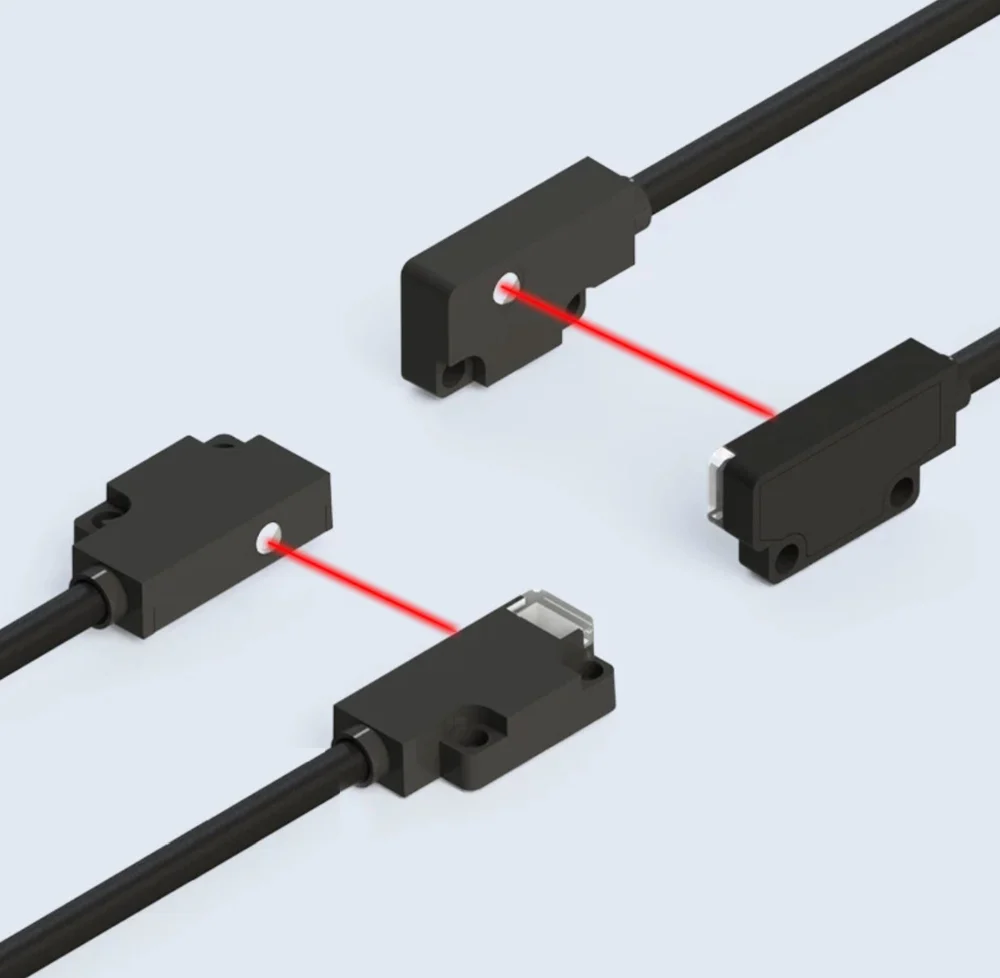
Ultra-thin through-beam pairs from 150mm to 1000mm: front or side sensing, 1mm object detection, NPN/PNP, IP67.
 🔍 Click to enlarge · 1/18
Technical Specifications
| Model | DX-50L, DX-100L, DX-50F, DX-100F (N/P versions); DX-15AN/BN, DX-30AN/BN, DX-15EAN/EBN, DX-30EAN/EBN |
|---|---|
| Sensing method | Through-beam (opposed mode): matched emitter and receiver pair, amplifier built in (ultra-thin housing) |
| Detection range | DX-15 = 150 mm; DX-30 = 300 mm; DX-50L / DX-50F = 500 mm; DX-100L / DX-100F = 1000 mm |
| Optical layout | Front-sensing (F suffix, or no letter on short-range models) or side-sensing with a 90-degree optical axis (L suffix, or E on short-range models) |
| Output type | DX-50/DX-100: NPN or PNP, selected by the (N)/(P) order option, with normally-open / normally-closed switchable in the wiring. DX-15/DX-30: NPN only, with A = Light-ON (N.O.) and B = Dark-ON (N.C.) fixed by part number. |
| N.O. / N.C. switching (DX-50 / DX-100) | Short the white wire to the blue (negative) wire and the black output wire changes from normally-open to normally-closed |
| Wiring — emitter (2-wire) | Blue = negative (−); Brown = positive (+) |
| Wiring — receiver (4-wire) | Blue = negative (−); Brown = positive (+); Black = signal output; White = N.C. switching wire |
| Light source | 680nm infrared |
| Response time | 0.5ms |
| Minimum detectable object | 1mm |
| Operating voltage | 12-24VDC |
| Protection rating | IP67 |
Overview
The DX series is a through-beam (opposed-mode) photoelectric sensor supplied as a matched emitter and receiver pair in an ultra-thin housing. Because detection depends on the beam being broken rather than on light reflected back from the target, it reads dark, glossy and awkwardly shaped parts that a diffuse sensor struggles with — and it does so from a housing slim enough to fit in a narrow slot, along a guide rail, or between closely spaced panels where a standard photoelectric body will not go.
Two optical layouts are offered across the range. Front-sensing units emit along the axis of the housing; side-sensing units turn the optical axis through 90 degrees so the pair can be mounted flat against a rail or panel without a bracket redesign. Detection distances run from 150 mm to 1000 mm depending on model, and the longer-range models add selectable NPN or PNP output with normally-open / normally-closed switching done in the wiring rather than by ordering a different part number.
Features & Benefits
Through-beam detection — reads dark, glossy and irregular targets
Detection depends on the beam being interrupted, not on how much light the target reflects back. Black rubber, polished metal, matte plastic and irregular edges all block the beam equally, which removes the colour- and finish-dependence that limits diffuse-reflective sensors.
Ultra-thin housing with front-sensing or side-sensing optics
Fits where a standard-body photoelectric sensor cannot. Choose the side-sensing layout (E suffix on 150/300 mm models, L suffix on 500/1000 mm models) to turn the beam 90 degrees and mount flat along a rail or panel without redesigning the bracket.
One family from 150 mm to 1000 mm
The same ultra-thin form factor covers short in-machine gaps at 150 and 300 mm and wider spans at 500 and 1000 mm, so a machine using several detection points can standardise on one housing style, one mounting method and one wiring convention.
NPN or PNP, with N.O./N.C. switched in the wiring
The 500 mm and 1000 mm models are ordered as (N) or (P) for sinking or sourcing output, and the output logic is changed on site: short the white wire to blue (negative) and the black output wire switches from normally-open to normally-closed. One part number covers both logic states, which cuts the number of variants a distributor has to stock.
Detects objects as small as 1mm
Reliable presence sensing for pins, small components and thin edges that conventional-range photoelectric sensors often miss.
0.5ms response time
Supports fast pass and presence detection on high-speed feeding and sorting lines.
IP67-rated despite the ultra-thin profile
Dust-tight and protected against temporary immersion, suitable for stations with oil mist or washdown exposure.
Self-contained amplifier — no external amplifier unit required
Simplifies wiring and panel space versus fiber-optic sensors that need a separate amplifier.
Applications
Models & Ordering Information
Long range, side-sensing (500 / 1000 mm)
Long range, front-sensing (500 / 1000 mm)
Short range, front-sensing (150 / 300 mm)
Short range, side-sensing (150 / 300 mm)
How to read the DX model code
How to Select
- Choose the detection distance first: DX-15 for 150 mm, DX-30 for 300 mm, DX-50L/DX-50F for 500 mm, DX-100L/DX-100F for 1000 mm. Measure the actual emitter-to-receiver span and leave margin for alignment tolerance.
- Choose the optical layout second: front-sensing (DX-50F/DX-100F, or DX-15AN/DX-30AN) when the beam should run along the housing axis; side-sensing (DX-50L/DX-100L, or DX-15EAN/DX-30EAN) when the beam must exit at 90 degrees for mounting flat along a rail or panel.
- Choose the output polarity third: on the 500 mm and 1000 mm models, specify (N) for NPN sinking output or (P) for PNP sourcing output to match your controller's input card. Confirm the input type before ordering.
- Set the output logic in the wiring, not the part number, on 500/1000 mm models: the black output wire is normally-open by default; short the white wire to blue (negative) to make it normally-closed. This means one stocked part covers both logic states.
- On the 150/300 mm models the output logic is fixed by part number instead: choose an A model (DX-15AN, DX-15EAN) for Light-ON / normally-open, or a B model (DX-15BN, DX-30EBN) for Dark-ON / normally-closed. These models are NPN only.
- Confirm the actual output logic of DX-30EAN with the factory before ordering, since the catalog print shows Dark-ON while the E+A naming convention indicates it should be Light-ON.
- Remember that every DX model number is a matched emitter/receiver pair — both housings must be mounted facing each other across the detection path, with power run to each.
- Power supply is unified at 12-24VDC across the entire series, so no separate voltage selection is required.
📘 Need the full method? NPN vs PNP Sensor Outputs Explained
When NOT to specify the DX-15/30/50/100 — and what to use instead
Only one side of the detection path can be mounted or wired
Why not: Every DX model is a through-beam pair: the emitter and receiver are separate housings that must face each other, each with its own power connection. There is no single-housing reflective version in this series.
Use instead: a diffuse-reflective sensor such as the H series or H08/R12 micro diffuse range, or the DD diffuse-reflection area grid where a detection field rather than a point is needed
Detection distance needs to exceed 1000 mm
Why not: The longest-range models in this family, DX-100L and DX-100F, are rated to 1000 mm.
Use instead: the BX-H4000 long-range background-suppression sensor (up to 4 m) or a longer-range through-beam series such as the H-M M12/M18 range
A PNP output is required at 150 mm or 300 mm
Why not: The short-range DX-15 and DX-30 models are documented as NPN output only. PNP is offered on the 500 mm and 1000 mm models via the (P) order option.
Use instead: DX-50F or DX-50L with the (P) option if the longer range is acceptable, or the BGS-CX441/CX442 or E3JK series for PNP at shorter range
Ordering DX-30EAN and assuming it is Light-ON without checking further
Why not: The catalog print shows Dark-ON for DX-30EAN, which conflicts with the E+A naming convention used elsewhere in the series — the actual output logic is unconfirmed.
Use instead: confirm the actual output logic with us before ordering, or select a model whose logic is unambiguous, such as DX-15EAN
The application is a safety door interlock or personnel-guarding function
Why not: The DX photoelectric series is a detection sensor family, not the DXL safety door lock product line, and it carries no safety rating.
Use instead: the correct DXL safety door lock series for interlocking, or a certified safety light curtain (e.g. DQC/DQA series) for personnel guarding
Personnel guarding or any other safety-related presence detection
Why not: No safety rating or safety certification is published for this series.
Use instead: a certified safety light curtain (e.g. DQC/DQA series) for personnel protection
Specifications we do not publish yet
We only publish a figure once we are confident it is true. The items below are still being validated through further testing and real-world customer feedback, so for now we would rather leave them open than guess. If one of them matters to your design, ask us for the latest validated status.
- ⚠ 待老板确认(2026-07-28):以下 4 项沿用自旧版 DX-15/30 资料,尚未在新的 DX-50/DX-100 资料中得到确认 —— 响应时间 0.5ms、最小可检测物体 1mm、防护等级 IP67、供电 12-24VDC。长距离型号(500/1000mm)的实际数值请核对后更新。
- ⚠ 待老板确认(2026-07-28):新长距离型号是否也提供 680nm 红外光源(旧资料值)。
- Hysteresis
- MTBF
- Operating and storage temperature range
- Cable length and cable/connector type
- Actual output logic (Light-ON vs Dark-ON) of DX-30EAN, which conflicts with the naming convention in the current catalog print
- Certification status (documents said to be available on request but not specified)
Frequently Asked Questions
Is the DX series a through-beam or a diffuse-reflective sensor?
What detection distances are available in the DX series?
What is the difference between the L and F suffixes on DX-50 and DX-100?
What does (N/P) mean in model numbers like DX-50L (N/P)?
How do I switch the DX-50 or DX-100 output between normally-open and normally-closed?
How is the DX emitter wired compared with the receiver?
What is the smallest object the DX series can detect?
What is the response time of the DX series photoelectric sensor?
What is the difference between the A and B suffix models on DX-15 and DX-30?
What does the E in model names like DX-15EAN mean?
Is the DX series waterproof?
Does the DX series need an external amplifier?
What is the operating voltage of the DX series?
Is the DX ultra-thin photoelectric sensor the same product as the DX safety door lock series?
Related Categories and Example Products
Explore other functions that may be needed in a machine or line. The products below are category examples, not pre-validated electrical or safety combinations. Confirm each interface and application separately: Proximity Sensors · Laser Switch Sensors · Relay & Timer Modules
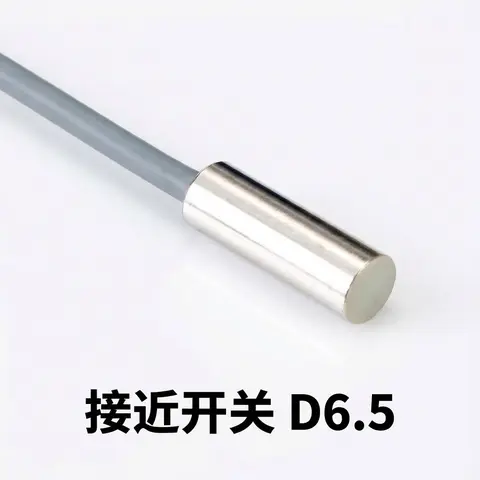
D6.5 Series Inductive Proximity Sensors (Ultra-Short 18mm / Y-Type / 35mm / 45mm)
6.5mm-diameter inductive proximity sensors for tight-clearance mounting where M8 sensors won't fit.
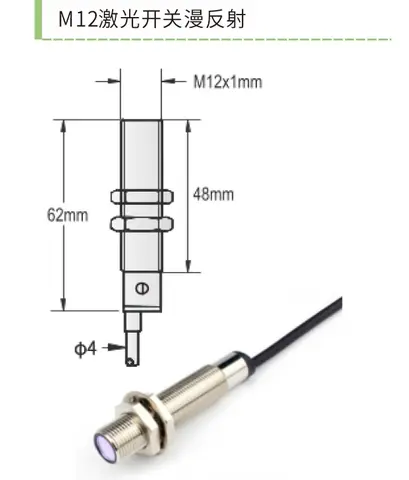
DDSK Laser Diffuse Reflective Sensor M12 / DK Laser Diffuse Reflective Sensor M18
M12/M18 threaded laser diffuse reflective sensor with a visible 650nm red laser for fast alignment.
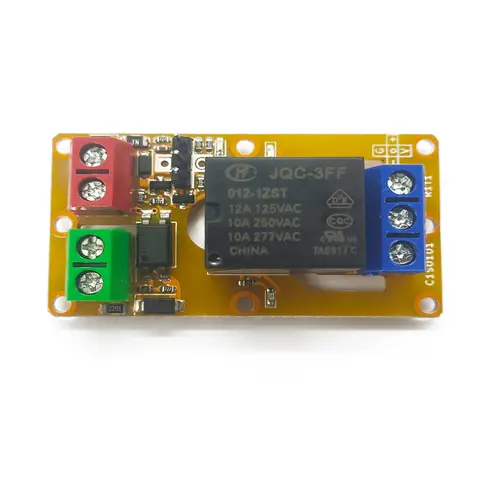
A1J0101 Economical Input Amplifier Module
Optocoupler-isolated input amplifier that turns a low-voltage signal into a 250V AC / 10A relay output.
Related Products in Photoelectric Sensors
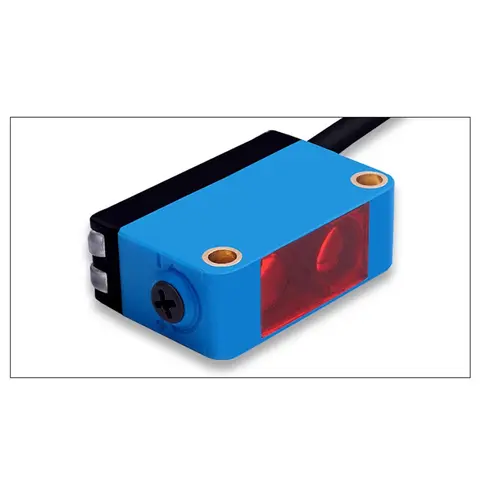
BGS-CX441 / BGS-CX442 Background Suppression Photoelectric Sensor
Wire-adjustable BGS sensor with 2 mm or 15 mm spot, 10-300 mm range, published black/white differential distance.
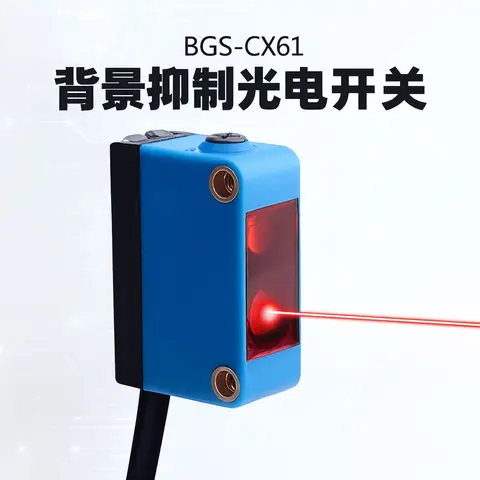
BGS-CX61 Focused-Beam Background Suppression Photoelectric Sensor
2 mm focused-spot BGS sensor that switches strictly by distance, ignoring shiny or close backgrounds.
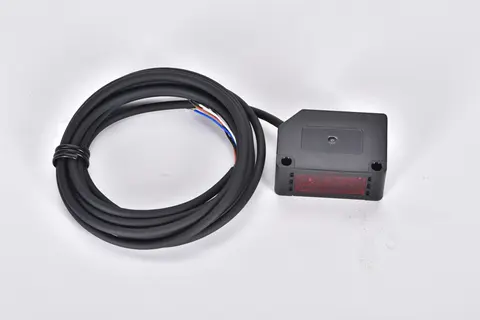
BX Series Long-range Background Suppression (BGS) Photoelectric Sensor
Background suppression photoelectric sensor detecting up to 4 m from one side, no reflector needed.
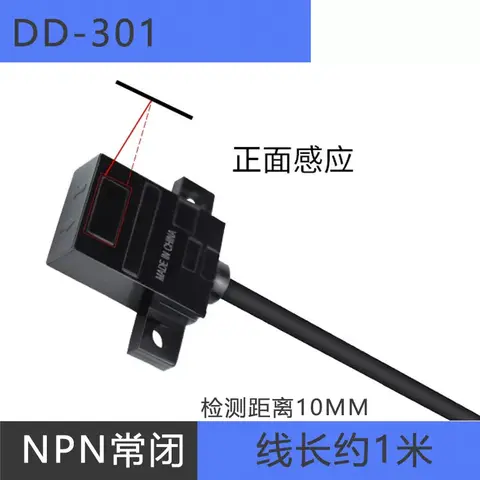
DD-301/401/302/402 Series Reflective Photoelectric Sensor (Wire-lead Type)
Wire-lead NPN reflective sensor, 5mm range, horizontal/vertical mount, Light-ON/Dark-ON logic options.