
H-series Micro Diffuse Photoelectric Sensor (M3-M6)
Photoelectric-range detection (5-200mm) in an M3-M6 threaded barrel the size of a proximity switch.
 🔍 Click to enlarge · 1/6
Technical Specifications
| Model | H0330/H0340 (M3), H0450/H0470 (M4), H05100/H05130 (M5), H06150/H06200 (M6), each in N1/P1/N2/P2, 32 models total |
|---|---|
| Output type | N1 = NPN N.O., P1 = PNP N.O., N2 = NPN N.C., P2 = PNP N.C. |
| Detection method | Diffuse-reflective |
| Sensing range | M3: 5-30mm / 5-40mm; M4: 10-50mm / 10-70mm; M5: 15-100mm / 15-130mm; M6: 20-150mm / 20-200mm (all adjustable) |
| Light source | 940nm infrared light |
| Housing material | Stainless steel |
| Operating voltage | 10-30VDC |
| Load current | 120mA |
| Response frequency | 100Hz |
| Response time | 5ms |
| Protection rating | IP65 |
Overview
The H-series (H03/H04/H05/H06) is a family of miniature diffuse-reflective photoelectric sensors housed in threaded cylindrical (M3/M4/M5/M6) stainless-steel barrels. Each thread size is offered in two adjustable sensing-range bands, with NPN/PNP output and N.O./N.C. logic, for 32 part numbers in total.
It targets machine builders and system integrators who need photoelectric-level detection range but only have proximity-switch-level mounting space: robotic grippers, precision jigs/fixtures, vibratory feeder tracks, and compact 3C/semiconductor equipment.
Features & Benefits
Photoelectric sensing range in a proximity-switch footprint
M3 to M6 threaded barrels detect from 5mm up to 200mm, varying by thread size — a range that inductive proximity sensors of the same barrel size cannot match, since same-size inductive sensors are typically limited to a 1-2mm sensing distance.
Two adjustable sensing-range bands per thread size
Each of the four thread sizes (M3/M4/M5/M6) offers two selectable range bands (e.g., M3: 5-30mm or 5-40mm; M6: 20-150mm or 20-200mm), and sensitivity within each band is adjustable, giving designers a distance option that fits the actual working gap.
Threaded-barrel mounting — single hole, two nuts, no bracket
The cylindrical threaded housing installs through a single drilled hole and is secured with two lock nuts, giving repeatable positioning and quick swap-out in confined mechanisms without needing a mounting bracket.
Stainless-steel housing with IP65 protection
The barrel is stainless steel and rated IP65 (dust-tight, protected against water jets), so the sensor can be mounted directly on robot arms and vibratory feeders exposed to knocks, dust, and washdown-adjacent conditions rather than being confined to a clean bench setup.
32-model matrix covering every common output/logic combination
Four thread sizes x two range bands x NPN/PNP x N.O./N.C. equals 32 stocked part numbers, so the correct output type for a given PLC input card or control logic is available off the standard model list without custom wiring.
940nm infrared emitter for ambient-light immunity
The sensor uses an infrared (invisible) light source at 940nm, so its detection is not disturbed by changes in factory lighting and it does not project a visible light spot that could interfere with a nearby vision inspection station.
10-30VDC wide supply range, 5ms response, IP65 diffuse detection
Operates on a standard 10-30VDC industrial supply with a 120mA load current, 5ms response time and 100Hz response frequency, matching common industrial control-cabinet power and standard-speed line requirements.
Applications
Models & Ordering Information
M3 (H03)
M4 (H04)
M5 (H05)
M6 (H06)
How to Select
- Step 1 — Choose the thread size (M3/M4/M5/M6) based on the available mounting hole diameter in your mechanism.
- Step 2 — Choose the sensing-range band that fits your actual working distance: M3: 5-30mm or 5-40mm; M4: 10-50mm or 10-70mm; M5: 15-100mm or 15-130mm; M6: 20-150mm or 20-200mm, leaving adjustment margin within the band.
- Step 3 — Choose NPN or PNP based on your PLC input card: NPN (sinking) uses suffix N1 (N.O.) / N2 (N.C.); PNP (sourcing) uses suffix P1 (N.O.) / P2 (N.C.).
- Step 4 — Choose N.O. or N.C. based on your control logic: N.O. (suffix 1) turns the output on when an object is detected; N.C. (suffix 2) turns the output off when an object is detected.
- Step 5 — Confirm supply and environment: all models run on 10-30VDC, are rated IP65, use a stainless-steel housing, and a 940nm infrared light source.
- Model-number quick reference: H0330P1 = M3 thread, 5-30mm band, PNP, N.O.
📘 Need the full method? NPN vs PNP Sensor Outputs Explained
When NOT to specify the H-series — and what to use instead
Dark, matte-black, or steeply angled targets near the outer edge of the stated range
Why not: Sensing ranges (e.g. 5-30mm up to 20-200mm) are diffuse-reflective and depend on light reflected back from the target surface, so a low-reflectivity or angled target will trigger at less than the rated range.
Use instead: a through-beam sensor pair, which is unaffected by target color or angle
Working distance beyond 200mm
Why not: The largest range in this M3-M6 line-up is the M6 (H06200) at 20-200mm adjustable; no model in this series reaches further.
Use instead: the M18 diffuse series (up to 3 m) or a through-beam pair for longer range
Personnel guarding or any safety-related interlock
Why not: This is a standard industrial presence sensor; no safety rating is documented for the series.
Use instead: a safety-rated light curtain or safety interlock
The target is a clear film or transparent glass part
Why not: Diffuse-reflective detection in this series relies on light reflected from the target surface, which a transparent target may not return reliably.
Use instead: a through-beam sensor pair
Specifications we do not publish yet
We only publish a figure once we are confident it is true. The items below are still being validated through further testing and real-world customer feedback, so for now we would rather leave them open than guess. If one of them matters to your design, ask us for the latest validated status.
- Hysteresis (differential travel)
- Minimum detectable object size
- Operating and storage temperature range
- MTBF or expected service life
- Cable/connector type
- Applicable certification standards beyond 'available on request'
Frequently Asked Questions
What is the sensing range of the M3 threaded photoelectric sensor?
What is the largest sensing distance available in the H-series?
Does the H-series support both NPN and PNP output?
What is the housing material and protection rating?
What light source does the sensor use?
What is the operating voltage and load current?
What is the response time and response frequency?
How is the sensor mounted?
Can this sensor detect non-metallic parts?
What is the difference between the N1/P1 and N2/P2 suffixes?
Are certification documents available for this sensor?
Related Categories and Example Products
Explore other functions that may be needed in a machine or line. The products below are category examples, not pre-validated electrical or safety combinations. Confirm each interface and application separately: Proximity Sensors · Laser Switch Sensors · Relay & Timer Modules
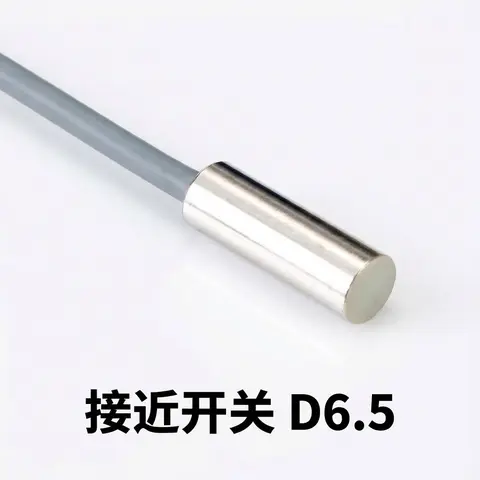
D6.5 Series Inductive Proximity Sensors (Ultra-Short 18mm / Y-Type / 35mm / 45mm)
6.5mm-diameter inductive proximity sensors for tight-clearance mounting where M8 sensors won't fit.
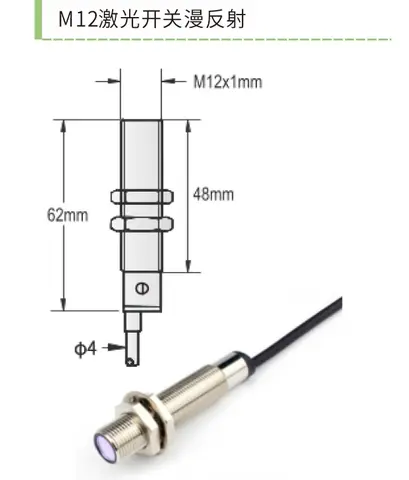
DDSK Laser Diffuse Reflective Sensor M12 / DK Laser Diffuse Reflective Sensor M18
M12/M18 threaded laser diffuse reflective sensor with a visible 650nm red laser for fast alignment.
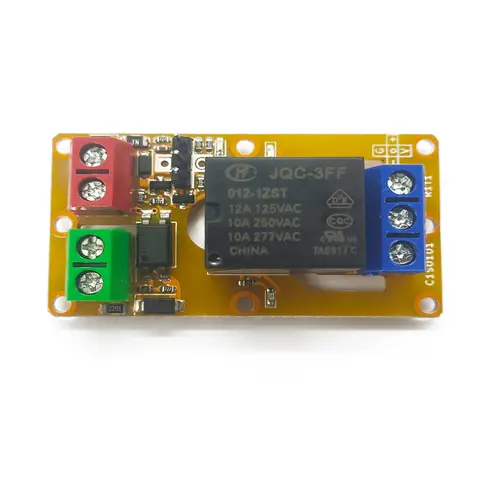
A1J0101 Economical Input Amplifier Module
Optocoupler-isolated input amplifier that turns a low-voltage signal into a 250V AC / 10A relay output.
Related Products in Photoelectric Sensors
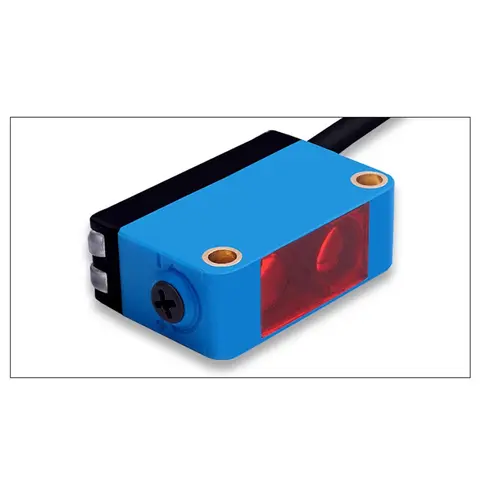
BGS-CX441 / BGS-CX442 Background Suppression Photoelectric Sensor
Wire-adjustable BGS sensor with 2 mm or 15 mm spot, 10-300 mm range, published black/white differential distance.
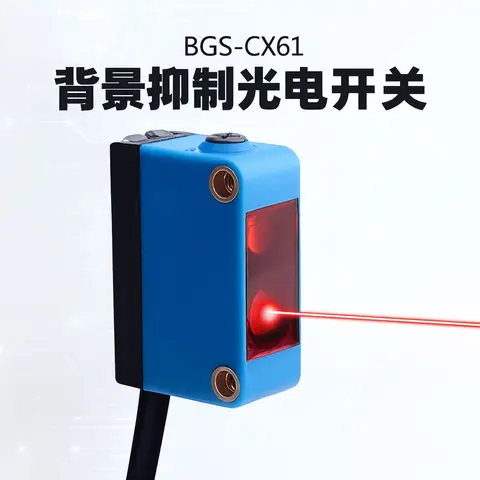
BGS-CX61 Focused-Beam Background Suppression Photoelectric Sensor
2 mm focused-spot BGS sensor that switches strictly by distance, ignoring shiny or close backgrounds.
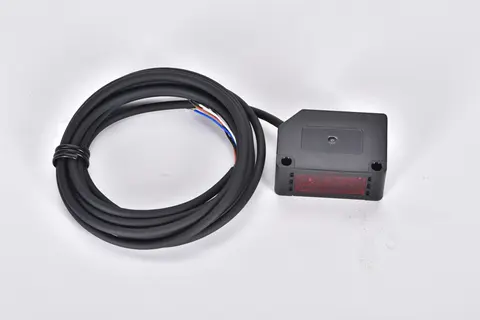
BX Series Long-range Background Suppression (BGS) Photoelectric Sensor
Background suppression photoelectric sensor detecting up to 4 m from one side, no reflector needed.
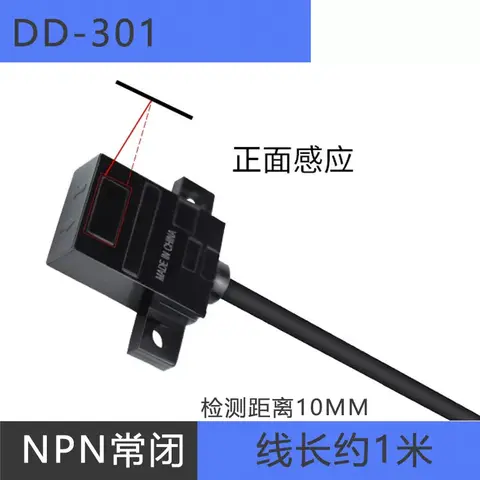
DD-301/401/302/402 Series Reflective Photoelectric Sensor (Wire-lead Type)
Wire-lead NPN reflective sensor, 5mm range, horizontal/vertical mount, Light-ON/Dark-ON logic options.