
FS-KNS Slot Photoelectric Sensor (Plug-in Type)
5 mm-slot sensor with simultaneous NO+NC outputs, 0.3 ms response, and 1 mm minimum detectable object.
 🔍 Click to enlarge · 1/12
Technical Specifications
| Output type | N = NPN (NO, NC); P = PNP (NO, NC) |
|---|---|
| Wiring | White = NO, Black = NC, Brown = V+, Blue = V- |
| Supply voltage | 5-24VDC ±10% |
| Load current | 100mA Max |
| Response time | 0.3ms Max |
| Protection rating | IP64 |
| Material | ABS housing |
| Minimum detectable object | φ1mm opaque object |
| Detection slot | 5mm slot width |
| Housing profiles | 302, 303, 304, 305, 306, 307 |
Overview
FS-KNS is a slot-type (fork/U-slot) photoelectric sensor: an object passing through the 5 mm slot interrupts the light beam between the emitter and receiver mounted face-to-face, triggering a switching output. It ships in NPN or PNP versions with both NO and NC signals brought out on separate wires (white = NO, black = NC, brown = V+, blue = V-). It suits machine builders and equipment integrators in packaging, labeling, small-parts assembly, and embedded terminal/POS equipment who need a compact, low-cost sensor to detect or count small objects passing through a fixed slot.
The sensor combines a minimum detectable object size of 1 mm with a maximum response time of 0.3 ms, so it can resolve fine pins, wires, or thin flags moving through the slot in quick succession without missed detections. It operates on a wide 5-24 VDC (±10%) supply range, switches up to 100 mA at its output, and is housed in IP64-rated ABS suited to typical workshop dust and splash conditions. Six housing profiles (302-307) are available within the series for different mounting orientations.
Features & Benefits
Complementary NO + NC outputs on separate wires
Get both a normally-open and a normally-closed signal from one sensor without any wiring selection. One line can drive detection logic while the other supports interlock or wire-break diagnostics.
Detects objects down to 1 mm
The minimum detectable object is a φ1 mm opaque item, suitable for sensing fine pins, thin wires, or narrow flags that pass through the slot.
0.3 ms max. response time
Fast enough to follow closely-spaced objects moving through the slot without missing a detection.
Wide 5-24 VDC supply range (±10%)
The same sensor can be powered directly from a 5 V logic board or a 24 V industrial control circuit, without a separate power conversion stage.
100 mA max. switching capacity
Sufficient to drive small relays or indicator loads directly at the sensor output.
IP64-rated ABS housing
Dust-tight and splash-resistant construction suited to typical workshop environments.
Six housing profiles (302-307)
A range of outline shapes within the same series allows selection of the mounting orientation and lead-exit direction that fits the installation space.
Applications
Models & Ordering Information
FS-KNS Series — Housing Profile Numbers
How to Select
- Choose by output type: suffix N = NPN (NO+NC simultaneous output); P = PNP (NO+NC simultaneous output). Select according to whether the on-site PLC/controller input is sinking (NPN) or sourcing (PNP).
- Wiring is fixed and pre-defined: white = normally-open (NO) signal, black = normally-closed (NC) signal, brown = supply positive (V+), blue = supply negative (V-); both signal wires are brought out simultaneously with no switching required.
- Choose by housing profile/mounting orientation: the series offers six housing profile numbers (302-307) for different mounting space and lead-exit direction requirements.
- Supply voltage does not require model selection: the whole series shares a common 5-24VDC ±10% wide-voltage design; simply connect to the equipment's actual supply voltage.
- Check target size against slot width: FS-KNS has a fixed 5 mm slot width and detects objects down to φ1 mm; if the target is smaller than φ1 mm, or the required slot width is larger than 5 mm, a different slot-sensor series is needed.
📘 Need the full method? NPN vs PNP Sensor Outputs Explained
When NOT to specify the FS-KNS — and what to use instead
The object to be detected is smaller than about phi1 mm, or the required slot is wider than 5 mm
Why not: The FS-KNS selection guide itself states the sensor has a fixed 5 mm slot width and detects objects down to phi1 mm; a target smaller than phi1 mm or a wider required slot needs a different series.
Use instead: a micro-slot model such as DD-L25/L45 for finer resolution, or a wide-slot model such as DD-303N/DD-403N (13 mm gap) for a wider opening
The output only needs a single signal and simultaneous NO+NC wiring is unnecessary complexity for the panel
Why not: FS-KNS brings out both NO (white) and NC (black) signals simultaneously on separate wires as a fixed design feature, with no single-output variant documented.
Use instead: a series offering a single selectable output logic, such as the DD-670 series (N/P/NA/R by model or by the (L) terminal)
The installation is outdoors or subject to direct water spray rather than occasional workshop splash
Why not: The housing is rated IP64 (dust-tight, splash-resistant), which the source describes as suited to typical workshop dust and splash conditions, not sustained water-jet exposure.
Use instead: an IP65-rated slot sensor such as DD-L25/L45 for washdown-adjacent environments
Specifications we do not publish yet
We only publish a figure once we are confident it is true. The items below are still being validated through further testing and real-world customer feedback, so for now we would rather leave them open than guess. If one of them matters to your design, ask us for the latest validated status.
- The exact order-code format combining the housing profile number (302-307) and N/P suffix is still being finalized — ask us to confirm the code before ordering
- Light source type and wavelength are not stated in the source material
- Slot depth (fork insertion depth) is not stated
- Hysteresis (differential travel) is not stated
- MTBF / rated mechanical or electrical lifetime is not stated
- Operating and storage temperature range is not stated
- Cable length is not stated
- No certification documents are published on the product page; available on request only, specific standards/marks not stated
Frequently Asked Questions
What is the slot width of the FS-KNS sensor?
What is the smallest object the FS-KNS can detect?
Does the FS-KNS provide both NO and NC outputs at the same time?
What is the difference between the N and P suffix in the model name?
What supply voltage does the FS-KNS require?
What is the response time of the FS-KNS?
What is the maximum switching (load) current?
What environmental protection rating does the FS-KNS housing have?
How many housing variants are available in the FS-KNS series?
How is the FS-KNS wired?
Related Categories and Example Products
Explore other functions that may be needed in a machine or line. The products below are category examples, not pre-validated electrical or safety combinations. Confirm each interface and application separately: Photoelectric Sensors · Fiber Optic Sensors · Proximity Sensors
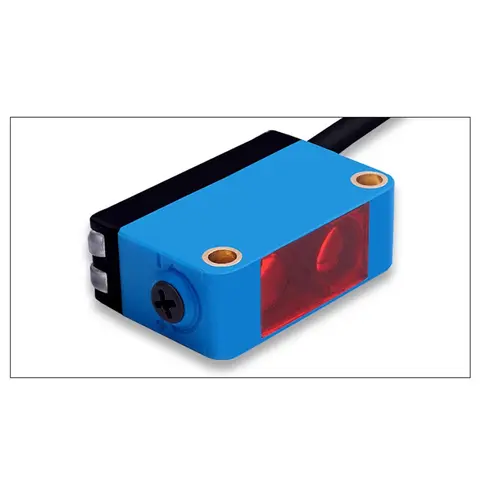
BGS-CX441 / BGS-CX442 Background Suppression Photoelectric Sensor
Wire-adjustable BGS sensor with 2 mm or 15 mm spot, 10-300 mm range, published black/white differential distance.
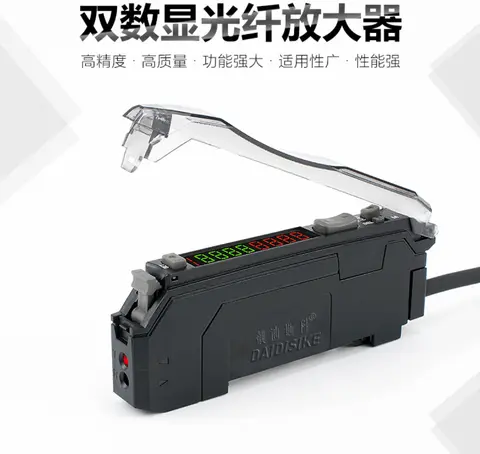
Fiber Amplifier (Digital Fiber Optic Sensor Amplifier)
Digital fiber optic amplifiers with NPN/PNP output, from potentiometer economy models to 25µs dual-display smart units.
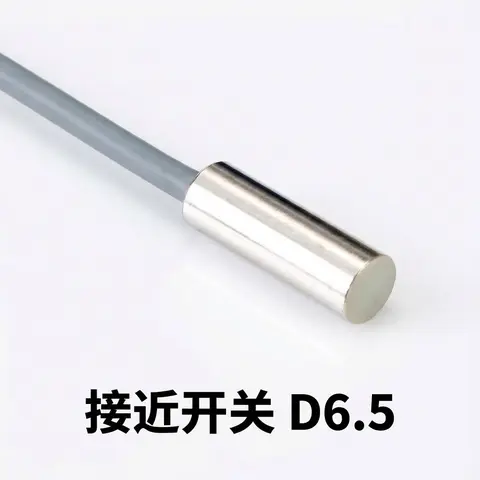
D6.5 Series Inductive Proximity Sensors (Ultra-Short 18mm / Y-Type / 35mm / 45mm)
6.5mm-diameter inductive proximity sensors for tight-clearance mounting where M8 sensors won't fit.
Related Products in Slot Sensors
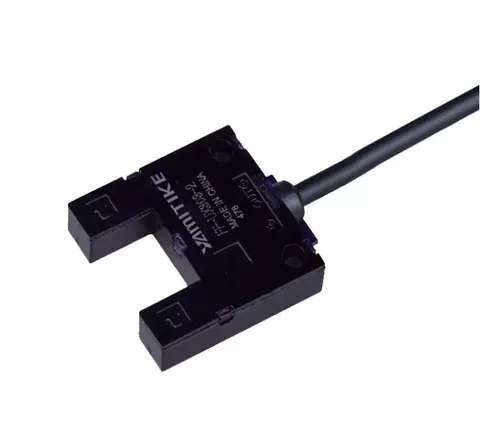
DD-303N / DD-403N Wide-slot Photoelectric Sensor
13 mm through-beam slot sensor giving real tolerance for thick or fluttering parts, still detecting down to 2.2×0.5 mm.
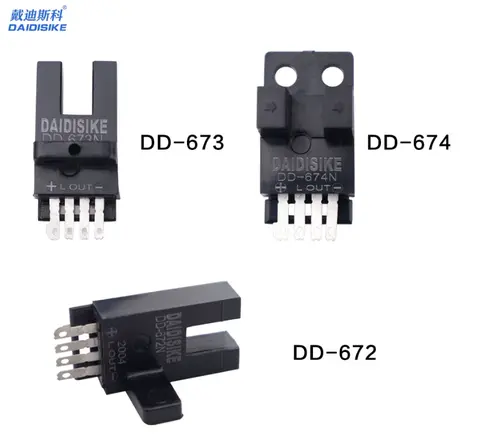
DD-670 Series Slot Photoelectric Sensor (Pin/Plug-in Connector Type)
Plug-in connector slot photoelectric sensor, 5 mm slot, 20 models across 5 housing styles, 4 NPN/PNP output versions.
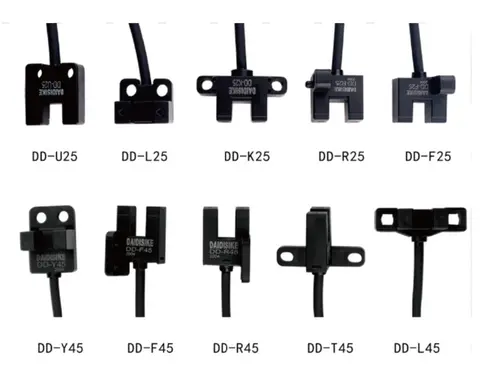
DD-L25/45 Series Micro-slot (Micro U-shaped) Photoelectric Sensor
Micro U-shaped photoelectric sensor with 0.01 mm repeatability and 0.025 mm hysteresis, in 10 compact mounting shapes.
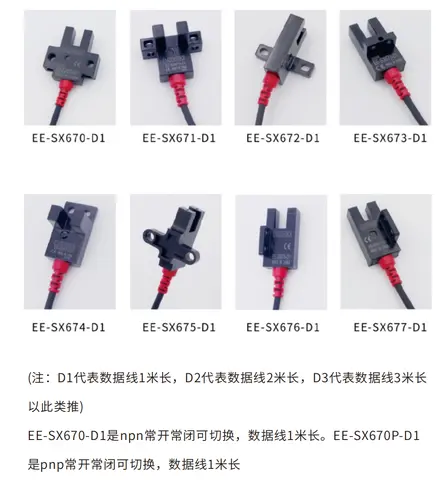
EE-SX67 Series Slot-type Photoelectric Sensor (Photomicrosensor)
Pre-aligned U-shaped photoelectric sensor in 8 shapes with full NPN/PNP output and wiring-selectable NO/NC logic.