
DD-670 Series Slot Photoelectric Sensor (Pin/Plug-in Connector Type)
Plug-in connector slot photoelectric sensor, 5 mm slot, 20 models across 5 housing styles, 4 NPN/PNP output versions.
 🔍 Click to enlarge · 1/9
Technical Specifications
| Output type | N=NPN, indicator lit when light received / P=PNP, indicator lit when light received / NA=NPN, indicator lit when beam blocked / R=PNP, indicator lit when beam blocked; connector (L) terminal open = Dark-ON, (L) shorted to (+) = Light-ON |
|---|---|
| Detection method | Through-beam slot type, plug-in connector |
| Light source | Infrared light |
| Detection slot | Slot 5 mm (width 7 mm) |
Overview
The DD-670 series is a U-shaped (fork/slot-type) photoelectric sensor that detects an interrupter flag or vane passing through its 5 mm detection slot (7 mm slot width), using an infrared emitter and receiver mounted opposite each other. Unlike lead-wire slot sensors that are wired directly into the control cabinet, the DD-670 connects via a plug-in connector, so the sensor body can be unplugged and swapped without rewiring. It is intended for machine builders, panel builders, and maintenance teams on automated equipment - home appliance production lines, indexing/cam machinery, and feeder systems - who need a standard-mount slot sensor that is quick to replace in the field.
The series covers 20 catalog part numbers across 5 housing styles (standard DD-670, L-type DD-671, T-type DD-672, and two close-mounting types DD-673/DD-674) and 4 output/indicator versions (N, P, NA, R), giving NPN or PNP output with either a Light-ON or Dark-ON indicator. The operation logic (Light-ON vs Dark-ON output) can also be set on site via the connector's (L) terminal, without changing the part number.
Features & Benefits
Plug-in connector body - swap the sensor in seconds, no rewiring
Because the sensor connects through a plug-in connector rather than fixed lead wires, a failed unit can be unplugged and a replacement plugged in directly by a line operator, without opening the control cabinet or involving an electrician.
Four output/indicator versions selectable by model suffix (N / P / NA / R)
N = NPN with the indicator lit when light is received; P = PNP with the indicator lit when light is received; NA = NPN with the indicator lit when the beam is blocked; R = PNP with the indicator lit when the beam is blocked. Each combination is a distinct model number, so equipment designers can specify the exact version by part number.
Operation mode selectable via the connector (L) terminal
Leaving the connector's (L) terminal open sets the output to Dark-ON (energizes when the beam is blocked); shorting (L) to V+ sets the output to Light-ON (energizes when the beam is received). This lets one physical unit cover both logic requirements on site.
Five housing styles, including close-mounting versions
Standard (DD-670), L-shaped (DD-671), T-shaped (DD-672), and two close-mounting styles (DD-673, DD-674) give machine designers layout flexibility, including placing multiple sensors side by side in tight spaces.
Infrared emitter, 5 mm detection slot (7 mm slot width)
The sensor uses an infrared (non-visible) light source across a 5 mm slot with a 7 mm slot width, matching the interrupter-flag geometry commonly used with this slot dimension.
20 catalog part numbers cover 5 housing shapes x 4 output/indicator types
Standard, L-type, T-type and two close-mounting types are each offered in N/P/NA/R versions, giving a defined ordering matrix rather than a single fixed configuration.
Applications
Models & Ordering Information
Standard type
L-type
T-type
Close-mounting type 1
Close-mounting type 2
How to Select
- Selecting a DD-670 series part number involves three independent choices - housing style, output transistor type, and indicator logic - which together determine the model suffix.
- Select by housing style: standard body -> DD-670; L-shaped body -> DD-671; T-shaped body -> DD-672; close-mounting (narrow-pitch side-by-side) body style 1 -> DD-673; close-mounting body style 2 -> DD-674. If several sensors must be mounted side by side at narrow pitch, prioritize DD-673/DD-674.
- Select by output transistor and indicator logic (suffix): N = NPN output, indicator lit when light is received (Light-ON indicator); P = PNP output, indicator lit when light is received (Light-ON indicator); NA = NPN output, indicator lit when the beam is blocked (Dark-ON indicator); R = PNP output, indicator lit when the beam is blocked (Dark-ON indicator). Choose NPN or PNP to match the downstream PLC/controller input type, and choose the indicator logic to match on-site commissioning habits.
- Fine-tune the on-site operation logic independently of the model choice: if the operation logic needs to switch without changing the part number, leave the connector's (L) terminal open for Dark-ON output, or short (L) to V+ for Light-ON output. This is a wiring choice, separate from the model selection above, and can be re-adjusted on the same unit.
- Check the slot dimension: confirm the interrupter flag/vane can pass smoothly within the 5 mm slot (7 mm slot width).
📘 Need the full method? NPN vs PNP Sensor Outputs Explained
When NOT to specify the DD-670 — and what to use instead
The interrupter flag or vane is thicker than the 5 mm slot (7 mm slot width) can pass
Why not: The DD-670 series has a fixed detection slot of 5 mm with a 7 mm slot width; the source material gives no minimum-object or wide-tolerance figures that would extend beyond this fixed opening.
Use instead: a wider-slot model such as DD-303N/DD-403N (13 mm gap) for thicker or loosely-guided parts
The equipment cannot accommodate a plug-in connector body and needs a pre-terminated lead-wire or fixed-cable sensor instead
Why not: The DD-670 series is specifically a plug-in connector type, designed so the sensor body itself unplugs from the harness; this is the defining feature of the series, not an optional variant.
Use instead: a pre-wired cable-type slot sensor such as EE-SX67 (1 m/2 m/3 m factory-terminated cable) where a fixed lead is preferred
The application needs a documented response time, minimum detectable object size, IP rating, or supply voltage figure to size the sensor for fast counting or a harsh environment
Why not: The source specs for DD-670 cover only detection method, slot dimension, light source, and output/logic options -- no response frequency, minimum object size, IP rating, or supply voltage/current figures are published for this series.
Use instead: a series with those figures documented, such as FS-KNS (0.3 ms response, IP64) or DD-L25/L45 (IP65), if those parameters are hard requirements
Specifications we do not publish yet
We only publish a figure once we are confident it is true. The items below are still being validated through further testing and real-world customer feedback, so for now we would rather leave them open than guess. If one of them matters to your design, ask us for the latest validated status.
- Minimum detectable object size is not stated in the source material
- Response time / response frequency is not stated
- Supply voltage and current consumption are not stated
- Protection (IP) rating is not stated
- Operating and storage temperature range is not stated
- Hysteresis (differential travel) is not stated
- MTBF / rated mechanical or electrical lifetime is not stated
- Connector pin-out and mating-connector part number are not stated beyond the (L) logic-select terminal
- No certification documents are published on the product page; available on request only, specific standards/marks not stated
- Slot depth (fork insertion depth) is not stated
Frequently Asked Questions
What does the model suffix N, P, NA, R mean on the DD-670 series?
Can I change the sensor's operation logic (Light-ON vs Dark-ON) without changing the part number?
How is the DD-670 sensor connected to the machine's wiring?
What is the detection slot size on the DD-670 series?
What light source does the DD-670 series use?
How many housing styles and models are available in the DD-670 series?
What are the close-mounting versions (DD-673/DD-674) for?
Can I get certification documents for the DD-670 series?
Related Categories and Example Products
Explore other functions that may be needed in a machine or line. The products below are category examples, not pre-validated electrical or safety combinations. Confirm each interface and application separately: Photoelectric Sensors · Fiber Optic Sensors · Proximity Sensors
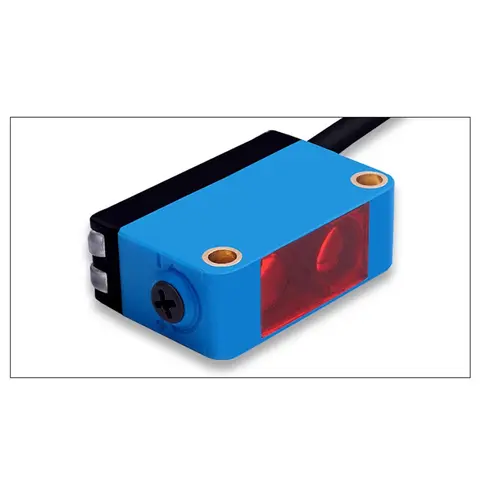
BGS-CX441 / BGS-CX442 Background Suppression Photoelectric Sensor
Wire-adjustable BGS sensor with 2 mm or 15 mm spot, 10-300 mm range, published black/white differential distance.
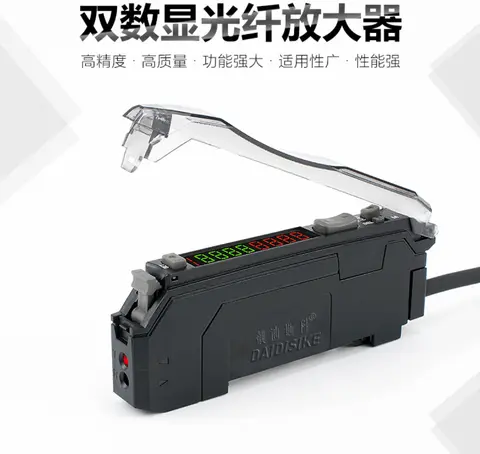
Fiber Amplifier (Digital Fiber Optic Sensor Amplifier)
Digital fiber optic amplifiers with NPN/PNP output, from potentiometer economy models to 25µs dual-display smart units.
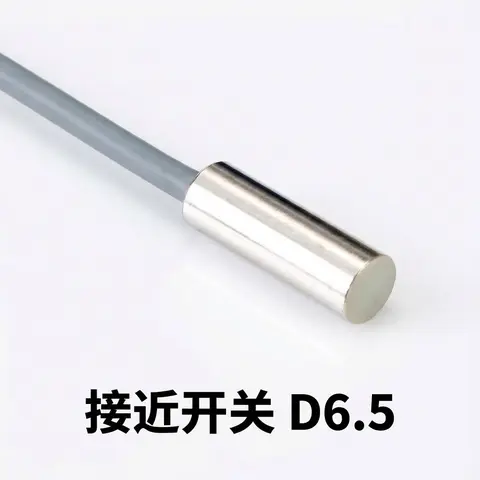
D6.5 Series Inductive Proximity Sensors (Ultra-Short 18mm / Y-Type / 35mm / 45mm)
6.5mm-diameter inductive proximity sensors for tight-clearance mounting where M8 sensors won't fit.
Related Products in Slot Sensors
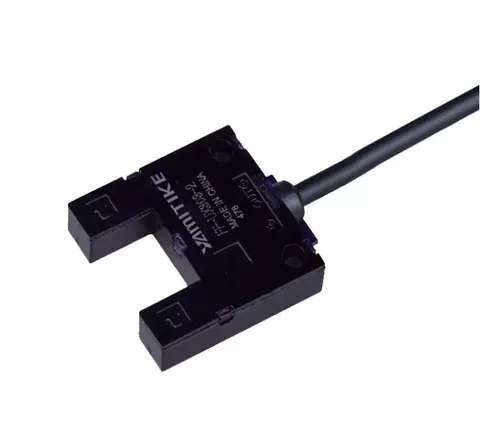
DD-303N / DD-403N Wide-slot Photoelectric Sensor
13 mm through-beam slot sensor giving real tolerance for thick or fluttering parts, still detecting down to 2.2×0.5 mm.
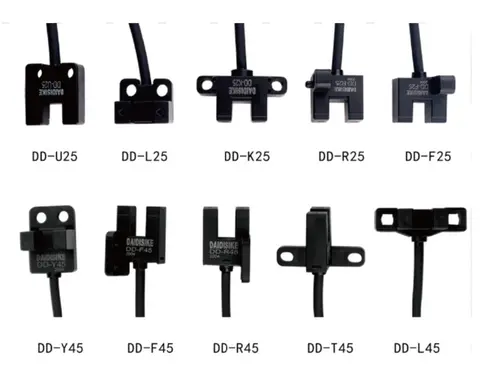
DD-L25/45 Series Micro-slot (Micro U-shaped) Photoelectric Sensor
Micro U-shaped photoelectric sensor with 0.01 mm repeatability and 0.025 mm hysteresis, in 10 compact mounting shapes.
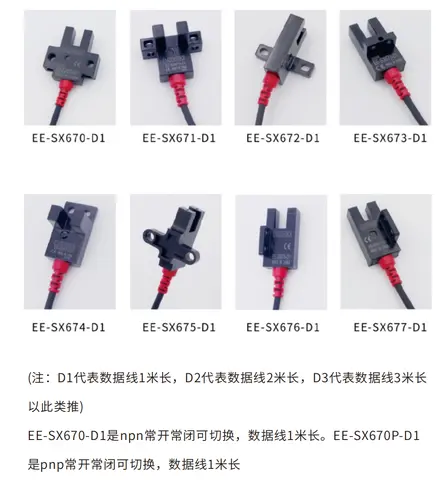
EE-SX67 Series Slot-type Photoelectric Sensor (Photomicrosensor)
Pre-aligned U-shaped photoelectric sensor in 8 shapes with full NPN/PNP output and wiring-selectable NO/NC logic.
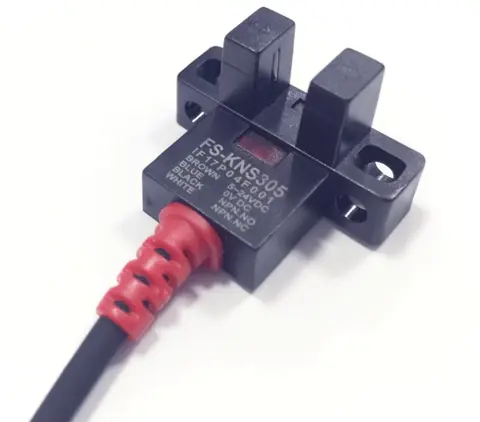
FS-KNS Slot Photoelectric Sensor (Plug-in Type)
5 mm-slot sensor with simultaneous NO+NC outputs, 0.3 ms response, and 1 mm minimum detectable object.