
DLD20A5-5N / DLD20A5-5P 2D TOF Obstacle-avoidance LiDAR (20 m)
20 m 2D TOF LiDAR with pure NPN/PNP discrete outputs — wires straight into a PLC, no protocol, no SDK.
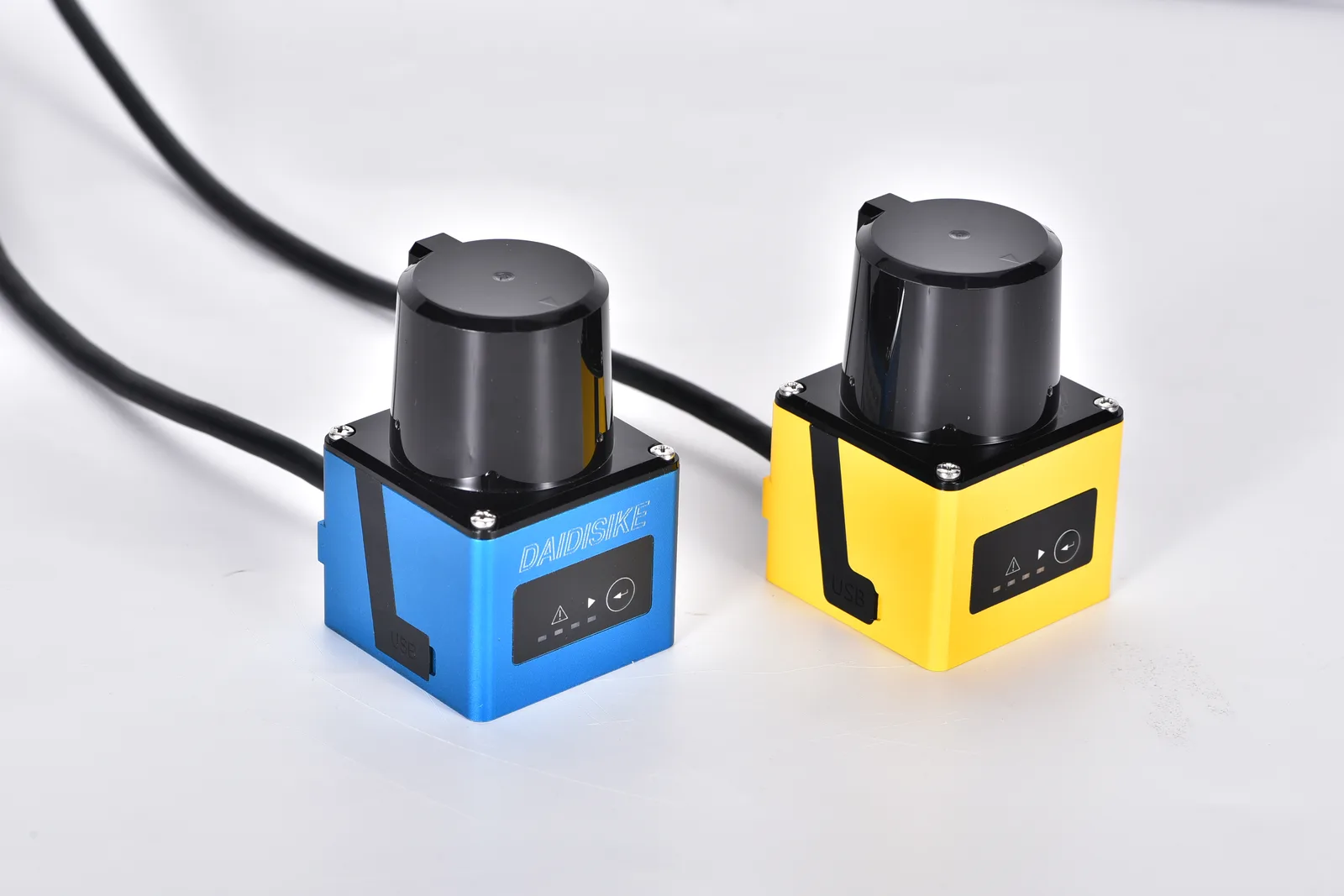 🔍 Click to enlarge · 1/16
Technical Specifications
| Model | DLD20A5-5N / DLD20A5-5P |
|---|---|
| Output type | DLD20A5-5N: NPN discrete x3 + status x1; DLD20A5-5P: PNP discrete x3 + status x1 |
| Switch output rating | DC30V 50mA MAX |
| Detection range | 0.05-20 m |
| Scan angle | 270° |
| Scan rate | 15/30 Hz |
| Angular resolution | 0.1° / 0.3° |
| Detection accuracy | ±30 mm |
| Laser | 905 nm, Class I |
| Operating voltage | DC9-28V |
| Ingress protection | IP65 |
| Zone sets | 16 zone sets |
| Dimensions | 50 x 50 x 76 mm |
Overview
The DLD20A5 is a 270° 2D Time-of-Flight LiDAR sensor that scans out to 20 m and, instead of streaming raw point-cloud or Ethernet data, evaluates the scan against 16 stored zone sets and drives three independent discrete outputs (NPN sinking on the -5N variant, PNP sourcing on the -5P variant) plus a status output.
It is built for machine builders and system integrators who need long-range, multi-level area monitoring (warning / slow-down / stop) but want to control it the same way they control a photoelectric sensor or a safety-style area scanner — with hard-wired switch signals into a PLC — rather than building an Ethernet/bus integration.
Features & Benefits
Pure discrete-output long-range LiDAR
20 m detection with 3x NPN or PNP switch outputs plus 1 status output, with no protocol stack or SDK required to bring it online.
NPN and PNP variants for global electrical standards
The -5N (sinking) and -5P (sourcing) variants cover Japanese- and European-style control panel wiring within one series.
Three outputs x 16 stored zone sets for staged protection
Each zone set provides three nested detection fields mapped to the three discrete outputs, letting a vehicle switch between warning / slow-down / stop responses as speed or route section changes.
0.05 m to 20 m coverage in one sensor
Long-range anticipation and close-in detection are handled by the same unit, without a dead zone near the sensor face.
0.1°/0.3° selectable angular resolution
At the finer 0.1° setting, scan points remain roughly 35 mm apart even at the 20 m limit, helping keep slim objects within the evaluated field. 15/30 Hz scan-rate options are available.
±30 mm detection accuracy, 905 nm Class 1 laser
TOF ranging accuracy is quoted at ±30 mm across the working range, using an eye-safe Class 1 laser source.
IP65-rated, DC9-28V wide supply, compact housing
A 50 x 50 x 76 mm housing with IP65 protection suits installation on mobile platforms and machine frames without a dedicated enclosure.
Mechanically and electrically identical to the 5 m version (DLD05A3)
Same 270° field, ±30 mm accuracy, 905 nm Class 1 laser, DC9-28V supply, IP65 rating and 50 x 50 x 76 mm housing, so extending a product line from 5 m to 20 m coverage does not require new brackets, wiring, or mounting hole layouts.
Applications
Models & Ordering Information
DLD20A5 series
Earlier model code
PDF & 3D CAD Downloads
Browse all downloadsDLD05 / DLD20 5 m / 20 m TOF LiDAR User Manual
DLD05 / DLD20 TOF LiDAR NPN and PNP Quick Wiring Guide
DLD05 / DLD20 TOF LiDAR Quick User Manual
Two-page quick reference. Original fold-out page layout retained; zoom in to read wiring details.
Confirm the document and CAD file match the exact ordered version before installation or mechanical design. Contact us if your model is not listed.
How to Select
- By detection range: the DLD20A5 series covers 0.05-20 m. If the required detection range is only up to 5 m, the mechanically identical DLD05A3 series is the closer fit; if the application needs Ethernet-based ranging data output at 30 m or 50 m, see the DLD30T / DLD50T8 series instead.
- By output type (NPN/PNP): choose -5N (NPN, sinking) for control panels built around sinking-input PLCs; choose -5P (PNP, sourcing) for sourcing-input PLCs. Both variants share identical detection performance — only the output electrical type differs.
- By zone sets: all DLD20A5 units include 16 stored zone sets, each providing 3 nested detection fields mapped to the 3 discrete outputs. Select which zone set is active via external switching to match the vehicle's current speed or route section.
- By angular resolution/scan rate: 0.1° resolution at 20 m keeps scan points about 35 mm apart, better for detecting slim objects at long range; 0.3° gives coarser resolution. Scan rate is selectable at 15 Hz or 30 Hz — higher scan rate updates the field faster, useful for higher vehicle speeds.
- By power supply and mounting: DC9-28V wide-range supply and a 50 x 50 x 76 mm IP65 housing are common to both variants, so the mechanical/electrical footprint does not change with the output-type choice — only wiring polarity differs between -5N and -5P.
📘 Need the full method? How to Choose a 2D LiDAR Scanner
When NOT to specify the DLD20A5-5N — and what to use instead
Using the DLD20A5 to protect a person in a machine-safety stop circuit
Why not: No Type (IEC 61496), SIL (IEC 61508) or Category/PL (ISO 13849) rating is documented for this sensor, and its outputs are 3 NPN/PNP discrete switches (DC 30 V, 50 mA max) plus a status signal — not OSSDs.
Use instead: The DAIDISIKE ST27 Series Safety Laser Scanner — Type 3 / SIL 2 / Cat. 3 PL d, OSSD outputs, 3 m or 5 m protective field at 1.8% remission.
Setting braking or stopping-distance logic against the full 20 m range for dark or low-reflectivity targets
Why not: The published 0.05-20 m figure carries no target-reflectivity qualifier. Other LiDARs in this line state their range against a specific remission (for example DLD05A3's siblings quote 90% and 10% cases separately), but the reflectivity basis for the DLD20A5's 20 m number is an open item we have flagged internally and have not resolved with the factory. Real range on a dark target could be materially shorter than 20 m.
Use instead: Ask us for the reflectivity basis of the 20 m figure before you finalise zone sizes. Until it is confirmed, build in margin and add a closer redundant zone for dark or unknown-reflectivity targets.
The application only ever needs to see objects within about 5 m
Why not: The DLD20A5 is built and tuned for 0.05-20 m coverage, and its zone-set library is sized around far-field staged braking rather than tight short-range logic. You would be paying for range you do not use.
Use instead: The mechanically identical DLD05A3-3N / DLD05A3-3P (0.05-5 m) from the same housing platform.
You need Ethernet or fieldbus ranging data rather than a hardwired trigger
Why not: The DLD20A5 is pure discrete I/O — 3 NPN or PNP switching outputs plus 1 status signal — with no Ethernet or bus protocol of any kind.
Use instead: DLD30T-5N or the DLD50T8 series, which output Ethernet-based ranging data instead of switch signals.
Wiring the -5N or -5P variant without first checking the panel's input convention
Why not: The -5N variant is NPN (sinking) only and the -5P variant is PNP (sourcing) only. There is no combined or field-switchable output type.
Use instead: Verify the input polarity before ordering: -5N for sinking-input cards, -5P for sourcing-input cards.
Flagging a slender object — a thin post, cable or pedestrian leg — near the far edge of 20 m using the 0.3 degree setting
Why not: At 0.1 degree resolution scan points sit roughly 35 mm apart even at 20 m. The coarser 0.3 degree setting spreads them further at the same distance, raising the chance a slim object is missed between adjacent points.
Use instead: Use the 0.1 degree setting for long-range slim-object detection, or add a dedicated closer-range sensor as backup at that point.
Specifications we do not publish yet
We only publish a figure once we are confident it is true. The items below are still being validated through further testing and real-world customer feedback, so for now we would rather leave them open than guess. If one of them matters to your design, ask us for the latest validated status.
- Target reflectivity basis for the published 0.05-20 m maximum range. No 90% / 10% (or other) qualifier is documented for this model, unlike others in the line — this directly affects stopping-distance planning, so ask us before you fix a safety margin
- Weight — not confirmed, unlike the 150 g documented for the shorter-range DLD05A3.
- Operating temperature range.
- Housing and lens material.
- End-to-end response time — figures you may find elsewhere (134 ms @15 Hz / 66 ms @30 Hz) are not validated by us, so we do not publish them yet
- Power consumption and current draw across the DC 9-28 V input range.
- Output and power connector type (DB15 versus flying leads) and cable length.
- Certification documentation. Certification documents are available on request.
Frequently Asked Questions
What is the maximum detection range of the DLD20A5?
What output signals does the DLD20A5 provide?
Does the DLD20A5 use Ethernet or a bus protocol like RS485/Modbus?
What is the scan angle and scan rate?
What angular resolution options are available?
How accurate is the distance measurement?
What laser type does the DLD20A5 use, and is it eye-safe?
What is the operating voltage and ingress protection rating?
How many zone sets does the DLD20A5 support?
What is the physical size of the DLD20A5?
How is the DLD20A5 different from the DLD30T or DLD50T8 series?
Can the DLD20A5 provide certification documents such as CE, FCC, or RoHS?
Related Categories and Example Products
Explore other functions that may be needed in a machine or line. The products below are category examples, not pre-validated electrical or safety combinations. Confirm each interface and application separately: Relay & Timer Modules · Safety Light Curtains · Proximity Sensors
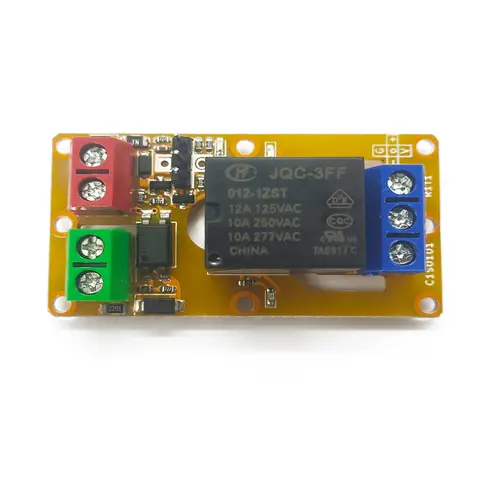
A1J0101 Economical Input Amplifier Module
Optocoupler-isolated input amplifier that turns a low-voltage signal into a 250V AC / 10A relay output.
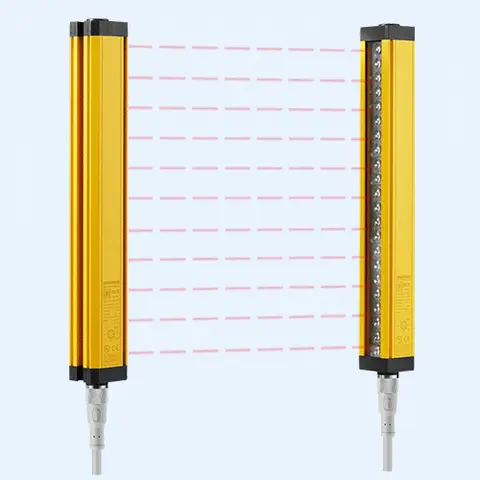
DCE Automation Safety Light Curtain
Compact through-beam safety light curtain in a 30 x 30 mm housing: 10/20/30/40 mm beam pitch, up to 72 beams, 0.3-3 m or 0.3-6 m sensing distance, NPN/PNP output. Catalogue-stated Type 4 design basis; confirm exact safety-document scope.
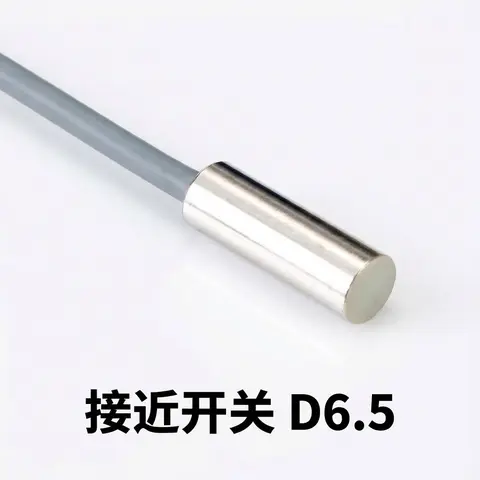
D6.5 Series Inductive Proximity Sensors (Ultra-Short 18mm / Y-Type / 35mm / 45mm)
6.5mm-diameter inductive proximity sensors for tight-clearance mounting where M8 sensors won't fit.
Related Products in LiDAR Scanners
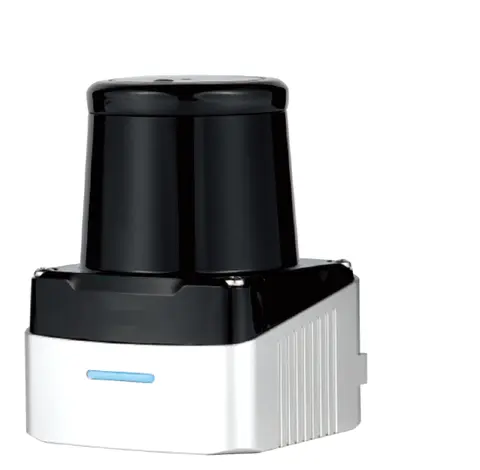
DLD-100D Single-Line TOF Scanning LiDAR
Single-line TOF scanning LiDAR with up to 100 m range, model-dependent 280°/360° coverage, and a 100 Hz / 0.32° DLD-100DP option.
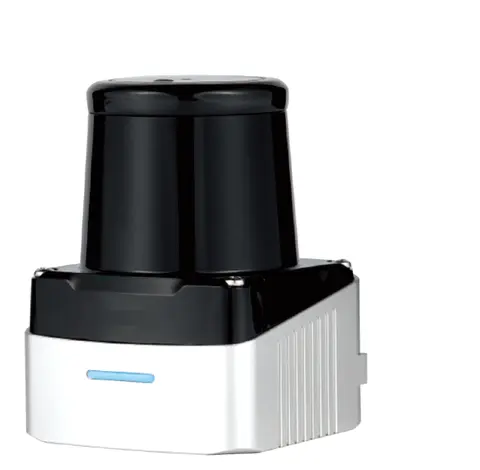
DLD-50D 2D TOF LiDAR for Navigation & Mapping (50 m)
50 m-range 2D TOF LiDAR for mobile robot navigation and mapping — ±20 mm repeatability, 280° FoV, Ethernet output.
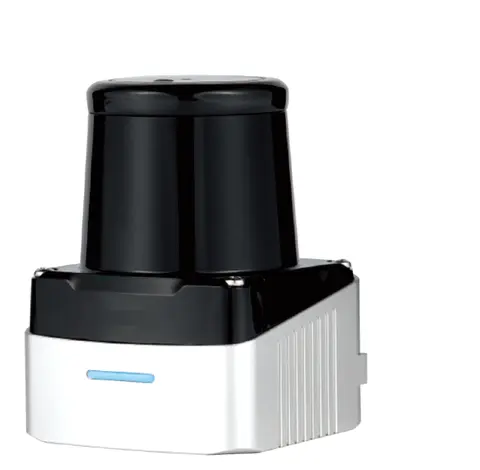
DLD-50G 2D Single-line LiDAR (Diffuse-remission Measuring Type)
2D single-line laser scanner measuring diffuse-remission distance off natural surfaces, no reflector needed.
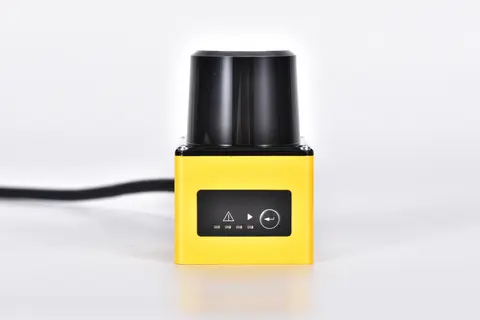
DLD05A3 2D TOF Obstacle-avoidance LiDAR (5 m)
2D TOF LiDAR with NPN/PNP switching outputs that wires like a photoelectric sensor — no protocol stack, no SDK.