
DLD30T-5N Single-line TOF Measuring 2D LiDAR (30 m)
Palm-sized IP67 single-line TOF 2D LiDAR with 0.08° resolution and Ethernet point-cloud output for AGV navigation.
 🔍 Click to enlarge · 1/6
Technical Specifications
| Model | DLD30T-5N |
|---|---|
| Output interface | NPN discrete output + Ethernet 100BASE-TX |
| Detection range | 30 m @ 90% reflectivity / 10 m @ 10% reflectivity |
| Detection accuracy | ±30 mm |
| Scan angle | 270° |
| Scan frequency | 10-30 Hz |
| Angular resolution | Min. 0.08° (adjustable) |
| Operating voltage | DC12-24V |
| Laser | 905 nm, Class I |
| Protection rating | IP67 |
| Dimensions | 50 × 50 × 76 mm |
| Weight | 148 g |
Overview
The DLD30T-5N is a Time-of-Flight (TOF) single-line/single-layer 2D LiDAR that performs a 270° rotational scan and outputs measurement (point-cloud) data — distance and angle for each scan point — over a standard Ethernet interface, rather than pre-processed switch outputs. It is built for system integrators and OEMs who develop their own navigation, SLAM, or area-monitoring software and need direct access to raw scan data, including mobile robot / AGV manufacturers, warehouse automation integrators, and machine builders mounting sensors on moving equipment such as robot arms, gantries, and forklifts.
The sensor delivers an adjustable angular resolution down to 0.08°, a scan frequency adjustable from 10 to 30 Hz, and a dual-rated detection range of 30 m on 90% reflectivity targets and 10 m on 10% reflectivity (dark) targets. Housed in a palm-sized 50 × 50 × 76 mm, 148 g IP67 enclosure with a Class 1 eye-safe 905 nm laser, it outputs point-cloud data over a 100BASE-TX Ethernet interface and runs on DC12-24V power.
Features & Benefits
Adjustable angular resolution down to 0.08°
Delivers dense, gap-free contour point data on distant or slender objects such as posts, shelf legs, or human legs — fine enough for reliable mapping and navigation. Resolution is adjustable so users can trade point density against data volume.
Honest dual-rated detection range
30 m on 90% remission (reflectivity) targets, 10 m on dark 10% remission targets, published together so integrators can select the sensor based on the worst-case surface — dark clothing, black bins — rather than a single best-case number.
Scan frequency adjustable from 10 to 30 Hz
Lower frequency gives denser point capture for static mapping and measurement tasks; higher frequency gives faster refresh for dynamic monitoring — both on the same unit.
Palm-sized, lightweight housing
At 50 × 50 × 76 mm and 148 g, the housing is compact enough to mount on space- and weight-constrained platforms such as small mobile robots, moving gantries, or robotic-arm end-effectors.
IP67 housing with Class 1 eye-safe 905 nm laser
Rated for dusty and washdown-prone industrial environments, and safe for continuous operation in areas where personnel are present, per laser safety classification.
Standard 100BASE-TX Ethernet measurement data output
Connects directly to industrial PCs or navigation controllers over a single Ethernet cable — the common interface used by navigation and mapping software stacks.
Applications
Models & Ordering Information
DLD30T Series
How to Select
- If your application needs raw distance/angle point-cloud data for custom navigation or mapping software, choose DLD30T-5N with its Ethernet measurement data output.
- If your application only needs a simple switch signal for obstacle avoidance, choose a switch-output series instead — DLD30T-5N is a point-cloud measurement sensor, not an on/off switch sensor.
- Always size the sensor to the worst-case (lowest) reflectivity figure for your target material: 30 m at 90% reflectivity, 10 m at 10% reflectivity.
- Choose a finer angular resolution setting (toward 0.08°) for denser point clouds when scan time and data volume allow; choose a coarser setting to reduce data volume and processing load.
- Choose the lower end of the 10-30 Hz scan frequency range for static measurement/mapping tasks that benefit from denser points per scan, and the higher end for dynamic monitoring tasks that need faster refresh.
- Confirm your platform can supply a stable DC12-24V power source before installation.
- Confirm available mounting space and payload budget: at 50 × 50 × 76 mm and 148 g, DLD30T-5N suits space- and weight-constrained mounting positions such as small robots or arm ends.
📘 Need the full method? How to Choose a 2D LiDAR Scanner
When NOT to specify the DLD30T-5N — and what to use instead
Using the DLD30T-5N as the protective device in a machine safety function
Why not: Its only confirmed output is raw point-cloud measurement data over 100BASE-TX Ethernet. There is no discrete safety switching output, and no Type (IEC 61496), SIL (IEC 61508) or Category/PL (ISO 13849) rating is published for this model.
Use instead: The DAIDISIKE ST27 Series Safety Laser Scanner — Type 3 / SIL 2 / Cat. 3 PL d, dedicated OSSD outputs, 3 m or 5 m protective field at 1.8% remission.
Detecting dark, low-reflectivity objects — black bins, dark workwear, matte rubber — out near the headline 30 m figure
Why not: The range is dual-rated: 30 m applies at 90% reflectivity only. At 10% reflectivity the confirmed range is 10 m. That is a third of the headline number.
Use instead: Design the working distance around the 10 m @10% figure for dark targets, and confirm performance on your actual target material with us before committing to a layout.
Expecting the scanner to resolve thin objects — posts, cart legs — right at the far end of its 30 m range
Why not: Even at the finest confirmed 0.08 degree angular resolution, the spacing between measured points widens with distance: roughly 14 mm at 10 m but roughly 42 mm at 30 m. A thin target at 30 m can fall between points.
Use instead: Validate detection of your actual object size at the actual working distance with a test scan, or ask us about denser point spacing for that range.
Deploying outdoors in extreme heat or cold on an assumed temperature rating
Why not: No operating temperature range is confirmed for DLD30T-5N in our current factory material. A wider range appearing in third-party material conflicts with the factory datasheet and we do not publish it.
Use instead: Confirm the actual operating temperature range with us before specifying this sensor for a hot or cold installation.
Specifications we do not publish yet
We only publish a figure once we are confident it is true. The items below are still being validated through further testing and real-world customer feedback, so for now we would rather leave them open than guess. If one of them matters to your design, ask us for the latest validated status.
- Operating temperature range.
- Number and logic of switchable / programmable detection zones.
- Response time / measurement output latency.
- Power consumption and current draw; whether PoE is supported.
- Application-layer Ethernet protocol beyond the confirmed 100BASE-TX physical layer, and connector pinout.
- Housing material.
- MTBF or expected service life.
- Certification documentation. Certification documents are available on request.
- Number of NPN discrete output channels, their switching rating and zone-trigger logic. The output is confirmed present but these details are not yet published.
- Whether a PNP (sourcing) variant of the DLD30T is available.
Frequently Asked Questions
What does "TOF" mean in the DLD30T-5N LiDAR, and how does it differ from triangulation-based sensors?
What is the actual detection range of the DLD30T-5N?
What data does the DLD30T-5N output, and over what interface?
What angular resolution does the DLD30T-5N support?
What scan frequency does the DLD30T-5N run at?
Is the DLD30T-5N laser safe for use around personnel?
What is the measurement accuracy of the DLD30T-5N?
What is the physical size and weight of the DLD30T-5N?
What power supply does the DLD30T-5N require?
Can the DLD30T-5N provide certification documents such as CE, FCC, or RoHS?
Related Categories and Example Products
Explore other functions that may be needed in a machine or line. The products below are category examples, not pre-validated electrical or safety combinations. Confirm each interface and application separately: Relay & Timer Modules · Safety Light Curtains · Proximity Sensors
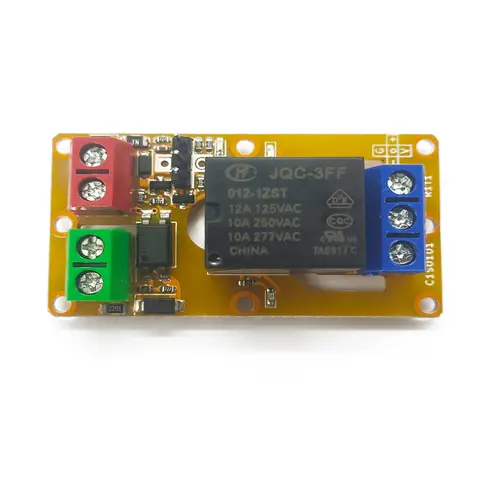
A1J0101 Economical Input Amplifier Module
Optocoupler-isolated input amplifier that turns a low-voltage signal into a 250V AC / 10A relay output.
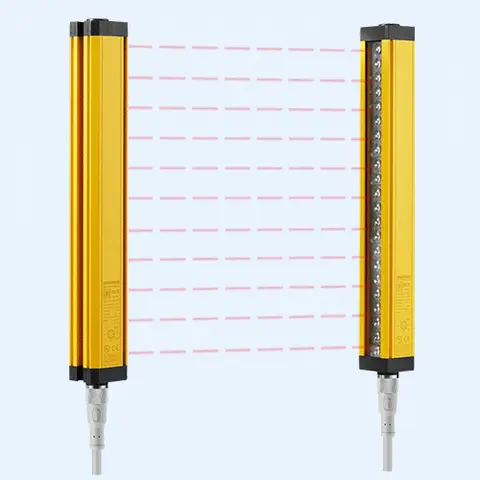
DCE Automation Safety Light Curtain
Compact through-beam safety light curtain in a 30 x 30 mm housing: 10/20/30/40 mm beam pitch, up to 72 beams, 0.3-3 m or 0.3-6 m sensing distance, NPN/PNP output. Catalogue-stated Type 4 design basis; confirm exact safety-document scope.
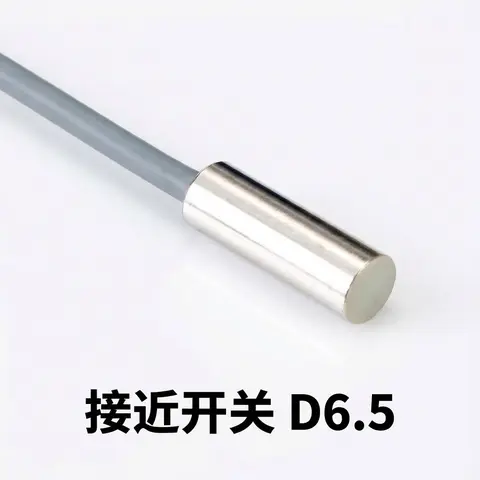
D6.5 Series Inductive Proximity Sensors (Ultra-Short 18mm / Y-Type / 35mm / 45mm)
6.5mm-diameter inductive proximity sensors for tight-clearance mounting where M8 sensors won't fit.
Related Products in LiDAR Scanners
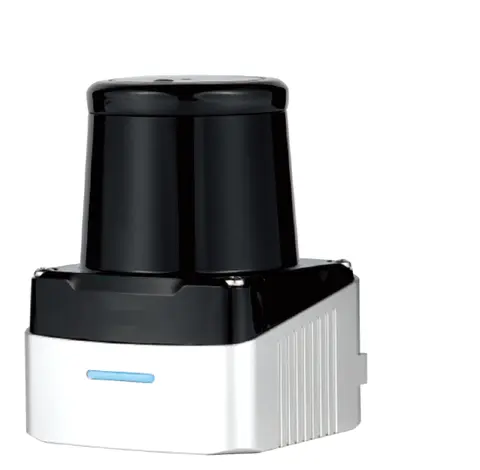
DLD-100D Single-Line TOF Scanning LiDAR
Single-line TOF scanning LiDAR with up to 100 m range, model-dependent 280°/360° coverage, and a 100 Hz / 0.32° DLD-100DP option.
DLD-50D 2D TOF LiDAR for Navigation & Mapping (50 m)
50 m-range 2D TOF LiDAR for mobile robot navigation and mapping — ±20 mm repeatability, 280° FoV, Ethernet output.
DLD-50G 2D Single-line LiDAR (Diffuse-remission Measuring Type)
2D single-line laser scanner measuring diffuse-remission distance off natural surfaces, no reflector needed.
DLD05A3 2D TOF Obstacle-avoidance LiDAR (5 m)
2D TOF LiDAR with NPN/PNP switching outputs that wires like a photoelectric sensor — no protocol stack, no SDK.