
DLD50T8N / DLD50T8P — 50 m Measuring LiDAR with Discrete I/O + Ethernet
A 50 m TOF lidar with Ethernet point-cloud data and hard-wired NPN/PNP discrete output from one sensor.
 🔍 Click to enlarge · 1/9
Technical Specifications
| Model | DLD50T8N / DLD50T8P |
|---|---|
| Output | DLD50T8N: NPN discrete I/O + Ethernet 100BASE-TX; DLD50T8P: PNP discrete I/O + Ethernet 100BASE-TX |
| Detection Range | 50 m @ 90% remission / 20 m @ 10% remission |
| Accuracy | ±30 mm |
| Scanning Angle | 280° |
| Scan Frequency | DLD50T8N: 50 Hz; DLD50T8P: 100 Hz |
| Angular Resolution | DLD50T8N: 0.08° / 0.16° / 0.32°; DLD50T8P: 0.32° |
| Operating Voltage | 9-36 V DC |
| Laser | Class 1 |
| Protection Rating | IP67 |
| Dimensions | 60 × 60 × 80 mm |
| Weight | 250 g (excluding cable) |
| Operating Current | 0.25 A at 12 V (MAX); supply current, not the discrete-output load rating |
| Power Consumption | 3 W (MAX) |
| Operating Temperature | -10°C to +55°C |
| Ambient Light Immunity | >80,000 lux |
| Discrete I/O Integration Details | NPN (DLD50T8N) / PNP (DLD50T8P); channel count, output load current, pinout and trigger logic require T8-specific confirmation |
| Ethernet Protocol | 100BASE-TX physical interface documented; application-layer protocol and software compatibility require confirmation |
Overview
DLD50T8N/P is a 2D single-line time-of-flight (TOF) scanning lidar covering a 280° field of view out to 50 m (at 90% remission) or 20 m (at 10% remission, i.e. dark/low-reflectivity targets), with ±30 mm accuracy. It is built for OEMs and system integrators who need a scanning lidar that delivers both raw measurement data over Ethernet and simple hard-wired switching signals, without adding a second sensor for the discrete-output side.
It is available in two output variants: DLD50T8N (NPN discrete I/O + 100BASE-TX Ethernet, 50 Hz scan frequency, selectable angular resolution of 0.08°/0.16°/0.32°) and DLD50T8P (PNP discrete I/O + 100BASE-TX Ethernet, 100 Hz scan frequency, 0.32° angular resolution). Both variants operate on 9-36 V DC, are IP67 rated, use a Class 1 laser, and measure 60×60×80 mm at 250 g.
Confirm the T8 Electrical Interface Before Ordering
| Procurement field | Documented | Still to confirm |
|---|---|---|
| Output variant | DLD50T8N: NPN; DLD50T8P: PNP | Channel count, output load current, trigger logic and pin assignment |
| Power | 9-36 V DC; 0.25 A at 12 V MAX; 3 W MAX | Supply design across the input range; do not use 0.25 A as the I/O load rating |
| Ethernet | 100BASE-TX | Application protocol, SDK/driver, host OS and integration guide |
| Installation | 60 × 60 × 80 mm; 250 g excluding cable; IP67; -10 to +55 °C | Ordered connector/cable, mounting drawing and blind-sector orientation |
The T8 catalogue page is the basis for these fields. DLD-50D is a different device: DLD-50DH, DLD-50DC and DLD-50DP are not order codes for this page, and the DLD-50D SDK/manual must not be used to fill T8 gaps.
For the separate Ethernet-only family, compare the DLD-50D product page.
Prepare a T8 Quotation and Sample Check
- Specify DLD50T8N or DLD50T8P, quantity, actual target reflectivity/material, distance span, required scan speed and receiving-controller model.
- Ask for the T8-specific pinout, per-channel electrical limits, trigger configuration and Ethernet integration document before connecting any output.
- Confirm included cables/connectors, mounting drawing, software availability, required certificates, delivery destination and lead time in the quotation.
- Agree sample acceptance on the real target: distance error, field coverage, scan data and ordinary switching behavior. Do not treat an ordinary switching test as validation of a personnel-safety function.
Features & Benefits
Hybrid output: Ethernet scan data plus hard-wired discrete outputs in one scanner
The product table lists Ethernet 100BASE-TX and NPN/PNP I/O. Confirm the application protocol, I/O channel count, trigger behavior and electrical limits against the ordered T8 version before designing the receiving circuit; these details are not supplied by the DLD-50D manual.
NPN and PNP variants for sinking or sourcing control systems
DLD50T8N provides NPN (sinking) discrete output; DLD50T8P provides PNP (sourcing) discrete output. Match the receiving input and confirm the output load rating and pinout before deciding whether an interface is needed.
Dual-rated 50 m / 20 m range specified for real-world dark targets
Range is stated as 50 m at 90% remission and 20 m at 10% remission, with ±30 mm accuracy. Compare these specified target conditions with the real surface; 20 m is not an unconditional worst-case range for every dark or contaminated target.
280° wide-angle coverage with model-specific scan speed/resolution trade-off
Both variants scan a 280° field of view. The N-model runs at 50 Hz with selectable 0.08°/0.16°/0.32° angular resolution for higher point-density mapping; the P-model runs at 100 Hz with fixed 0.32° resolution for faster refresh in dynamic monitoring.
IP67 sealing and 9-36 V DC wide-range supply for outdoor and vehicle-mounted use
The housing is rated IP67 and accepts 9-36 V DC input. Check supply stability, transients, connector sealing and optical-window exposure for the actual installation; IP67 does not establish vehicle-power transient tolerance.
Class 1 eye-safe laser in a compact housing
The laser is Class 1, eye-safe under normal operating conditions per the applicable laser classification. The unit measures 60×60×80 mm at 250 g, allowing mounting in space- and weight-constrained equipment.
Applications
Models & Ordering Information
DLD50T8 50 m Measuring LiDAR with Discrete I/O
PDF & 3D CAD Downloads
Browse all downloadsDLD-50D User Manual - Shared 50 m LiDAR Reference
22 pages. The manual names DLD-50DH/DC/DP variants and is shared here as a reference for the listed 50 m products; it does not establish identical specifications for DLD-50G or DLD50T8N/P. Confirm the ordered interface, wiring and firmware before use. Some dimension-drawing labels remain in Chinese.
Confirm the document and CAD file match the exact ordered version before installation or mechanical design. Contact us if your model is not listed.
How to Select
- Choose DLD50T8N for NPN (sinking) control-system wiring, or DLD50T8P for PNP (sourcing) wiring; both include 100BASE-TX Ethernet for data output.
- Choose DLD50T8N when finer angular resolution (selectable down to 0.08° at 50 Hz) is needed for detailed measurement or mapping density.
- Choose DLD50T8P when a faster 100 Hz refresh rate is the priority for tracking moving objects or fast-changing scenes.
- Design the working detection distance around the 20 m (10% remission) rating if target surfaces are dark or low-reflectivity; the full 50 m applies only to higher-reflectivity (90%) surfaces.
- Supply voltage (9-36 V DC), IP67 protection, Class 1 laser class, and the 60×60×80 mm / 250 g housing are identical on both variants and do not affect the N/P choice.
📘 Need the full method? How to Choose a 2D LiDAR Scanner
When NOT to specify the DLD50T8N — and what to use instead
Wiring the NPN/PNP discrete output into a safety PLC's safety input as a stop or interlock signal
Why not: The T8 product table documents ordinary NPN/PNP I/O, not a certified OSSD personnel-protection function. No Type, SIL or Category/PL rating is established for DLD50T8N/P by that table.
Use instead: The DAIDISIKE ST27 Series Safety Laser Scanner — Type 3 / SIL 2 / Cat. 3 PL d, dedicated OSSD outputs, 3 m or 5 m protective field at 1.8% remission.
Relying on the full 50 m range for dark or low-reflectivity objects such as tyres, rubber conveyor skirts or dark housings
Why not: The 50 m figure is rated at 90% target remission. At 10% remission the confirmed range is 20 m, with plus or minus 30 mm accuracy across the rated range.
Use instead: Evaluate ordinary monitoring around the 20 m @10% figure and test the actual target. Do not use this measurement LiDAR as the sole personnel-protection device or infer a safe stopping distance from range alone.
Ordering DLD50T8N when the panel is wired for sourcing (PNP) inputs, or vice versa
Why not: DLD50T8N (NPN / sinking) and DLD50T8P (PNP / sourcing) are two fixed, separate model variants. No field-selectable output polarity is published.
Use instead: Confirm the panel's sinking / sourcing convention before ordering and pick the matching N or P suffix.
You need a 100 Hz refresh rate and finer than 0.32 degree angular resolution at the same time
Why not: DLD50T8P is fixed at 100 Hz with fixed 0.32 degree resolution. DLD50T8N supports resolution down to 0.08 degrees but tops out at 50 Hz. No published variant offers both.
Use instead: Decide whether speed or point density is the priority, or ask us whether a variant covering both exists.
Specifications we do not publish yet
We only publish a figure once we are confident it is true. The items below are still being validated through further testing and real-world customer feedback, so for now we would rather leave them open than guess. If one of them matters to your design, ask us for the latest validated status.
- Number of discrete I/O channels, per-channel drive current and zone-trigger logic — the source states only 'NPN/PNP IO output'.
- Blind-sector orientation for the ordered T8 version; do not import the DLD-50D blind-sector drawing.
- Application-layer communication protocol over Ethernet (proprietary SDK, Modbus TCP, EtherNet/IP) beyond the 100BASE-TX physical layer.
- Connector type, pinout and cable length.
- Supply current across the complete 9-36 V DC input range; the published 0.25 A maximum is specified at 12 V, not an output-channel rating.
- Housing material and MTBF; the catalogue's motor-life figure does not establish a whole-system reliability calculation.
- Certification documentation and exact ordered-model scope; request applicable evidence before committing a conformity requirement.
Frequently Asked Questions
What is the effective detection range of the DLD50T8N/P lidar?
What is the difference between DLD50T8N and DLD50T8P?
What must I confirm before using Ethernet data and discrete switching output together?
Is the discrete output on DLD50T8N/P a certified safety output (OSSD)?
What is the scanning angle (field of view) of the DLD50T8N/P?
What laser safety class is used, and is it eye-safe?
What is the operating voltage and protection rating?
What are the physical dimensions and weight?
Can I choose the angular resolution?
How does this model differ from the DLD-50D measuring lidar?
Related Categories and Example Products
Explore other functions that may be needed in a machine or line. The products below are category examples, not pre-validated electrical or safety combinations. Confirm each interface and application separately: Relay & Timer Modules · Safety Light Curtains · Proximity Sensors
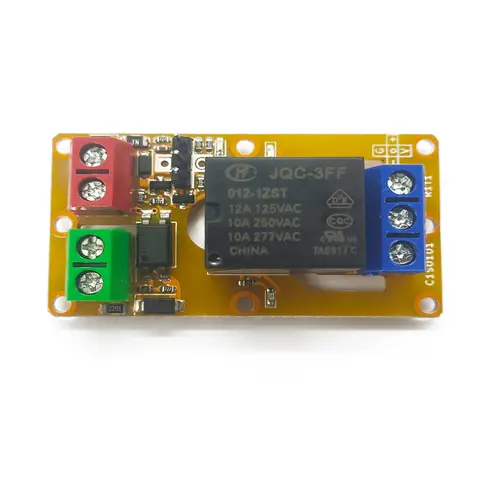
A1J0101 Economical Input Amplifier Module
Optocoupler-isolated input amplifier that turns a low-voltage signal into a 250V AC / 10A relay output.
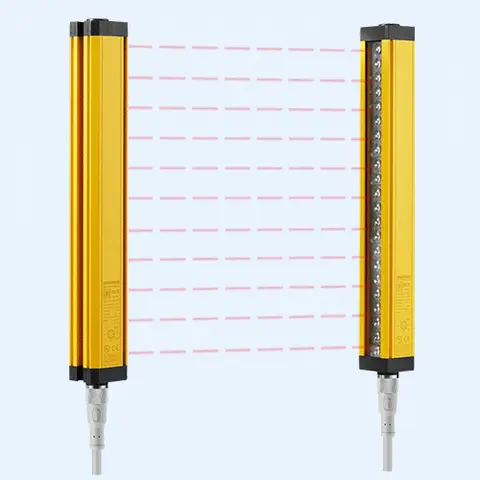
DCE Automation Safety Light Curtain
Compact through-beam safety light curtain in a 30 x 30 mm housing: 10/20/30/40 mm beam pitch, up to 72 beams, 0.3-3 m or 0.3-6 m sensing distance, NPN/PNP output. Catalogue-stated Type 4 design basis; confirm exact safety-document scope.
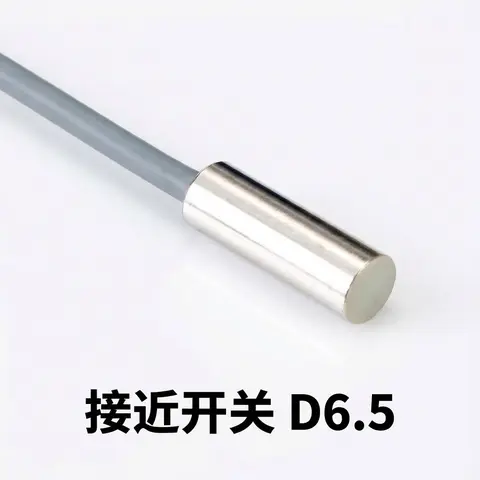
D6.5 Series Inductive Proximity Sensors (Ultra-Short 18mm / Y-Type / 35mm / 45mm)
6.5mm-diameter inductive proximity sensors for tight-clearance mounting where M8 sensors won't fit.
Related Products in LiDAR Scanners
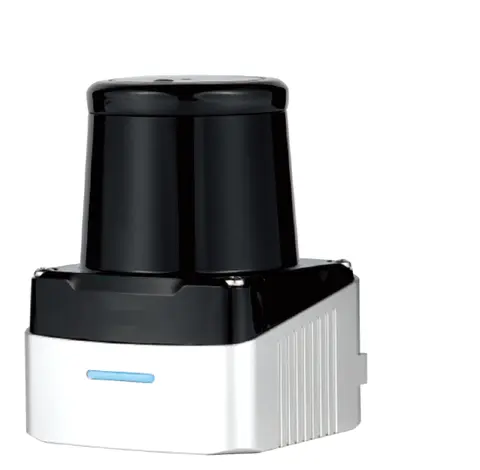
DLD-100D Single-Line TOF Scanning LiDAR
Single-line TOF scanning LiDAR with up to 100 m range, model-dependent 280°/360° coverage, and a 100 Hz / 0.32° DLD-100DP option.
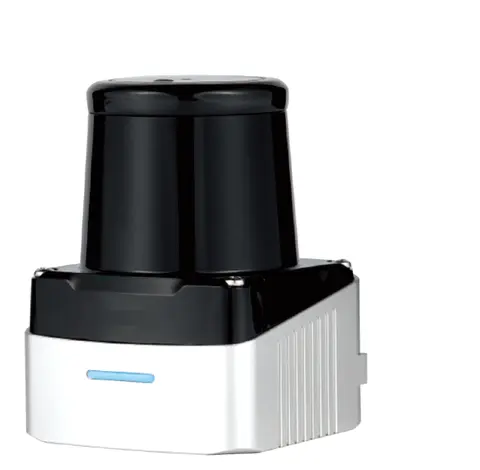
DLD-50D 2D TOF LiDAR for Navigation & Mapping (50 m)
50 m-range 2D TOF LiDAR for mobile robot navigation and mapping — ±20 mm repeatability, 280° FoV, Ethernet output.
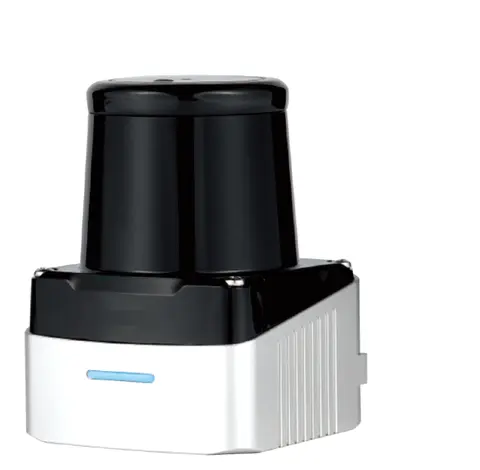
DLD-50G 2D Single-line LiDAR (Diffuse-remission Measuring Type)
2D single-line laser scanner measuring diffuse-remission distance off natural surfaces, no reflector needed.
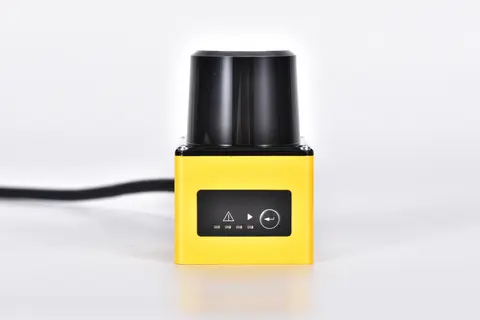
DLD05A3 2D TOF Obstacle-avoidance LiDAR (5 m)
2D TOF LiDAR with NPN/PNP switching outputs that wires like a photoelectric sensor — no protocol stack, no SDK.