
DX-W3 Safety Door Lock
Compact mechanical-contact safety door lock: 1300 N holding force, 2 contact blocks, 6 NC/NO configurations, IP67.
▶ Watch it in action: Safety Light Curtain + Guard-Locking Door Switch Interlock — Wiring Demo
 🔍 Click to enlarge · 1/21
Technical Specifications
| Output type | Mechanical contact type (C=NC, O=NO), 2 contact blocks, 6 combinations |
|---|---|
| Contacts | 2 gold-plated contact blocks |
| Locking method | GD = solenoid-locked, mechanical release / GC = mechanically locked, solenoid release |
| Head material | J = metal head |
| Solenoid voltage | DC24V ±10% |
| Holding force | 1300N |
| Ingress protection | IP67 |
| Mechanical life | 1,000,000 cycles |
| Forced separation | ≥60N |
Overview
DX-W3 is a compact, mechanical-contact safety door interlock switch (solenoid-assisted locking) for machine guard and access doors. When a hinged or sliding guard door is opened, its mechanical contacts change state, and while hazardous machine motion is still in progress the solenoid lock applies a holding force to keep the door shut. It is built for machine builders and panel integrators who need a simple, contact-based interlock — rather than an RFID/coded electronic switch — for guarding access doors on machine tools, packaging equipment, and similar industrial cells.
The DX-W3 has 2 contact blocks offered in 6 NC/NO configurations, each available in two locking-type versions (GD and GC), for 12 models in total. It provides 1300 N of locking/holding force, is rated IP67 with a DC24V ±10% solenoid supply, and is rated for 1,000,000 mechanical operating cycles with forced separation of ≥60N available for manual override.
Features & Benefits
Right-sized contact count for simple safety circuits
2 contact blocks in 6 NC/NO configurations (C/C, /2C, 2C/, CO/, O/C, /CO), each in GD and GC locking types, for 12 models total — enough for a single- or dual-channel basic safety circuit without paying for the extra unused contacts a higher-contact-count model would carry.
Selectable contact-block position (head or body)
Some contact combinations place contacts only in the head compartment (e.g. 2C/), others only in the body compartment (e.g. /2C), letting installers pick the wiring layout that best fits the machine's cable routing and access space.
Gold-plated contacts for signal reliability
Both contact blocks use gold-plated contacts, which helps maintain reliable low-voltage/low-current safety-circuit signal transfer.
1300 N holding force keeps the guard shut during coast-down
The solenoid lock applies 1300 N of locking/holding force, resisting attempts to open the guard door while hazardous machine motion has not yet come to a complete stop.
IP67-rated, 24V DC solenoid for shop-floor environments
Rated IP67 and powered by DC24V ±10%, suitable for machine tool areas exposed to coolant spray, oil mist, or washdown.
Two locking-type versions per contact configuration
Each of the 6 contact combinations is offered in two locking-type versions, GD and GC. Per the latest product PDF, GD is solenoid-locked with mechanical release, and GC is mechanically locked with solenoid release, so the same contact layout can be matched to the guard's required locking behavior.
1 million mechanical cycles with 60N forced separation
Rated for 1,000,000 mechanical operating cycles, and the guard can be forced open with ≥60N in an emergency or manual-release scenario.
Compatible with our DXL safety door bolt for a combined assembly
The DXL safety door bolt has pre-drilled mounting holes that accept the DX-W3 directly, allowing a bolt-plus-interlock assembly to be built from the two products.
Applications
Models & Ordering Information
DX-W3 Switch Models (12 variants)
PDF & 3D CAD Downloads
Browse all downloadsDX-W3 Safety Door Lock Technical Data Sheet
Find the file for your exact model
Open the download center with this series selected. Search the full model, check the file details, and download the matching CAD file.
Confirm the document and CAD file match the exact ordered version before installation or mechanical design. Contact us if your model is not listed.
How to Select
- Decide how many safety channels you need — the DX-W3 has 2 contact blocks, offered as C/C (one NC per compartment), 2C/ or /2C (2 NC contacts in one compartment), or CO/, O/C, /CO (mixed NC/NO signal).
- Choose the contact-block location (head vs. body) to match your wiring access: pick a head-only or head+body configuration (e.g. 2C/, C/C) if cable entry is easiest from the switch head, or a body-only configuration (e.g. /2C) if it's easiest from the body side.
- Choose the locking type: GD is solenoid-locked with mechanical release, and GC is mechanically locked with solenoid release — select the version that matches the fail-safe/locking behavior your machine's safety design requires.
- Confirm supply and environment: all DX-W3 models use DC24V ±10% solenoid supply and are IP67-rated — check this matches your control cabinet supply and the door's environmental exposure (coolant, washdown, etc.).
- Check mechanical requirements: verify the 1300N holding force and ≥60N forced-separation force against your guard door's size/weight and any manual-release requirement, and check the 1,000,000-cycle mechanical life against your expected door-open cycle count over the machine's service life.
- If your application needs more than 2 contact channels, compare against the DX-W2 (4 contact blocks, 14 combinations, 28 models) or the 6-contact-block DX-W5 in the same platform.
📘 Need the full method? How to Choose a Safety Door Switch / Interlock
When NOT to specify the DX-W3 — and what to use instead
The circuit needs more than 2 contact blocks or more than 6 NC/NO configurations.
Why not: DX-W3 is limited to 2 contact blocks in 6 configurations, the smallest contact count in the DX-W platform.
Use instead: DX-W2 (4 contact blocks, 14 combinations) or DX-W5 (6 contact blocks, 4 combinations)
The application needs RFID-coded or electronic transistor output rather than mechanical contacts.
Why not: DX-W3 is a mechanical-contact device intended for relay-based circuits.
Use instead: DX-D6 guard-locking switch
The specification calls for a documented electrical (contact-switching) cycle life.
Why not: DX-W3's electrical life is not separately published in the current source data (unlike its 1,000,000-cycle mechanical life).
Use instead: DX-W2, which publishes a 150,000-operation electrical life on the same platform, if that figure is a hard requirement
The risk assessment calculates guard-opening forces above the rated 1300 N holding force.
Why not: 1300 N is DX-W3's published holding force.
Use instead: DX-D6 (2000 N holding force) if an electronic RFID output is acceptable, or consult the factory for supplementary restraint
The installation is in an environment where the operating temperature range must be verified against a published spec.
Why not: DX-W3's operating temperature range is not stated in the current source data.
Use instead: Confirm with the factory before specifying in temperature extremes, or reference DX-W2's documented -20C to +60C range as a starting point pending confirmation
Specifications we do not publish yet
We only publish a figure once we are confident it is true. The items below are still being validated through further testing and real-world customer feedback, so for now we would rather leave them open than guess. If one of them matters to your design, ask us for the latest validated status.
- Electrical (contact-switching) life cycle count
- Operating temperature range
- PFHd / B10d / MTTFd reliability figures
- Certificate number and scope for the design basis
- Overall body dimensions and weight
- Connector/cable options beyond the standard unwired conduit head
Frequently Asked Questions
What output type does the DX-W3 use — mechanical contacts or electronic/RFID?
How many models are available in the DX-W3 series?
What is the difference between the GD and GC versions?
What holding force does the DX-W3 provide?
What is the supply voltage and ingress protection rating?
How many mechanical operating cycles is the DX-W3 rated for?
Can the guard door be opened manually if the solenoid is not released?
Can the DX-W3 be combined with a mechanical door bolt?
How does the DX-W3 compare to the DX-W2 and DX-W5 in our range?
What contact material is used?
Is the DX-W3 certified to ISO 14119 or other safety standards?
Related Categories and Example Products
Explore other functions that may be needed in a machine or line. The products below are category examples, not pre-validated electrical or safety combinations. Confirm each interface and application separately: Safety Relays · Safety Light Curtains · Safety Mats
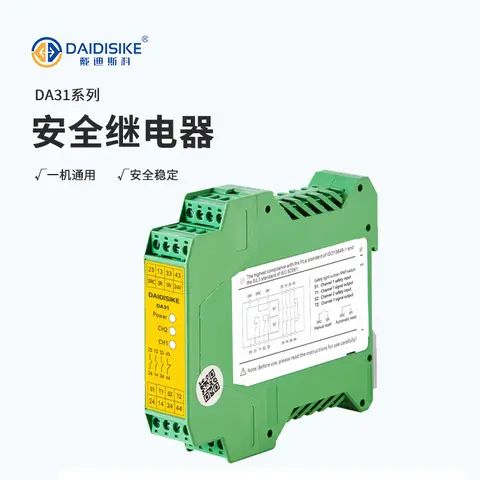
DA31 Emergency-Stop Safety Relay Module
Ultra-slim 22.6 mm Category 4/PL e/SIL 3 safety relay with dual-channel PNP/NPN input and a solid-state status output.
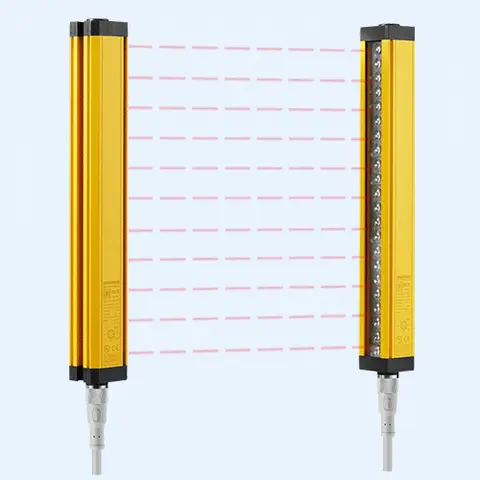
DCE Automation Safety Light Curtain
Compact through-beam safety light curtain in a 30 x 30 mm housing: 10/20/30/40 mm beam pitch, up to 72 beams, 0.3-3 m or 0.3-6 m sensing distance, NPN/PNP output. Catalogue-stated Type 4 design basis; confirm exact safety-document scope.
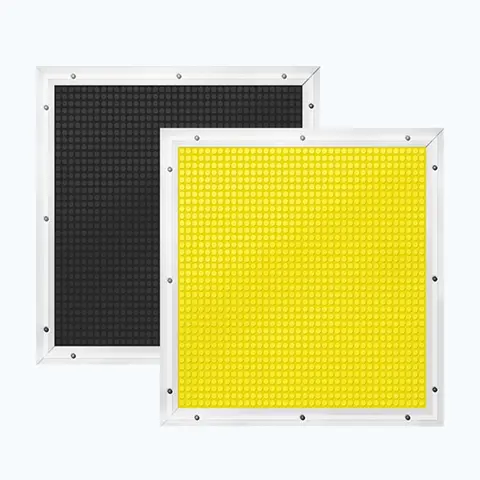
JT14 Safety Mat (Economical)
Economical pressure-sensitive safety mat with volt-free N.O. output for large-area or custom-shape floor guarding.
Related Products in Safety Door Locks & Switches
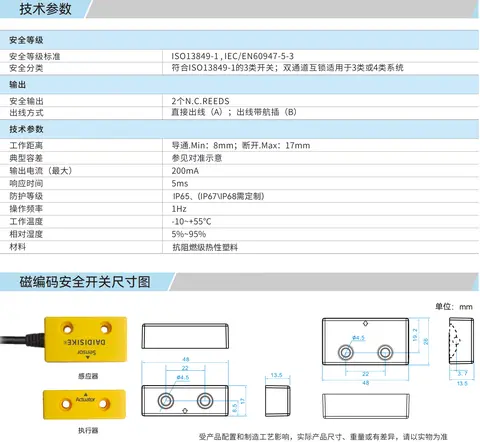
DX-C1 Magnetic Coded Safety Switch
Non-contact coded-magnet safety switch with 17 mm sensing range and high misalignment tolerance for guard doors.
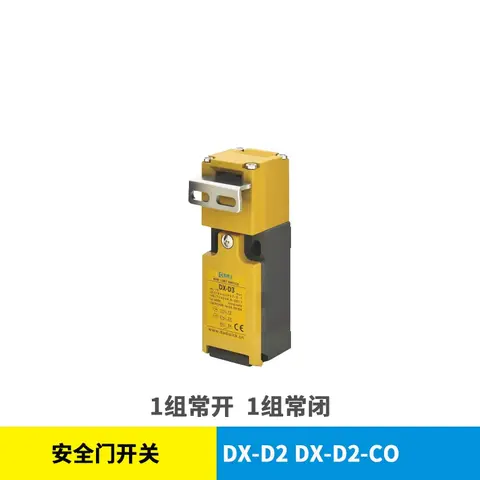
DX-D2 & DX-D3 Safety Door Switch
Mechanical NC/NO safety interlock switch, IP67, 1,000,000-cycle mechanical life, no locking function.
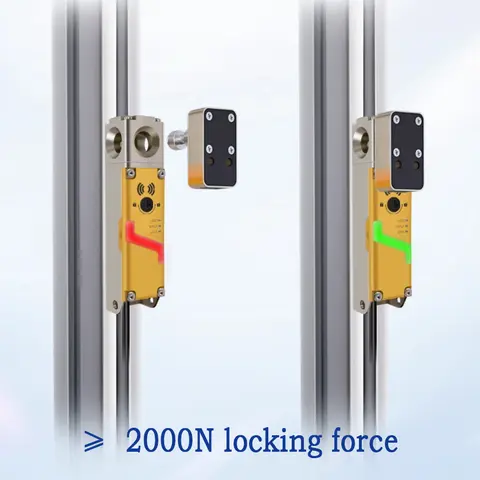
DX-D6 Guard Locking Safety-Door Switch
Guard locking safety-door switch: 2000 N holding force, redundant dual outputs, RFID-coded actuators.
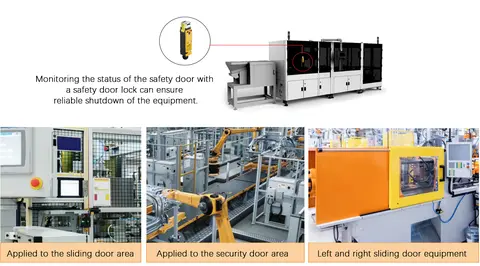
DX-K Series Safety Door Lock Operation Keys
11-model range of fixed and adjustable operation keys for DX-W2/W3/W5 and DX-D2/D3 safety door interlock switches.