
DDSK-J Outdoor Laser Beam Detector
Single beam pair secures up to 500 m of straight outdoor perimeter, IP67-rated with visible or invisible laser options.
 🔍 Click to enlarge · 1/9
Technical Specifications
| Output type | Relay dry contact (volt-free), N.O./N.C. selectable |
|---|---|
| Contact rating | AC 125V/0.5A; DC 24V/1A max |
| Detection range | 100 / 200 / 300 / 500 m selectable |
| Response time (beam interruption time) | 50 / 100 / 300 / 700 ms selectable |
| Laser wavelength | 660nm visible red / 980nm invisible infrared selectable |
| Laser class | Class 1 (eye-safe) |
| Optical axis adjustment | ±15° |
| Operating voltage | DC 9-30V or AC 9-20V |
| Ingress protection rating | IP67 |
| MTBF (mean time between failures) | > 150,000 hours |
Overview
DDSK-J is a through-beam (transmitter/receiver pair) outdoor laser intrusion detector for perimeter protection. It is intended for security integrators and end users who need to cover long, straight boundary lines — factory and warehouse perimeter walls, solar farm and substation fence lines, and other outdoor sites — with fewer poles and wiring points than conventional active-infrared beam systems typically require at long range.
Model DDSK-J1001 is a configurable unit: detection range, response time, laser wavelength and relay output polarity are selected to match the site. It offers a selectable detection range of 100, 200, 300 or 500 meters, a choice of 660 nm visible red laser or 980 nm invisible infrared laser (both Class 1, eye-safe), and a four-step selectable response time of 50, 100, 300 or 700 milliseconds.
Features & Benefits
Up to 500 m Coverage from a Single Beam Pair
Selectable detection range of 100/200/300/500 m lets one transmitter-receiver pair secure a straight perimeter run as long as 500 m, which can reduce the number of poles, wiring points and alarm zones needed compared with the manufacturer's own JNS infrared beam series (max 250 m at model JNS4-250S).
Choice of 660 nm Visible or 980 nm Invisible Laser
660 nm visible red laser makes the beam spot visible during alignment, speeding up installation over long distances; 980 nm invisible infrared laser keeps the beam hidden from view for covert perimeter protection. Both are Class 1 (eye-safe).
Four-Step Selectable Response Time (50/100/300/700 ms)
Installers can tune sensitivity on site: a fast setting catches running or fast-climbing intruders, while a slow setting rides through momentary obstructions such as birds or falling leaves to reduce nuisance alarms.
±15° Optical Axis Adjustment
Mechanical beam alignment tolerance of ±15° simplifies pointing the beam over long spans and tolerates poles that are not perfectly plumb or aligned.
IP67-Rated Enclosure
Dust-tight and rated for temporary immersion, one class above the IP65 rating common on outdoor beam detectors (including the manufacturer's own JHW solar wireless infrared detector series), suited to permanent exposed-pole installation in heavy rain and dust.
Volt-Free Relay Output, N.O./N.C. Selectable
Dry-contact relay output (AC 125V/0.5A, DC 24V/1A max) has no polarity or voltage-matching requirements, so it interfaces directly with alarm control panels, access controllers or PLCs from any brand.
Wide-Range Power Input, DC 9-30 V or AC 9-20 V
One model accepts both DC alarm-panel power and low-voltage AC site supplies, reducing the need for extra transformer or rectifier accessories on site.
MTBF Greater Than 150,000 Hours
Rated mean time between failures exceeds 150,000 hours, supporting continuous always-on perimeter monitoring.
Applications
Models & Ordering Information
DDSK-J Series
How to Select
- Detection range: choose 100, 200, 300 or 500 m to match the straight boundary length, allowing installation margin and confirming an unobstructed line of sight between transmitter and receiver.
- Beam wavelength: choose 660 nm visible red laser for faster on-site alignment with a visible beam spot, or 980 nm invisible infrared laser for covert protection where the beam should not be visible; both are Class 1 (eye-safe).
- Response time: choose a faster setting (toward 50 ms) to catch quick intrusions such as running or climbing, or a slower setting (toward 700 ms) in environments with birds or blowing leaves to reduce nuisance alarms, adjusting among the 50/100/300/700 ms steps based on site testing.
- Relay output polarity: select N.O. or N.C. to match the zone input logic of the connected alarm panel, access controller or PLC, keeping contact load within AC 125V/0.5A or DC 24V/1A max.
- Power supply: confirm whether the site provides DC alarm-panel power (DC 9-30 V) or low-voltage AC supply (AC 9-20 V); the DDSK-J1001 accepts either without additional model selection.
- Optical axis alignment tolerance: where pole foundations cannot be made perfectly vertical or aligned, the ±15° optical axis adjustment provides installation margin, though accurate pole installation is still recommended to minimize alignment work.
📘 Need the full method? How to Choose a 2D LiDAR Scanner
When NOT to specify the DDSK-J — and what to use instead
Machine safety guarding -- e.g., protecting a robot cell or press danger zone where a certified electro-sensitive protective device (ESPE) is required
Why not: DDSK-J1001 is documented only as an outdoor perimeter intrusion/security beam with a volt-free relay output and a Class 1 eye-safe laser rating; no machine-safety ESPE certification is cited anywhere in the source material, and the product is marketed for perimeter security, not machine safeguarding.
Use instead: A certified safety-rated light curtain / ESPE from DAIDISIKE's safety light curtain product line for machine guarding applications.
The site has persistent fog, heavy rain, or an obstructed line of sight between poles
Why not: The system is a through-beam pair that the selectionGuide instructs installers to confirm has an unobstructed line of sight over the selected straight range (100/200/300/500 m); no fog- or rain-derated visibility figures are documented.
Use instead: A site survey to confirm sight-line and weather conditions, plus a shorter selected range or additional pole spacing where needed.
The perimeter has curves or significant grade changes rather than a straight run
Why not: Applications are documented specifically for long, straight boundary lines (perimeter walls, fence lines) covered by one beam pair.
Use instead: Multiple DDSK-J1001 pairs positioned along each straight segment of the boundary.
The perimeter must resist an intruder climbing over or crawling under a single beam line
Why not: DDSK-J1001 is documented as a single through-beam transmitter/receiver pair; the source material does not confirm a multi-beam-per-pole configuration (see dataGaps), so one beam at one height can be defeated by climbing over or crawling under it.
Use instead: Stack multiple DDSK-J1001 pairs at different heights on the same poles for climb/crawl-under resistance.
Specifications we do not publish yet
We only publish a figure once we are confident it is true. The items below are still being validated through further testing and real-world customer feedback, so for now we would rather leave them open than guess. If one of them matters to your design, ask us for the latest validated status.
- Whether a 433 MHz wireless output option exists is unconfirmed -- referenced on a category page but not on the product detail documentation
- Beam configuration -- whether each pair is single-beam or supports multi-beam (2/3 beam) blocking modes with a stated beam spacing -- is inconsistent across source documents and unresolved
- The laser safety standard/certificate number behind the stated "Class 1" rating (e.g., IEC 60825-1) is not cited
- Operating temperature range is not documented
- Overall unit dimensions and housing material are not documented
- Detection accuracy/tolerance figures are not documented
Frequently Asked Questions
What is the maximum perimeter length a single DDSK-J1001 pair can cover?
What is the difference between the 660 nm and 980 nm laser options?
Is the DDSK-J1001 laser safe for the human eye?
How does the adjustable response time help reduce false alarms?
What output does the DDSK-J1001 provide, and how do I connect it to my alarm panel?
What power supply does the DDSK-J1001 require?
What environmental protection rating does the DDSK-J1001 have?
How much beam misalignment can the optical axis adjustment tolerate?
Does the DDSK-J1001 have a wireless output option?
What is the rated reliability (MTBF) of the DDSK-J1001?
Related Categories and Example Products
Explore other functions that may be needed in a machine or line. The products below are category examples, not pre-validated electrical or safety combinations. Confirm each interface and application separately: LiDAR Scanners · Laser Distance Sensors · Relay & Timer Modules
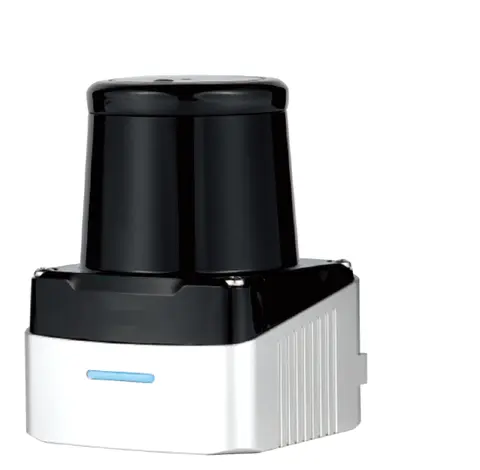
DLD-100D Single-Line TOF Scanning LiDAR
Single-line TOF scanning LiDAR with up to 100 m range, model-dependent 280°/360° coverage, and a 100 Hz / 0.32° DLD-100DP option.
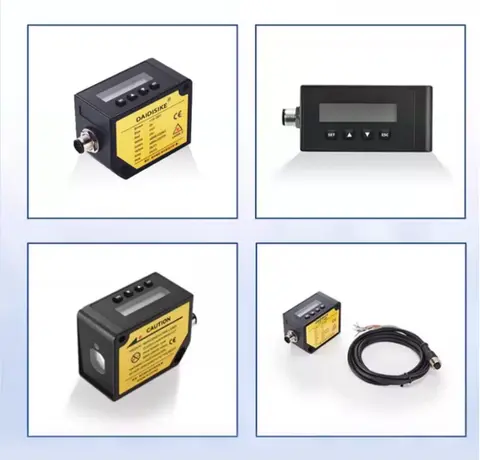
DDA-Y & DDB-Y Industrial Laser Distance Sensor (Phase-Shift)
Phase-shift laser distance sensors: 0.2-100 m range, millimeter accuracy, RS485 Modbus RTU, switching or analog output.
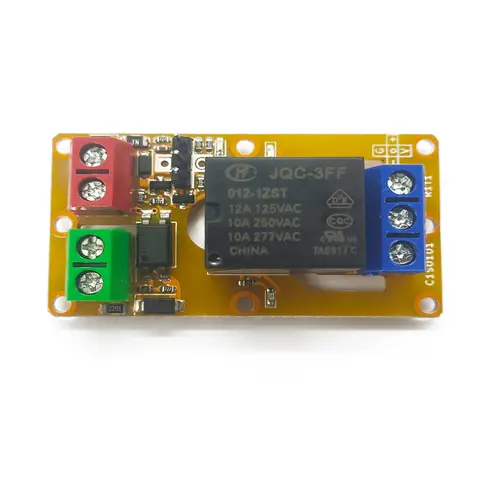
A1J0101 Economical Input Amplifier Module
Optocoupler-isolated input amplifier that turns a low-voltage signal into a 250V AC / 10A relay output.